
The Story of a Seafarer Drifting for 24 Hours at Sea After a Missile Hit His Ship
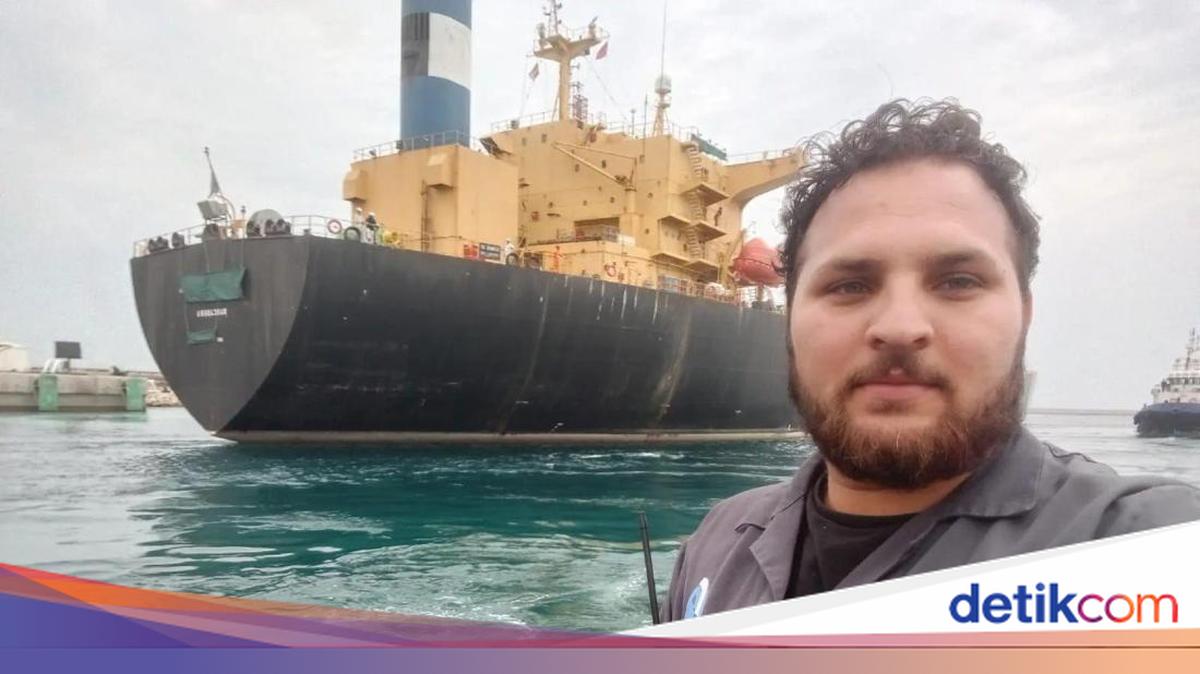
The ship Hassan had just finished loading with cement at a port in southern Iran when the United States and Israel launched attacks against Iran. Waves of ceaseless explosions caused debris to fall in the port.
“Like in a movie,” said the Pakistani crew member (ABK), whose name has been changed.
“All the attacks happened near us.”
The US and Israel launched a series of attacks against various government and military locations in Iran on 28 February.
A few days later, the ship Hassan was on decided to set sail. However, the vessel sank after being hit by a missile. They were swept into the sea and, Hassan said, all they could hold onto were life jackets and floating pipes.
“The water was very choppy, and very cold,” said the 22-year-old man.
At first, they hoped help would come, but their mood worsened minute by minute. They couldn’t even bring themselves to look at each other.
“We thought we would drown in the sea, and no one would know,” he continued. “It felt like time had stopped and we could die at any moment.”
After nearly 24 hours at sea, Hassan and his five colleagues, including a fellow Pakistani and four Iranians, were rescued by a passing Iranian ship.
“I had no hope of surviving,” said Hassan. “But when that ship rescued us and gave us food and water, it felt like a miracle and I was given a new life.”
Hassan is one of about 20,000 seafarers on 1,600 ships trapped in the Gulf after Iran blocked the Strait of Hormuz in response to the US-Israel attacks.
That estimate comes from the International Maritime Organisation (IMO), which has strongly condemned the threats to ships and urged countries to “support diplomatic efforts to secure the evacuation” of the seafarers.
Now that a ceasefire has been imposed, Hassan believes it provides no “real benefit,” especially after the US began blockading Iranian ports.
“I’ve always heard from my seniors that even during war, ships are usually not restricted and ports are not targeted,” he said.
Hassan is also one of the few lucky ones who managed to return home.
Upon arriving in Iran, the shipowner returned Hassan’s passport and those of the Pakistani crew members, along with some money for the journey. However, his wages for five months, amounting to 250,000 Pakistani rupees (Rp15.4 million), were not paid.
Because no commercial flights crossed Iranian airspace, Hassan tried to leave Iran via a “dangerous” land route to the Pakistan border.
The journey took 24 hours, twice as long as usual. Traffic was heavy because many people were also trying to leave Iran’s capital, Tehran.
“Even the taxi driver was very scared. He said he also had to earn a living, otherwise he wouldn’t leave his home,” said Hassan.
Police checkpoints were set up everywhere, and officers only allowed travellers through after thorough checks, he said.
Throughout the journey, very little food and drink was available. Hassan only had three packets of crisps and two bottles of water for the entire trip.
Hassan believes this crisis will not be resolved anytime soon.
“I’ve lost my job and inflation is very high, so it’s very hard to survive,” said Hassan.
“If war has to happen, why target ships or block their routes? These ships carry essential goods needed in daily life.
“Without such supplies, problems will worsen and everyone will be affected.”
Grieving family
Getty ImagesThousands of cargo ships are trapped in the Gulf at the start of the war.
Not everyone made it out of Iran safely.
Yasir Khan, another Pakistani seafarer, died after a missile attack at the same port on 24 March. According to the IMO, at least 10 seafarers have been killed in attacks on commercial ships since the war began.
In recent days, hundreds of people have visited Yasir’s home on Manora Island, Karachi, to offer condolences and bring food. Yasir is remembered by his family and friends as a lively, cheerful, and kind-hearted person.
“My father showed patience and resilience, but my mother and sister-in-law are in very bad condition,” said Yasir’s brother, Wajid.
“They keep saying, ‘When will Yasir’s body arrive? Why is it taking so long?’ I somehow managed to force my mother to eat a little, but Yasir’s wife hasn’t eaten anything.”
“He had big dreams,” said Wajid. “He wanted to succeed, support his wife and child, give them a better life. That’s why he went.”
On the first day of Eid al-Fitr, 21 March, Yasir called his family as usual but didn’t talk about the war. However, he then asked to speak to Wajid privately.
“He asked me to find a way to get him out of there.”
In the following days, Wajid received no news from Yasir and knew something was wrong.
“We kept trying to get information from everywhere,” he said. “At first, I hoped he had survived—maybe he reached the shore, or another ship, or was injured somewhere.”
Eventually, he learned that Yasir had died after a missile hit his ship while he was fast asleep.
In minutes, the ship sank and everyone on board was thrown into the water. Only two seafarers, also from Pakistan, survived.
Life and death
Wajid KhanYasir is remembered by his family and friends as a lively, cheerful, and kind-hearted person.
For Hassan, his sunken ship now feels like a hidden blessing. If not, he said, he would still be stranded in Iran.
It took him five days to reach home from the Iran border. At home, his mother, sister, and aunt welcomed him.