
The Story of a Diasporic Chinese Community Building a Premier Grape Industry in Yunnan
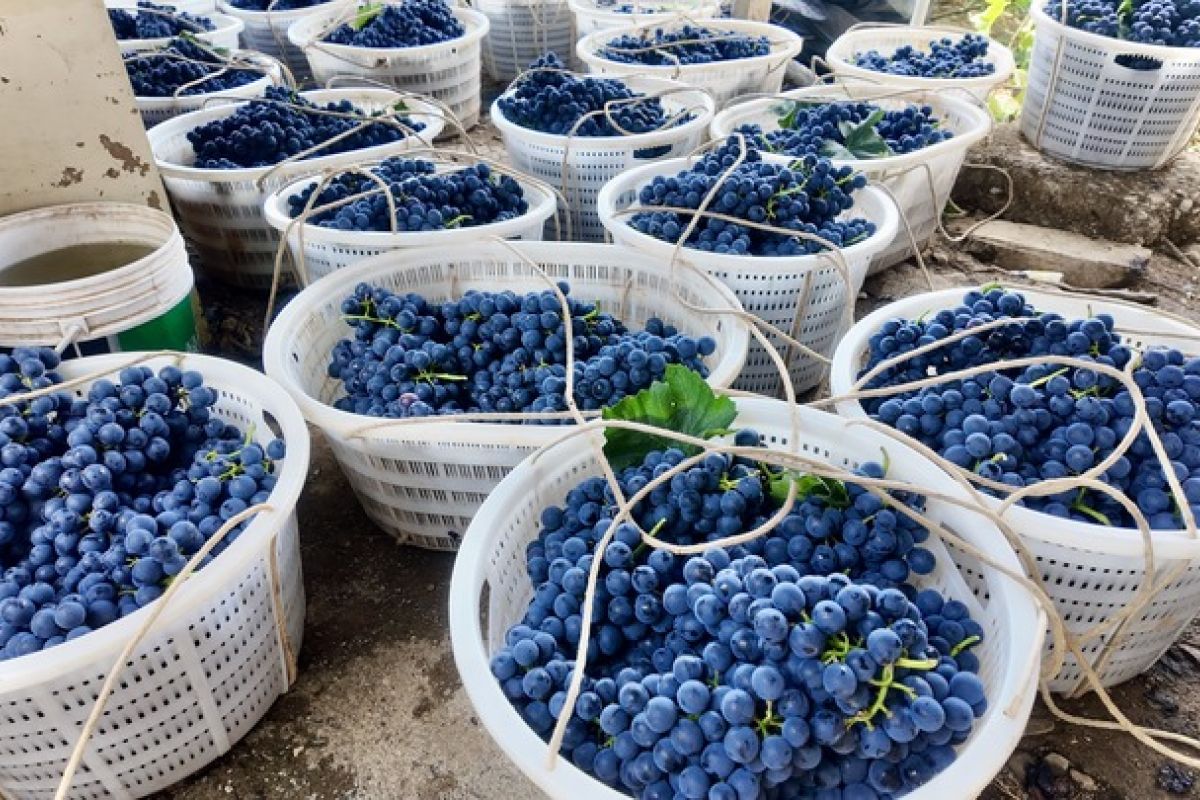
Kunming (ANTARA) - In a grape orchard in Liujiawan Overseas Chinese Community in Yunnan Province’s southwest, farmers are busy picking, sorting and packing the Black Summer grape variety ready for export to foreign markets, including ASEAN and Russia.
As a settlement inhabited by thousands of overseas Chinese descendants who returned to China decades ago or more, Liujiawan has witnessed the hard work of its residents for decades to turn barren land into a base for the grape industry.
Working collectively, they have built irrigation channels, improved soil conditions, and developed farmland through methods such as straw returning to the land and deep ploughing. In addition to farming techniques, they also brought cultural traditions, cuisine, and multilingual households shaped by Southeast Asian influences.
As the grape industry grew, residents sought to cultivate superior and unique varieties.
In the 1980s, they began experimenting with imported grape varieties and gradually adjusted cultivation techniques to local conditions through various trials.
After the reforms and opening up, the Binchuan region, where this community is located, expanded its fruit industry, with grapes and oranges becoming the main drivers of the economy.
For Du Xiaocong, one of the grape growers in Liujiawan, the success of exporting grapes to Indonesia has a special meaning. ‘My predecessors came from Indonesia, and now the grapes I have grown with my own hands can return to Indonesia. It is like a connection with our ancestors, something magical,’ he said.
After decades of development, the Binchuan region now has more than 8,300 mu (about 553 hectares) of grape plantations and land for oranges and other fruits. In addition, several local brands have been officially registered.
The growth of the industry has been supported by the expansion of infrastructure. Binchuan has built more than 1,500 cold storage facilities and over 60 automatic sorting and packaging lines. A cross-border e-commerce warehouse in Vietnam has also accelerated customs clearance, enabling these fruits to reach ASEAN markets in as little as 12 hours.
Thanks to the descendants of overseas Chinese, Liujiawan carries an exotic flavour that blends Southeast Asian cultural and culinary elements, attracting many visitors. Now local tourism combines with agriculture into eco-tourism, making the community more well-known and increasing residents’ incomes.
‘The mature cold chain and product promotion through live streaming have pushed Binchuan grapes to broader markets. We can see more young people getting involved in the grape industry here, and the standard of living for residents is improving,’ said Wang Tao, a local official, to reporters. End.
Translator: Xinhua