
The Stop-Start Progress of the Asset Forfeiture Bill in the DPR
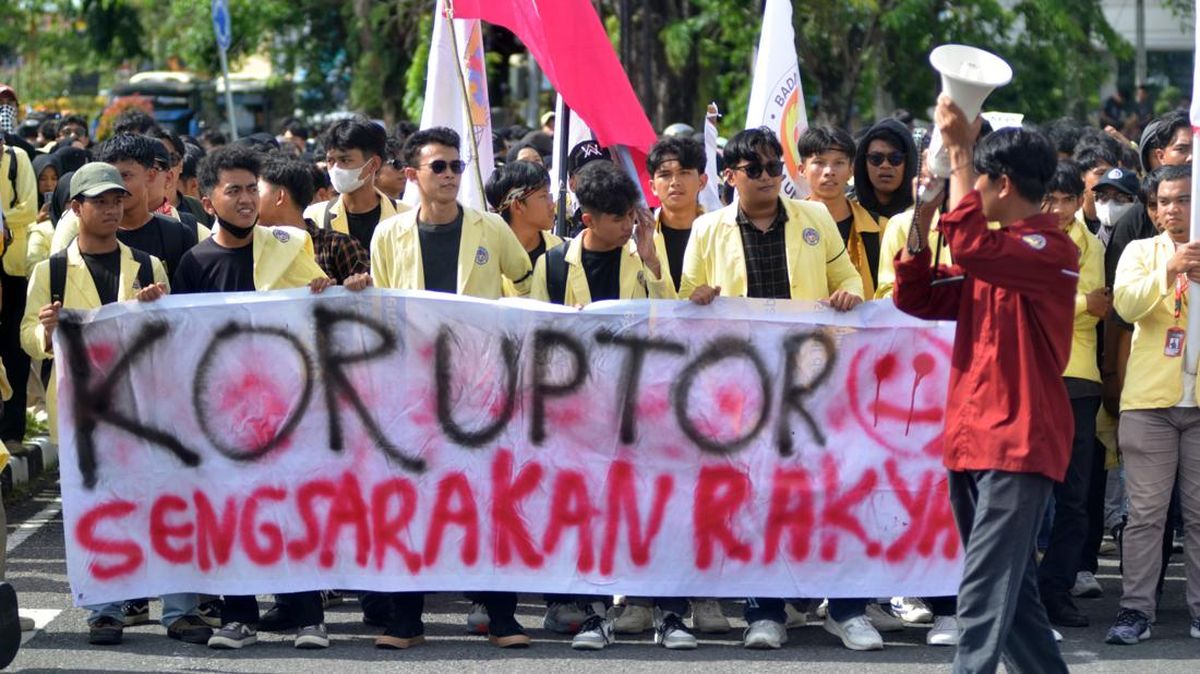
The DPR’s plan to finalise the deliberation of the Asset Forfeiture Bill appears half-hearted. Although it has been included in the priority legislative agenda, the DPR and the government have yet to officially commence discussions on the bill. Discourse on the Asset Forfeiture Bill typically resurfaces when a corruption case causes public uproar, such as the recent case allegedly involving former Junior Attorney General for Special Crimes, Febrie Adriansyah. Shortly after that case emerged, the DPR’s Commission III held a press conference, during which they affirmed that the council members were still striving to deliberate the asset forfeiture bill. “This is a priority for 2026. And of course, because it is a 2026 priority, we will make every effort to complete it this year,” said Deputy Speaker of the DPR Saan Mustopa at the parliament complex in Jakarta on Tuesday (14/7). Saan made the statement to dispel discordant rumours suggesting the DPR had just rejected the deliberation of the Asset Forfeiture Bill. According to him, the bill’s deliberation is currently still in the stage of gathering public input. “We need to convey that the issue circulating in the public, that the DPR has rejected the deliberation of the Asset Forfeiture Bill, is not true,” said the NasDem politician. The discourse on the Asset Forfeiture Bill has now spanned three presidencies, from Susilo Bambang Yudhoyono (SBY) and Joko Widodo (Jokowi) to the current administration of Prabowo Subianto for the 2024-2029 period. SBY and Jokowi each served two terms, or ten years, covering the periods 2004-2014 and 2014-2024 respectively. Citing various sources, the discourse on this Asset Forfeiture Bill can be traced back to 2008. The effort to deliberate the bill was then initiated by the Financial Transaction Reports and Analysis Centre (PPATK), which presented it to President SBY in 2009. A year later, the deliberation of the Asset Forfeiture Bill at the government level was underway. According to the official website of the National Law Development Agency (BPHN), the academic draft for the bill was completed in 2012. The nearly 200-page academic draft, including its bibliography, was compiled by a team led by Ramelan. The digital document of the 2012 Academic Draft was accessed by CNNIndonesia.com from the official BPHN website on Wednesday (15/7). The Asset Forfeiture Bill was first discussed during the administration of President Susilo Bambang Yudhoyono (SBY). At that time, the PPATK was the initiator and presented it to President SBY in 2009 for deliberation. The first draft was completed in 2012, but until the end of SBY’s presidency and throughout Jokowi’s tenure, the bill was never followed up for joint deliberation and passage by the government and the DPR. The issue of the asset forfeiture bill has repeatedly heated up whenever an event—primarily related to corruption—shocks the public. And the bill has repeatedly been included in the national legislation programme plans up to this year. During the Jokowi administration in 2023, he issued a presidential letter to the DPR to immediately deliberate the Asset Forfeiture Bill. However, no further discussion took place until the 2024 General Election rolled around. At the International Workers’ Day commemoration on 1 May 2025, Prabowo, who was invited to attend as president, gave a speech about his promise and support for the Asset Forfeiture Bill. At the time, he asserted that passing the bill was in line with his campaign promise to eradicate corruption. The bill finally entered the 2025 Priority National Legislation Programme for the first time, proposed by the DPR’s Commission III during a legislative programme evaluation meeting at the Legislation Body on 9 September 2025. However, entering 2026, the Asset Forfeiture Bill has never been formally deliberated. The bill was subsequently proposed for inclusion in the 2026 Priority National Legislation Programme. Yet, as of the middle of this year, the public sees the bill as seemingly untouched. Currently, Commission III Chairman Habiburokhman has not disclosed when his commission will form a Working Committee to officially begin the deliberation. He recently stated that he would still invite legal academics from various universities and legal practitioners to discuss the bill. “Last night it was decided that we will invite legal academics from all law faculties, from as many as are willing, across Indonesia. Just like the Criminal Procedure Code. For the Criminal Procedure Code, we invited all universities. We will invite all legal academics, a representation,” Habib said at the parliament complex in Jakarta on Tuesday (14/7). Responding to the current situation, the Coordinator of the Indonesian Anti-Corruption Society (MAKI), Boyamin Saiman, criticised the lawmakers’ fluctuating commitment to deliberating and passing the Asset Forfeiture Bill. He also reminded them of the promise made regarding the bill in 2025. “Whatever the case, the promise to pass the asset forfeiture bill was made last year, and now it’s approaching August with no news. That’s how it always is, the DPR deliberates, then goes into recess, and stops discussing it,” he quipped when contacted by CNNIndonesia.com on Wednesday (15/7). “Then after a commotion and a momentum—recently there was a major corruption case—it gets discussed with the excuse of using a ‘turbo’ and so on. So, I ultimately do not believe the DPR is serious about passing the asset forfeiture bill unless they are truly forced. I demand the DPR show proof, pass it immediately,” he continued. He also reminded that the bill has been mature for discussion since 2008, but lawmakers have frequently delayed it on the grounds that it needs further review. That pretext, he added, ultimately invites suspicion, especially in the eyes of anti-corruption researchers and activists. “Because this bill has been mature since 2008, it just needs to be passed. In fact, if it is discussed further, I am convinced the discussions are aimed at reducing the material that might endanger certain DPR members or anyone else involved,” he said. According to him, the existence of the Asset Forfeiture Law would become a potent weapon to combat corruption.