
The Starting Point for Indonesia's Technological Independence
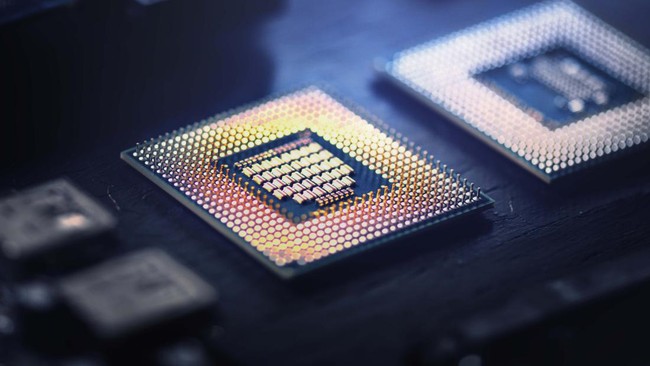
President Prabowo Subianto has positioned industrial, energy, and mobility independence as vital components of Indonesia’s transformation. The government aims to develop 100 GW of solar power capacity and strengthen the national electric vehicle and motorcycle sectors. Behind all these products lies a single determining component: the semiconductor.
The government has also begun taking steps regarding human resources. Through an ecosystem development initiative with Arm, Indonesia aims to train 15,000 semiconductor talents within three years. A focus on chip design is crucial, as Indonesia does not necessarily need to possess its own foundry to begin building semiconductor capabilities.
However, the question is not merely how many people are trained. The more important question is: after training, are they capable of building something?
An assessment of Electrical Engineering curricula at UI, ITB, UNDIP, and ITS shows that Indonesia’s major universities already possess many of the necessary components, including semiconductor devices, VLSI, FPGA, analog/mixed-signal, microelectronics, embedded systems, and IC technology. The primary issue is that these competencies remain fragmented. Industry requires individuals capable of connecting theory into a single engineering process: requirements, architecture, design, verification, prototyping, debugging, and providing evidence of correctness.
This is where the National Internship Programme, MagangHub, could play a much more strategic role. The Ministry of Manpower has increased the 2026 MagangHub quota to 150,000 participants, with internship periods of up to six months and opportunities for competency certification facilitation.
The government states this programme is intended to narrow the gap between graduate competencies and industrial needs. Imagine if, out of that number, 2,000 internship slots were specifically dedicated to semiconductor engineering. Not 2,000 people performing administrative tasks in tech companies, but divided into three core capabilities:
Digital IC: specification → RTL → verification → FPGA → synthesis → timing → DFT → physical implementation.
Analog/mixed-signal: specification → transistor-level design → simulation → PVT → layout → extraction → post-layout verification.
Firmware: power/reset → first execution → register initialization → peripheral → boot → security → operating-system handoff → board bring-up.
With such a composition, participants could be formed into hundreds of cross-disciplinary engineering teams. A single team could be given a simple yet tangible target: a smart meter controller, a secure MCU, a motor-control subsystem, a BMS controller, a sensor interface, or a utility processor.
The metric for success must also change. Rather than simply stating one