
The Stalled Diplomatic Path Between Iran and the United States
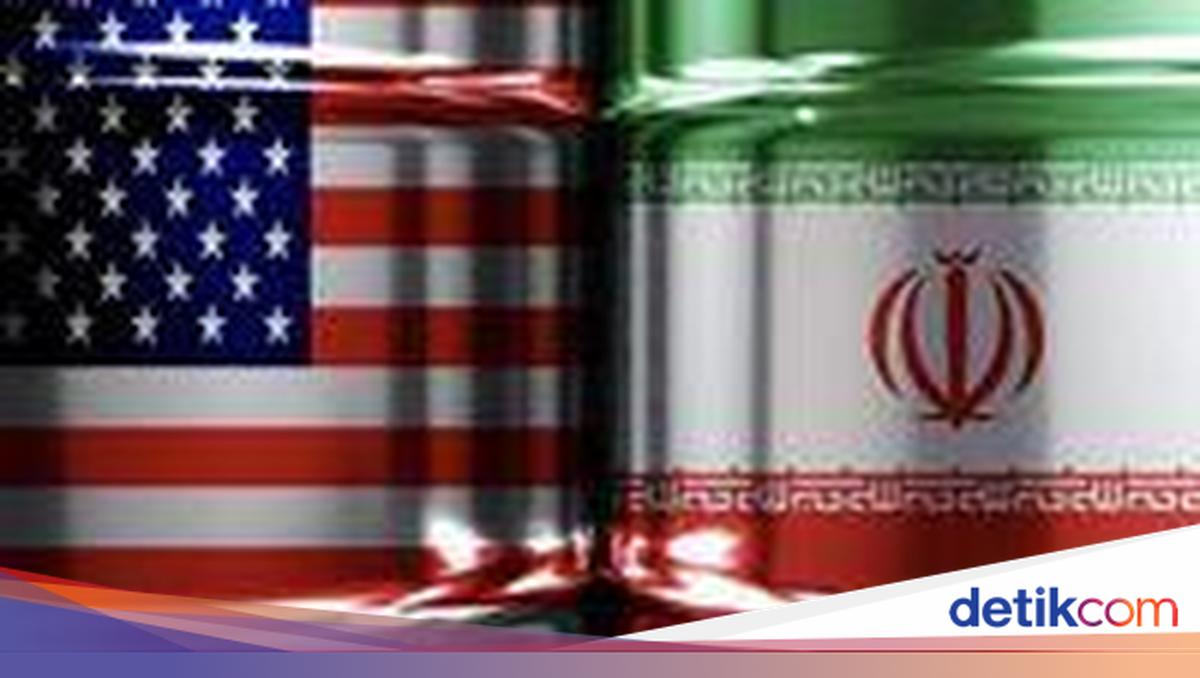
The war between Iran and the United States (US) entered an increasingly paradoxical phase in early October 2026, as military forces were further strengthened and economic pressure tightened, while diplomatic channels lost the trust of both sides.
Foreign Minister Abbas Araghchi’s statement that there is “no military solution”, and President Masoud Pezeshkian’s criticism that negotiations with Washington had become meaningless, reveal a deepening trust deficit between Tehran and Washington.
In Washington, Donald Trump has also maintained threats of force. On 1 October, he stated that his options were to “blow up” Iran or reach a deal, rhetoric that narrows the room for diplomatic compromise.
The Security Dilemma
The current deadlock cannot be separated from the changing character of the conflict since the United States and Israeli attacks on Iran in late February 2026, which came while negotiations over Iran’s nuclear programme were under way.
The conflict has created a serious credibility problem for Tehran in convincing its adversaries that diplomacy can still deliver security, given that the earlier negotiations took place alongside military escalation.
From the perspective of the security dilemma, measures perceived as defensive by one side, such as the deployment of warships, air defence systems, missiles or blockades, can be read as offensive threats by the other, producing a spiral of escalation.
The Iran–US issue has become more complex than a dispute over the nuclear programme, as the negotiating agenda now includes maritime security, economic sanctions, oil exports, Iran’s regional position and Washington’s relationship with Israel.
Indirect talks through mediators such as Qatar and Pakistan show that communication channels have not fully collapsed. However, the absence of agreement on the sequencing of concessions means each side is waiting for the other to act first.
Reuters reported that an Iranian proposal, conveyed through the Qatari mediator, offered to reopen the Strait of Hormuz within seven days as part of a mechanism to end hostilities. Trump rejected the proposal, however, because its conditions were deemed unacceptable. This dynamic can be understood through the concept of coercive diplomacy: a strategy of influencing an opponent’s behaviour through a combination of threats, pressure and offers of settlement.
The United States uses sanctions, blockades, pressure on energy exports and the threat of military force to compel Tehran to accept the security configuration Washington desires. Iran, for its part, uses missile capabilities, threats to shipping and the geographic position of the Strait of Hormuz as instruments of counter-coercion.
When both sides believe their pressure tools can improve their bargaining position, the incentive to make concessions falls, and negotiations shift from the search for a solution to a contest over which side will first run out of endurance.
Political Economy
The Strait of Hormuz conflict is the most sensitive point in this deadlock, because regional security concerns coincide directly with global economic interests.
Data from the US Energy Information Administration show that in 2024 around 20 million barrels of oil per day passed through the Strait of Hormuz, equivalent to roughly one-fifth of global petroleum liquids consumption, while about one-fifth of global LNG trade also transited the waterway.
This geographic position gives Iran considerable strategic leverage, but also creates constraints, since any disruption in Hormuz carries economic consequences for Iran, the Gulf states, Asia and international energy markets.
Recent Reuters data show that oil exports from Gulf states other than Iran had recovered to an average of around 19.2 million barrels per day in September, approximately 81 per cent of pre-war levels, while Iranian exports fell to zero due to the US blockade.
This suggests that pressure on Hormuz has not produced a clear political victory for Tehran, yet it has also not eliminated the vulnerability of the global energy system to geopolitical disruption.
The impact has moved beyond the bilateral Iran–US relationship into the realm of global political economy, as seen in Brent crude prices of around US$100 per barrel on 6 October 2026 and rising shipping costs from the Gulf region.
Reuters reports that logistical disruptions, higher risk premiums and limited refining capacity are keeping energy prices high even as regional export volumes begin to recover. This indicates that the war has created distribution problems that cannot be solved simply by increasing production.
In this context, the diplomatic deadlock has produced a mutually hurting stalemate, a situation in which both sides suffer significant losses but have not found a politically acceptable point of compromise.
Iran faces pressure on its oil exports, economic stability and fiscal capacity, while the United States faces military costs, energy price pressures, market uncertainty and the risk of a wider regional war.
Conflicts of this kind are dangerous because each party may assume that adding pressure will improve its bargaining position, when in fact the accumulation of pressure may destroy the minimum conditions needed to rebuild trust.
A New Negotiating Architecture
A way out of the deadlock cannot be built through repeated bilateral meetings alone, because the central problem today is not the absence of a forum for communication but the collapse of credibility in commitments between the parties.
The theory of credible commitment explains that agreements are difficult to sustain when each side expects its opponent to change policy once it has obtained initial concessions.
Thus, Iran fears opening access through Hormuz before receiving guarantees, while Washington worries about easing sanctions before gaining certainty on nuclear and maritime security. Under these conditions, a solution must be designed as a phased mechanism in which one side’s actions produce concrete incentives for the other’s.
A more workable model could take the form of phased reciprocal de-escalation, in which each concession is made simultaneously, measurably and verifiably by a third party.
An initial phase could involve halting attacks on commercial vessels, ending US strikes on port facilities and on ships not directly involved in military operations, followed by limited and verified reopening of the Strait of Hormuz to commercial shipping.
A subsequent phase could include partial suspension of sanctions, a nuclear verification mechanism overseen by an international body, limits on military deployments, and a regional security forum involving Iran, the Gulf states, the United States and international actors with mediation capacity.
This framework matters because Iran–US negotiations require a security architecture, not merely an exchange of political promises between two governments.
Qatar and Pakistan could continue to serve as mediators, while the United Nations could provide legitimacy, verification mechanisms and a multilateral forum, so that implementation does not rest entirely on personal relations between Iran’s leadership and the United States.
From the perspective of complex interdependence, resolving the conflict also requires linking nuclear, energy, maritime security, sanctions, trade and regional stability within a single package that allows each party to secure gains it can sustain.
Here, diplomacy must shift from a winner-takes-all logic towards managed coexistence. A military victory over Iran would not automatically produce stability in the Middle East, and Iran’s ability to sustain pressure on Hormuz would not automatically yield a lasting strategic position.
The fact that Washington continues to use economic pressure while leaving room for diplomacy, and that Tehran keeps signalling its readiness to negotiate through mediators, shows that the diplomatic space has not been fully closed.
The Iran–US deadlock of October 2026 exposes the limits of an approach that relies too heavily on military threats and economic pressure as instruments of diplomacy. When threats are perceived as efforts at regime change and concessions are seen as strategic risks, negotiation loses its function as a means of building trust and becomes an arena for testing the opponent’s endurance.
A more rational way forward is to build a gradual, verifiable, multilateral and balanced agreement that turns the security dilemma into a mechanism of reciprocal restraint. Peace would then depend not on who is strongest, but on the parties’ ability to create shared interests in halting escalation.
Aji Cahyono is a lecturer and observer of Indonesian and Middle Eastern geopolitics, a graduate of the postgraduate programme at UIN Sunan Kalijaga Yogyakarta, and founder of Indonesian Coexistence.
Source: jawawa.id (https://jawawa.id/newsitem/the-stalled-diplomatic-path-between-iran-and-the-united-states-1791438953)
Originally published by detikcom (https://news.detik.com/kolom/d-8697692/jalan-berliku-negosiasi-diplomatik-iran-dan-amerika-serikat), translated from Indonesian