
The Splashing of Tilapia in Loa Kulu Sustains Food Security in East Kalimantan
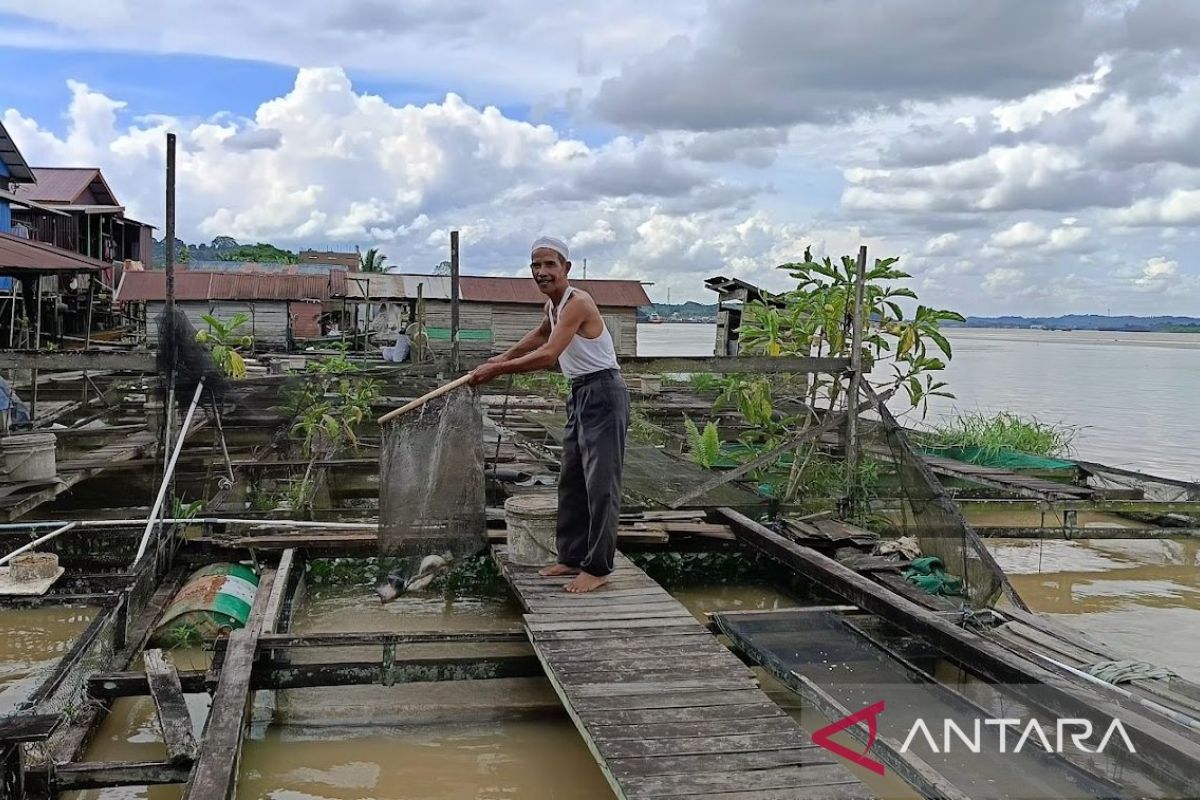
Samarinda (ANTARA) - One’s footsteps feel gently swaying to the rhythm of the Mahakam River’s current while stepping across the ulin wood arrangement framing 36 floating net cages in Jembayan Village, Loa Kulu Subdistrict, Kutai Kartanegara Regency, East Kalimantan.
From beneath the water’s surface, the lively splashing sounds can be heard, echoing as thousands of tilapia fish snap at the scattered feed. Standing atop these floating net cages, which produce up to one tonne per month, is Muhmajadi. He is a fish farmer with 24 years of experience.
“These tilapia have lifted our family’s economy, though the journey to reach this position has not been easy,” said Muhmajadi with a smile.
The year 2005 remains a vivid tale of sorrow in the memories of Loa Kulu’s fish farmers. That year, from the cages along the Mahakam River’s banks in Loa Kulu Subdistrict, carcasses of carp fish scattered everywhere. The Koi Herpes Virus (KHV) outbreak swept away capital, effort, and hopes of the local farmers.
Muhmajadi, who had pioneered carp fish farming since 2002, had to witness how his hard work was rendered futile in mere weeks. Not a few local farmers ended up closing shop.
However, giving up to the circumstances was not an option for the man who now serves as Chairman of the Gawi Baimbai Sejahtera Fish Farmers Group (Pokdakan) in Jembayan Village.
He and his group members racked their brains and decided to pivot. Muhmajadi shifted his main commodity from carp to tilapia, which proved more resilient, though he still allocated some space for carp and baung fish.
“Now, the water splashing in Loa Kulu’s cages is lively once again,” said Muhmajadi.
From his 36 floating net cages, nourished by the Mahakam River’s current, Muhmajadi routinely harvests up to one tonne of tilapia every month. For one pokdakan, the total tilapia harvest reaches over 10 tonnes.
Loa Kulu Aquaculture Fishing Village has a total of 40 fish farmer groups. These groups range from hatcheries to fish fattening specialists.
The tilapia from that village, now the favourite for fulfilling needs in East Kalimantan, is a potential that the local government continues to develop. Therefore, abundant natural resources will not be optimal without being matched by competent human resources. Realising this, educational intervention becomes a key step.
In 2025, Muhmajadi along with eight other representatives from various villages in Kutai Kartanegara—including two from Jembayan Village—was sent by the local government to undergo intensive education for seven months at the People’s Fisheries School (SPR) of Bandung Institute of Technology (ITB).
For traditional farmers, this is a leap forward. In that short university programme, they were not only taught how to feed fish but comprehensively trained in modern aquaculture techniques, scientific disease mitigation, and collective business management.
As a model pokdakan, Muhmajadi’s responsibilities now extend beyond his own cages. He and his group go into the community, providing direct guidance to other fish farmer groups.