
The Spiritual Practices of Pak Harto, Indonesia, and Kejawen Book Launched
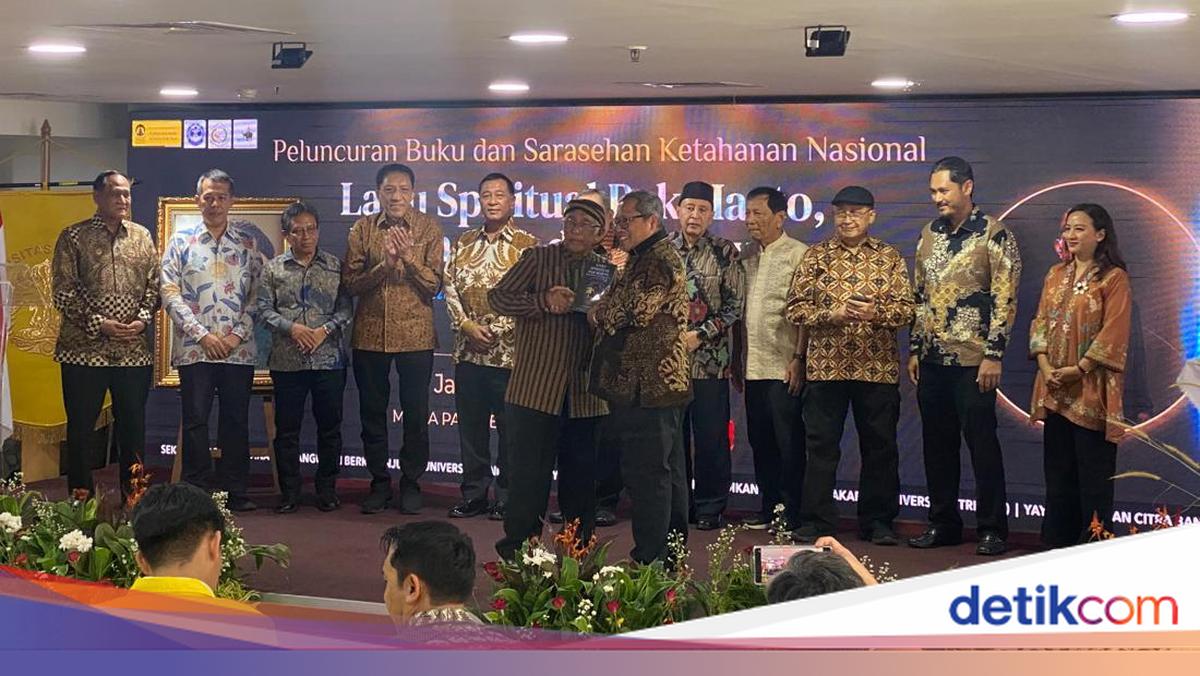
A book titled ‘The Spiritual Practices of Pak Harto, Indonesia, and Kejawen’ has been launched. The book reveals the daily behaviours of Indonesia’s second president, Soeharto, including his methods for selecting aides to serve in the government.
The launch took place at the University of Indonesia Graduate School in Salemba, Central Jakarta, on Monday (8/6/2026). The event was a collaboration between the Kaļian Citra Bangsa Foundation (YKCB), the Indonesian Education Development Foundation (Trilogi University), and the Kompas publishing house.
“I briefly describe Pak Harto’s daily behaviour, including how it influenced the way he recruited his aides,” said the book’s author, B. Wiwoho.
Wiwoho noted that the book was written based on his observations as a journalist stationed at the State Palace since 1972. To gather data, he also visited locations frequently visited by Soeharto.
“The content might differ slightly from the general public’s view of mysticism. Usually, mysticism is associated with supernatural beings and such. However, in this depiction, you will encounter other elements,” he said.
The book also includes a SWOT (Strengths, Weaknesses, Opportunities, and Threats) analysis through the lens of Javanese culture, explaining how the Javanese ‘Primbon’ interprets circumstances.
“I added a Javanese-style SWOT analysis. In general terms, this is the Javanese Primbon—how it reads a situation. However, I used more detailed descriptions and terms that do not sound like fortune-telling, but rather focus on situational analysis,” he explained.
During the event, Tri Agung Kristanto, a representative from Kompas publishing, stated that the book addresses public questions regarding whether Soeharto adhered to ‘Kejawen’ (Javanese spiritualism). He noted that Soeharto’s actions were rooted in local wisdom, a trait shared by many of the nation’s leaders.
“From Mr. Wiwoho’s book, we learn that Pak Harto had beliefs that stemmed from our cultural roots, rather than something that placed other entities above God,” he said. “However, we have what is known as local wisdom, and that local wisdom is what is preserved by our nation’s leaders,” he added.