
The Spiritual Dimension and Humanitarian Message of the Hajj Pilgrimage
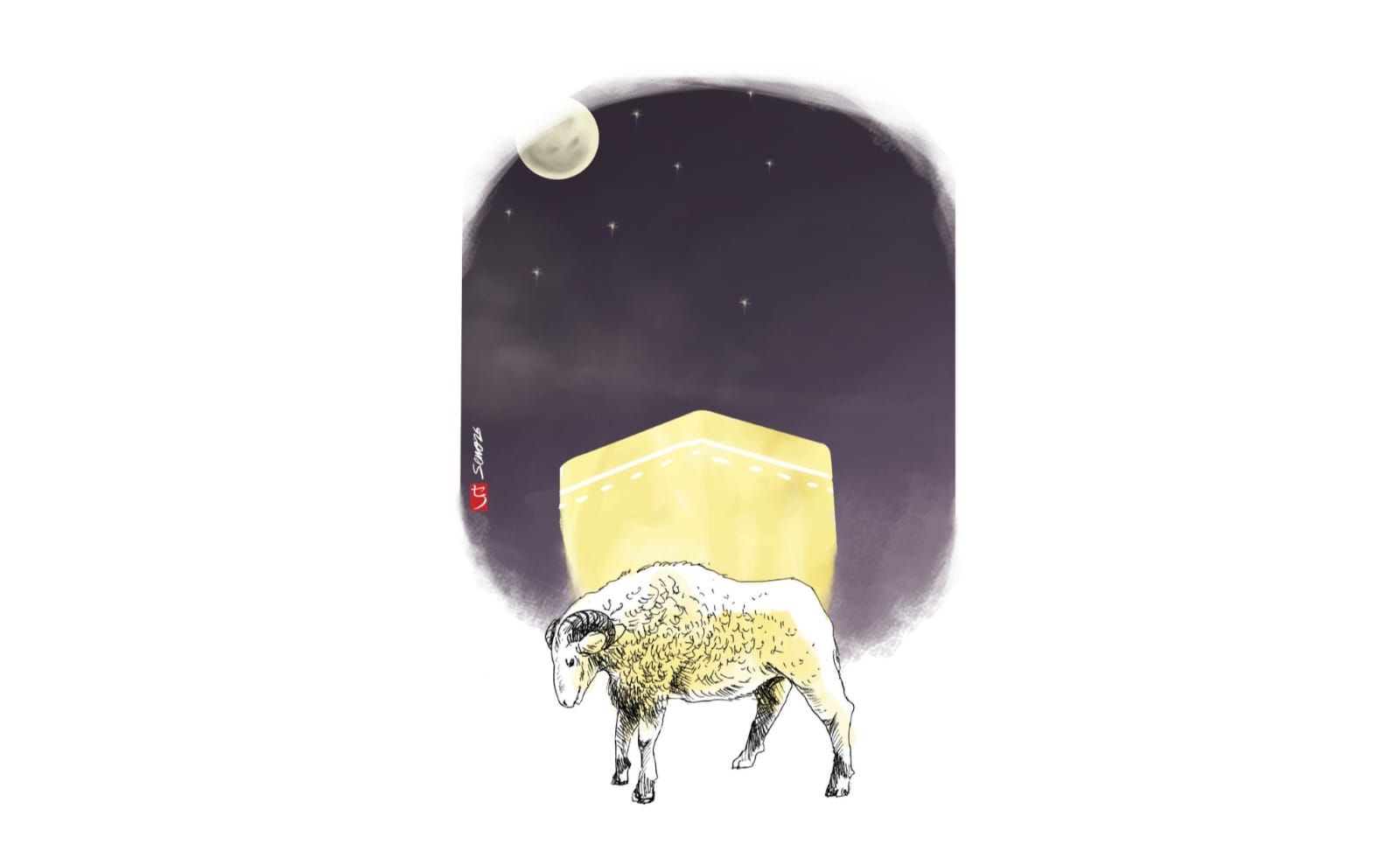
The pilgrimage to the Holy Land (Hajj) is an obligation for every Muslim who possesses the means (istitha’ah). However, it is important to understand that the capability for performing the Hajj is not limited to financial means, physical strength, and provisions while in the Holy Land. The Hajj also requires mental and spiritual preparedness.
Equally important are security guarantees, both from the pilgrims’ home country and from the host nation, known as the Servant of the Two Holy Mosques (Khādim al-Harāmayn), namely the Kingdom of Saudi Arabia. Security guarantees are vital because during the Hajj season 1447 AH/2026 AD, the world will be marked by war.
In such circumstances, the priority must be safeguarding life (hifdz al-nafs). For this reason, Allah states that the obligation of Hajj is only to those who are able to undertake the journey to the House of Allah (QS Ali ’Imran: 97). Each pilgrim also must bring the best provision, namely takwa (piety) (QS Al-Baqarah: 197).
That foundation of takwa will ensure that every pilgrim is able to understand both the meaning and the important message of every stage of the Hajj.
Every pilgrim should also emulate the character of the Prophet Ibrahim, as the central figure in the sequence of Hajj. Remember, at its core the Hajj rite is a pilgrimage tracing the footsteps of Ibrahim and his family.
THE SIGNIFICANCE OF THE HAJJ
For every Muslim, performing the Hajj to the Holy Land is a longing. Even for those who have already performed the pilgrimage, the desire to worship in the Holy Land remains high. There is always longing to travel again and again to the Holy Land. Not only to complete the Five Pillars, but the Hajj experience offers a significant and profound religious experience.
That is why it is understandable that the zeal of people to undertake the Hajj always surges. The enthusiasm to perform the fifth pillar also drives the queueing of prospective pilgrims (CJH) which continues to lengthen. As a result, the CJH wait list reaches decades.
According to data from the Ministry of Hajj and Umrah, in 2026 the CJH queue in several regions reaches 20-30 years. Some districts in South Sulawesi queue 45-50 years. The long CJH queues indicate two things. First, the public’s eagerness to worship is very high. Not only for Hajj; the enthusiasm for performing Umrah is also extraordinary.
Second, the long CJH queues also indicate that the welfare of the community is improving. This is because to secure a slot in the Hajj queue, a person must register through government-partner banks and deposit tens of millions of rupiah. The CJH queue exists not only for regular Hajj. Hajj plus, costing hundreds of millions of rupiah, also has a 5-10 year wait.
In facing such long queues, there seems to be no alternative. All CJH waiting for decades must remain patient. That is the meaning that the Hajj is indeed a call from Allah. Be patient until the time when you are truly called as guests of Allah (wafdullah). The call to be guests of Allah is clearly very moving to the heart.
With that call, Allah will be the host of the meeting of millions of pilgrims from all corners of the world. Hence, it is said that the Hajj pilgrims visit the Baitullah (House of Allah). As host, Allah will welcome, serve, and provide safety and comfort for the pilgrims.
The Ka’bah’s Building facing all directions also symbolises that Allah will host anyone who comes, from any country, irrespective of ideological background, religious beliefs, ethnicity, and socio-economic status. Allah does not discriminate among pilgrims, except according to their level of takwa.
Another virtue of the Hajj can be understood in several Hadiths of the Prophet Muhammad (peace be upon him). The Prophet said that a Hajj accepted by Allah (mabrur) has no reward other than Paradise. The Messenger also stated that Hajj performed correctly (without immoral acts or disobedience) will cleanse him of all sins, as though newly born from his mother’s womb.
SPIRITUAL DIMENSION
Iranian thinker Ali Shariati (1933-1977), in his book Hajj (2005), illustrates Hajj as a performance. Shariati’s assertion is not excessive if we consider the protocol of Hajj. When looked at carefully, the implementation of the fifth pillar of Islam indeed resembles a performance. Yet, it is not an ordinary performance; it is a grand display involving millions of people.
In that grand display, Allah SWT is the director. The characters to be played are Adam, Ibrahim, Hajar, and Shaytan. The main locations are around Masjid al-Haram, Masjid al-Nabawi, the Sacred House, the Ka’bah, Safa, Marwa, Arafat, Muzdalifah, Mina, and other historic places. Important symbols to observe are day, night, sunrise, sunset, sacrifice, tahalul (shaving the hair), and idols.
The sacred garb to be worn is the Ihram, two white seamless sheets (for men) and clothing covering modesty (for women). The Ihram attire symbolizes purity and equality before Allah. It should be emphasised that the principal players in this grand display are each pilgrim themselves. Each participant is required to perform their role with full devotion.
If contemplated carefully, the Hajj procession can surely lead each individual to a life coloured by an awareness of the existence of Allah. The House of Allah (the Ka’bah), facing all directions, signifies that Allah is everywhere. When this awareness arises, pilgrims are motivated to kiss the Black Stone (Hajar al-Aswad), or at least to wave toward the Kabah.
That is when each pilgrim feels their closeness to Allah. Unknowingly, tears flowed as a sign of gratitude because they could memen