
The Spirit of Qurban and the Imperative of Distributive Justice
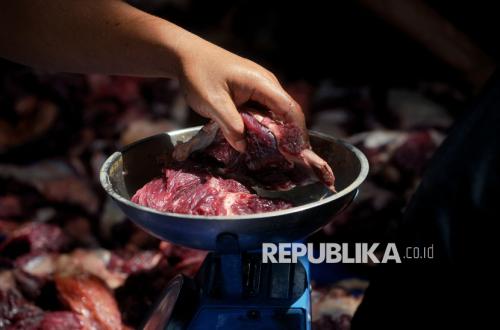
REPUBLIKA.CO.ID, JAKARTA – Every end of Dhu al-Hijjah, Muslims worldwide commemorate the profound sacrifice of Prophet Ibrahim, Siti Hajar, and Ismail through Qurban. This story is often framed as a personal faith narrative: a prophet’s submission to divine command. Yet, limiting Qurban to an annual slaughter ceremony or mere historical reenactment overlooks its most relevant substance for our times. Qurban is both a theological and economic statement: that ownership of wealth is never absolute, as it inherently contains others’ rights. This spirit must be re-examined amid Indonesia’s structural economic inequalities during Eid al-Adha 1447 H.
Data from the Central Statistics Agency (BPS) as of September 2025 shows the national Gini ratio at 0.363, a slight decline from 0.375 in March 2025. While this reduction is commendable, it masks urban expenditure inequality at 0.383—far higher than rural areas’ 0.295. Regional disparities remain wide: South Papua records a Gini of 0.426, while Bangka Belitung stands at 0.214. Poverty remains at 23.36 million people, or 8.25% of the population. This economic-political context renders Qurban not merely a ritual, but an underutilised redistributive instrument.
Two Dimensions of Qurban: Vertical and Horizontal
Within Islamic jurisprudence, Qurban comprises inseparable vertical and horizontal dimensions. The vertical dimension, taqarrub ilallah, involves drawing closer to Allah through sincerity and submission. The horizontal dimension, ihsan ila al-nas, entails doing good to others via meat distribution. The Quran, Surah al-Hajj verses 36-37, emphasises that it is not the meat or blood that reaches Allah, but the piety of the performer. Guidelines for distributing meat to the poor, neighbours, and family are empirical extensions of this piety.
This is what makes Qurban unique among many ritual acts. It cannot be resolved solely between servant and God; it necessitates tangible redistribution from the wealthy to the poor. The Sunnah of the Prophet recommends dividing meat into thirds: one-third for family, one-third for neighbours, and one-third for the needy. Without this concrete economic transfer, Qurban loses its essence. Thus, Qurban is one of few Islamic rituals structurally embedding redistribution mechanisms akin to zakat and waqf, distinguishing Islamic economics from mere individual ethics.
Maqashid Syariah and Distributive Justice
The maqashid al-shariah approach provides a robust theoretical foundation for viewing Qurban as a distributive justice instrument. M Umer Chapra, in his 2008 work The Islamic Vision of Development in the Light of Maqāṣid al-Sharīʿah, positions socio-economic justice as central to Islamic development. Chapra asserts that the Islamic state is not ideologically neutral; it has a moral duty to advance socio-economic justice and eliminate disparities. This view transcends capitalism’s market-driven distribution and socialism’s state coercion. In Chapra’s framework, markets remain free yet fair, and the state is active yet ethical.
Similarly, Monzer Kahf in Islamic public finance analysis identifies zakat, infak, sadaqah, waqf, and Qurban as redistributive institutions operating before and beyond state taxation. He terms these pillars of third-sector economics, filling gaps unaddressed by markets or government. Abdul Mannan stresses that Islamic welfare is multidimensional—material, moral, and spiritual. Contemporary scholar Jasser Auda, through systemic maqashid analysis, expands hifdz al-mal (wealth preservation) to equitable wealth circulation.
In this reading, Qurban ensures wealth does not circulate solely among the rich, as Quran Surah al-Hasyr verse 7 states: ‘kay la yakuna dulatan baina al-aghniya’ minkum’ (‘so that wealth does not merely circulate among the wealthy’). This is a doctrine against wealth concentration embedded in revelation. Long before modern economics, Ibn Khaldun in the Muqaddimah warned civilisations collapse when wealth concentrates among elites and the people’s burdens become unbearable. Qurban operates as an operational mechanism to prevent such concentration: during festivals, the affluent are theologically compelled to channel part of their wealth to the poor through otherwise inaccessible animal protein.
Sociological Interpretation: Qurban as Social Solidarity
A sociological perspective opens further understanding. Marcel Mauss, in his classic The Gift (1925), shows that giving in traditional societies is not merely economic transaction but social action building community cohesion through obligations to give, receive, and reciprocate. Qurban operates similarly: the shahibul qurban does not merely ‘give’ meat but reaffirms community ties and the wealthy’s responsibility to the poor. What is exchanged is not just objects, but social meaning: dignity recognition, bond reinforcement, and solidarity reproduction.
Émile Durkheim would interpret Qurban as a ritual reinforcing mechanical solidarity in agrarian-religious societies, and organic solidarity in modern differentiated-function societies. Collective ritual…
Source: jawawa.id (https://jawawa.id/newsitem/the-spirit-of-qurban-and-the-imperative-of-distributive-justice-1780040651)
Originally published by Republika (https://analisis.republika.co.id/berita/tfq8oj393/spirit-qurban-dan-imperatif-keadilan-distributif), translated from Indonesian