
The Spirit of Hoegeng Behind General Suyudi’s ‘Police with the People’
In Indonesia, Hoegeng’s name often resurfaces when public trust in the police is under strain. He has long been gone, but the standard he set has not grown obsolete: a law enforcer must do more than appear brave when confronting petty criminals. They must stand firm when a case touches people close to power.
Hoegeng Iman Santoso led the police from 1968 to 1971. He is remembered not only for rejecting gifts and living modestly, but also for his courage in handling cases sensitive to those in power. The investigation into Robby Tjahyadi’s luxury-car smuggling was one defining example. In Hoegeng’s story, integrity was not a personal adornment; it came at a political and professional cost.
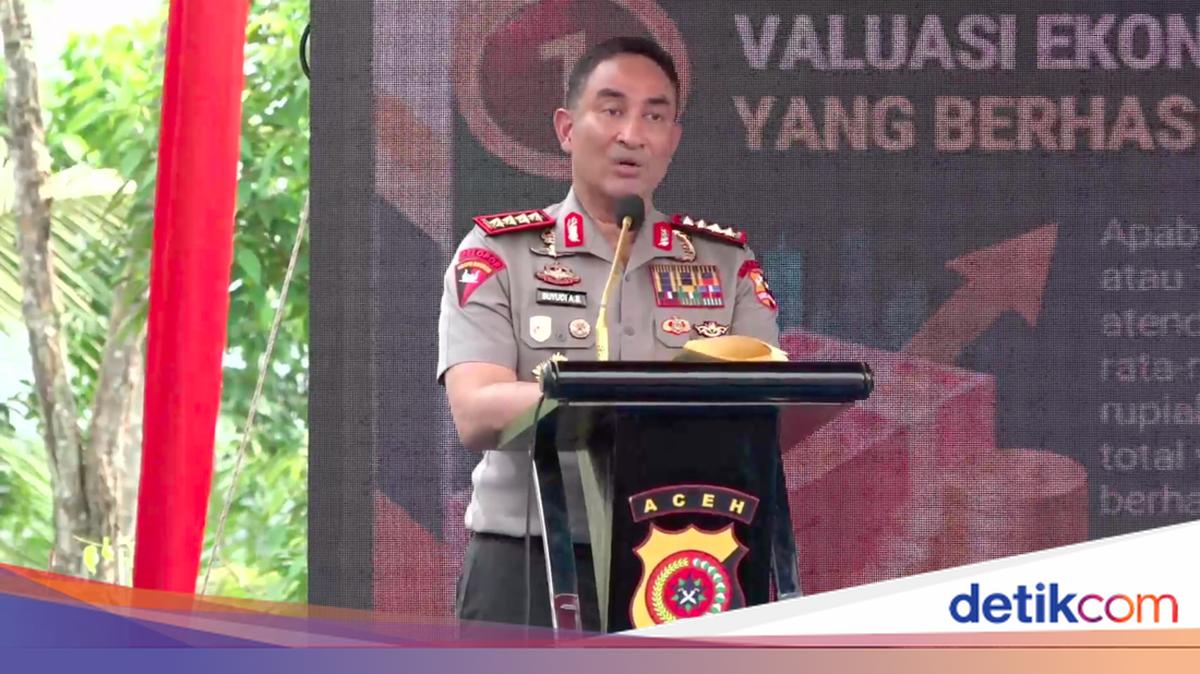
More than half a century later, the same question is being asked of General Suyudi Ario Seto. President Prabowo Subianto appointed him National Police Chief on 1 October 2026. His tenure is still in its early stages. That is precisely why every major step should be examined carefully rather than hastily turned into a new legend.
10.5 tonnes of narcotics and Hoegeng-like courage
A detikNews report on 27 October 2026 recorded the seizure of 10.5 tonnes of narcotics in a series of operations spanning three months. The haul included cannabis in Gresik, liquid methamphetamine in waters off Riau and a clandestine laboratory in Aceh; officers detained 59 people. The figures are substantial, and the networks involved crossed national borders.
Yet the most important fact is often lost amid the applause: the seizures were the result of joint work by the National Narcotics Agency (BNN), the National Police’s Criminal Investigation Department (Bareskrim Polri), Customs and Excise, and regional police commands. The operations also began before Suyudi became National Police Chief. Acknowledging the collective effort does not diminish his leadership; it is, rather, the most honest way to assess it.
Even 10.5 tonnes is not a finishing line. The fight against narcotics cannot be called complete if financiers, transaction controllers and those protecting the networks remain untouched. The public needs to see what follows: asset tracing, identification of the main actors and protection for those harmed. Seized evidence can be weighed, but the social damage caused by narcotics cannot be measured so simply in kilograms.
This is evidence, the article argues, of General Suyudi’s Hoegeng-like courage: applying the law fully and without fear. The 10.5-tonne figure may be the largest haul seized under a Bhayangkara chief in just three months.
When the law knocks on the force’s own door
The next test is more difficult. On 3 November 2026, Bareskrim Polri announced that former National Police Chief Listyo Sigit Prabowo had been named a suspect in an alleged illegal wiretapping case said to have targeted President Prabowo Subianto and several other figures. Investigators also named other senior officers as suspects; by 8 November, the number was reported to have reached four.
Under Suyudi’s leadership, the police formed a special team led by the head of Bareskrim to investigate the case. On 5 November, Suyudi stressed that the process was purely law enforcement, not an internal rivalry. The statement matters. Suyudi, the article says, has again demonstrated the importance of integrity and an unconditional commitment to the President and the Indonesian nation.
When the law must reach a former holder of the country’s top police post, the National Police Chief’s courage is tested not by speeches, but by whether he allows the process to continue without rank-based protection.
Being named a suspect is not a conviction: the allegation must be tested in court, and the right to a defence must be guaranteed. Until the investigation and evidentiary process are complete, the alleged wiretapping’s motive should not be turned into a political conclusion. What merits recognition now is the institution’s willingness to pursue a sensitive case, alongside the need for close oversight to ensure the process is credible.
There is an old temptation in any uniformed organisation to treat exposing a member’s wrongdoing as betrayal. In fact, allowing misconduct to go unaddressed damages the trust on which the uniform’s authority depends.
Suyudi has stressed that he will act firmly if any officers are involved. The article presents this stance as the reason nearly all Indonesians now greatly admire him, portraying him as an oasis amid the public distrust of the police in the past.
New hopes for a new Hoegeng
The philosopher Josiah Royce, in The Philosophy of Loyalty (1908), viewed loyalty as practical devotion to a cause. Moral loyalty does not mean defending a group regardless of its wrongdoing; it means upholding the good purpose that makes the group worthy of respect. For the police, that purpose is the law and the safety of citizens, not immunity for fellow officers.
In the light of Royce’s thinking, Suyudi’s loyalty should not be judged by how tightly he closes ranks, but by how open his institution is to scrutiny. Loyalty to the National Police means ensuring that the law does not stop at the gates of police headquarters.
The seizure of 10.5 tonnes of narcotics illustrates the scale of the fight against criminal networks. Meanwhile, the investigation into alleged wiretapping targeting the President, which has implicated a former National Police Chief, tests whether the law can reach both the circles of power and the police force itself.
These are the two arenas of courage long yearned for since Hoegeng’s time: confronting syndicates with substantial resources and connections, and allowing the law to investigate those who once held the force’s highest office. Together, they offer a chance to show that the principle of being ‘tough on the powerful’ can be put into practice, rather than remaining a phrase in a parliamentary confirmation hearing.
For that reason, calling Suyudi ‘the Hoegeng of today’ should be understood as both a hope and a demand, not a coronation. Hoegeng is remembered through a long record of conduct. Suyudi still has to prove that the firmness shown in major cases is also present in everyday service: citizens’ reports are followed up, errant officers are investigated, and people do not have to go viral to obtain justice.
Ultimately, what made Hoegeng great was not the rank on his shoulders, but his willingness to face risks while honouring his oath. Suyudi now stands at a similar crossroads. History will not count only tonnes of narcotics or the number of generals investigated. It will ask: after the cameras have stopped rolling, does the law continue to run its course?
People do not want to keep searching for a new Hoegeng. They are tired of asking when one will appear. That hope is now invested in Suyudi’s narrative of ‘Police with the People’.
They want to feel safe knocking on the door of a police station and to know that nobody can lock it when the law comes knocking, even if that person is a general.
Hoegeng proved that a police officer could lose his position without losing his honour. Suyudi now has the opportunity to prove that courage and honesty are not merely historical legacies, but principles still alive in the leadership of the National Police.
And if Suyudi remains steadfast in upholding those principles, history will have strong reason to record his name in the nation’s memory: General Suyudi Ario Seto, the new Hoegeng reborn today.
Source: jawawa.id (https://jawawa.id/newsitem/the-spirit-of-hoegeng-behind-general-suyudis-police-with-the-people-1794225124)
Originally published by detikcom (https://news.detik.com/kolom/d-8745374/semangat-hoegeng-di-balik-polisi-bersama-masyarakat-dari-jenderal-suyudi), translated from Indonesian