
The Silent Procession of Semana Santa in Larantuka, Indonesia, Gains Global Recognition, Enduring for 500 Years
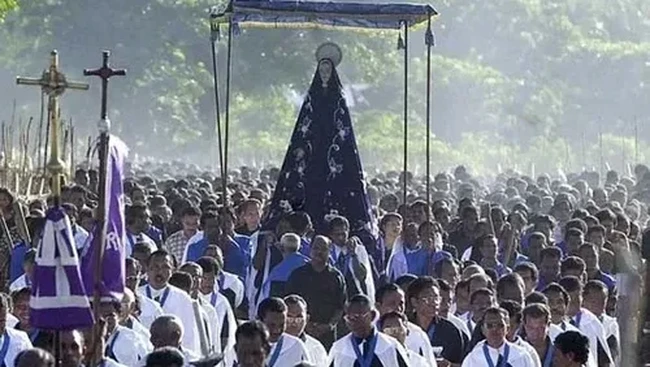
At the eastern tip of Flores, as the sun slowly sets over the Sawu Sea, the small town of Larantuka transforms into a moving stage of silence. Candles light up along the streets. Bells toll softly. Thousands of people walk in silence, following two ancient statues, Senhor Morto and Senhor da Pedra, carried in a slow rhythm, as if pulling time back five centuries. This ritual is known as Semana Santa. The tradition was born from a long journey across oceans, the politics of faith, and global trade in the 16th century. Semana Santa has roots in Catholic Europe, particularly Spain and Portugal. In the 16th century, after the wave of Protestant Reformation shook Europe, the Catholic Church responded through the Counter-Reformation movement. According to EBSCO, the issue at the time was simple: teachings were difficult for the general public to understand. Literacy rates were low, and access to scriptures was limited. The Church then changed its approach. The story of Jesus’s Passion was moved to open spaces. Street processions became a means of communication, with statues made to resemble real people, music and sequences of events arranged like a visual narrative. Each element served functions such as teaching, evoking emotion, and binding the faithful in a collective experience. This model developed strongly in regions like Andalusia in southern Spain. Cities like Seville and Malaga became primary references. Its basic structure remains the same to this day: brotherhood groups, statues (pasos), night processions, and predetermined routes. Semana Santa in Larantuka East Flores has one demographic fact that shapes the entire ritual landscape. The majority of its population is Catholic, with a strong concentration in Larantuka as the district capital. Semana Santa itself means Holy Week, a term originating from Portuguese. In Larantuka, it is carried out as a series of disciplines that begin well before Good Friday. It starts from Ash Wednesday. The faithful undergo a 40-day fast. There are communal prayers, Stations of the Cross, and the tradition of reciting semana in the Chapel of Senhor Morto every weekend. This becomes the preparation phase before entering the core procession. According to Exotic East Nusa Tenggara, the procession runs for one week and peaks on Good Friday. During the day, the parade starts from the chapel to the Cathedral of Reina Rosari. At night, the procession goes out again and circles the town via the same route each year. Along the route, there are eight armida stopping points that have been established. This number follows the sequence of Jesus’s Passion story. Each armida represents one phase, from the commissioning to the descent from the cross. Its management is handled by certain clans. Mulawato in Pantai Besar opens the series. Ama Kelen, Kapten Jentera, Riberu, Sau (Diaz), up to the Diaz Viera de Godinho family take roles in the following phases. The final stop is at the Chapel of Senhora Ana, guarded by the Amaleken Lewonama clan. Each time the procession stops, songs of lamentation are sung. Laments from the Book of Jeremiah, Popule Meus, and O Vos Omnes are sung in Latin and old Portuguese. The rhythm is slow, repeated, and maintains a silent atmosphere even though thousands are present. At the front of the line, symbols of suffering are carried in a fixed order: the cross, nails, crown of thorns, spear, up to lanterns. Without any change in position. From a local historical perspective, there is one story that continues to circulate. A young man named Resiona found a female statue on the shores of Larantuka. The statue was then stored in a korke, a traditional house, and treated as a sacred object. When missionaries arrived, the statue was symbolically identified as the Virgin Mary. Early records of the procession date back to the 17th century, around 1617. Details of the statue’s arrival are never fully disclosed. In Larantuka’s customary structure, such information falls into a category that is guarded and not freely discussed. Today, Semana Santa in Larantuka stands as one of the most unique Catholic traditions in the world. It carries traces of medieval Europe, Asian spice routes, and local Flores cosmology in the same space. The procession has not turned into a performance; it is still maintained in a slow rhythm, with strict symbolic discipline. On the streets of Larantuka, history walks, illuminated by candles, and repeats every year to commemorate the Passion, death, and resurrection of Jesus Christ.
Source: jawawa.id (https://jawawa.id/newsitem/the-silent-procession-of-semana-santa-in-larantuka-indonesia-gains-global-recognition-enduring-for-500-years-1775199965)
Originally published by CNBC Indonesia (https://www.cnbcindonesia.com/research/20260402123652-128-723523/prosesi-sunyi-semana-santa-larantuka-ri-mendunia-bertahan-500-tahun), translated from Indonesian