
The Silent Danger Threatening Indonesian Workers: Employers Report AI Concerns to ILO
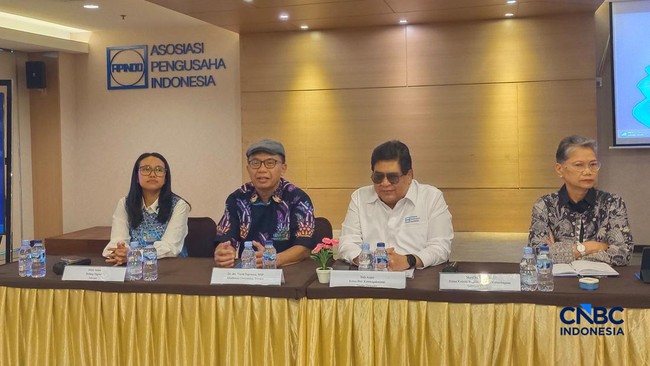
The Indonesian Employers’ Association (Apindo) has cautioned that the development of artificial intelligence (AI) must not erode employment opportunities in Indonesia. Technology should be positioned as a tool to enhance worker productivity, not to replace the role of humans. Apindo’s Head of Employment, Bob Azam, stated that the issue of AI was one of the main topics discussed at the 114th International Labour Conference (ILC) held by the International Labour Organization (ILO) in Geneva, Switzerland, from 1-12 June 2026. According to Bob, the current technological transformation is occurring very rapidly and is beginning to change the way people work, run businesses, and earn a living. ‘We hope that with the advent of AI, technology does not end up eroding the workforce. Technology must be positioned as a tool to increase productivity. So, we hope the application of AI is accompanied by a people-centred concept. The centre must remain on humans, on the workforce,’ Bob said during a Media Workshop at the Apindo National Executive Board Office in Jakarta on Tuesday (23/6/2026). He confirmed that Apindo had conveyed these concerns to the Director-General of the ILO while attending the conference in Geneva. ‘We do not want the Indonesian people to be less productive than their AI. This was also our concern when we were in Geneva, Switzerland, and we have already conveyed our initiatives regarding AI to the ILO Director-General,’ he said. Bob assessed that technological development and automation can indeed significantly increase productivity. However, on the other hand, this condition also has the potential to reduce the need for labour if not properly anticipated. He cited the experience of visiting a modern agricultural area on Jeju Island, South Korea. According to him, the application of smart farming resulted in far higher productivity compared to conventional methods. ‘The productivity is so high, it is 100 times that of conventional plantations with an investment that is 10 times greater. The investment is 10 times, but the productivity is 100 times,’ he revealed. Nonetheless, this situation raises new concerns regarding the future of work. ‘So, looking at this, I am not worried about a food shortage, but I am worried we will have no jobs. This is what we see with the orange revolution and also AI,’ he stressed. Therefore, Apindo is pushing for workforce skills development to be a primary focus for the government. Bob noted that the employment discourse is still dominated by issues of minimum wages, outsourcing, and platform workers, while discussions on improving worker competence remain minimal. ‘Unfortunately, the budget for training is not widely discussed. What is always discussed here is the minimum wage, then outsourcing, platform workers. But we never discuss how technology enters, the other employment ecosystems, so our world of work never really progresses,’ Bob explained. He noted that the government already has a large funding scheme for the human resource development of professional or white-collar workers through the Education Fund Management Institution (LPDP). However, similar support for workers who rely on physical labour, or blue-collar workers, is still deemed inadequate. ‘We hope that in the future there will be fundraising for workers. For white-collar workers, the government has already prepared more than Rp100 trillion for the LPDP. But for blue-collar workers, there is nothing,’ he said. Furthermore, Apindo is requesting that job creation become the main indicator of national economic development success amidst the rapid flow of digitalisation and AI. ‘The urgency for us to create jobs as the KPI for all our success is getting higher, not just for the government. So, we feel that the KPI is job creation,’ Bob stated. He said that even developed countries like the United States make labour absorption one of the main considerations in making economic policy decisions. ‘A country as large as America, before making a policy to raise interest rates or a trade tariff policy, looks at labour absorption as a KPI. Especially us as a developing country,’ he concluded.