
The Siak People in the View of Buya Hamka
The term ‘Orang Siak’ is often heard in West Sumatra and Riau. This term is usually applied to pious people who are diligent in worship.
This term has also been included in the Kamus Besar Bahasa Indonesia (KBBI). However, the entry in the KBBI does not include the word ‘orang’. Only ‘Siak’ is listed. Its meanings are:
A person (santri) who guards or looks after a mosque;
A person who usually lives in a mosque and receives sustenance from people’s alms.
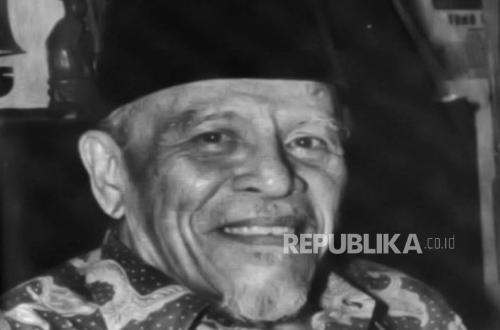
Regarding the term Orang Siak, Prof Hamka (Buya Hamka) also once explained its meaning. He wrote about it in a paper presented at the Riau History Seminar, initiated by the University of Riau in Pekanbaru on 20–25 May 1975.
In his notes in the book Dari Perbendaharaan Lama, Buya Hamka outlined several opinions about the meaning of the word Siak, which is the name of a river flowing through Riau. It later became the name of a kingdom established on the banks of that river.
According to Buya Hamka, there is one opinion about the meaning of Orang Siak, namely a person regarded as an expert in the Islamic religion. There are also those who say that Orang Siak are lebai-lebai or mosque caretakers.
Buya Hamka said that in Minangkabau, to this day in everyday language, what is called Orang Siak is a person expert in the Islamic religion. It has the same meaning as the Javanese understanding of santri.
“A person like myself (Buya Hamka), if in Minang, would be included in the Orang Siak group. If someone lives diligently in religion, people say: ‘That so-and-so is truly Siak!’,” said Buya Hamka.
However, in the Malay Peninsula (West Malaysia), what is generally called Siak are indeed the daily administrators of mosques. Sometimes ‘Orang-Orang Siak’ is interpreted as people assigned to manage, bathe, and perform funeral prayers for the deceased.
“However it is interpreted, whether in the elevated manner of Minangkabau or the somewhat lower manner of Malaysia, the word Siak is clearly, in the perception of the Malay people, very closely tied to religion,” said Buya Hamka.
But, Hamka continued, regarding the words Orang Siak, he once heard from the late Dr Syekh Abdullah Ahmad, a great ulama renowned in Minangkabau (died 1934), that the famous Minangkabau proverb ‘Adat menurun, syara’ mendaki’ (custom descends, religious law ascends) — the ‘ascending’ is from this Siak region. He (Dr Abdullah Ahmad) rejected the common interpretation of that time, which said that syara’ ascended from Ulakan, Pariaman, brought by Syekh Burhanuddin Ulakan to Minangkabau upon his return from Aceh, where he studied under Syekh Abdurrauf Singkil. He (Syekh Burhanuddin) died in 1111 Hijriyah.
According to Buya Hamka, Dr Syekh Abdullah Ahmad did not accept the opinion that it ascended from Ulakan. Because if that were so, Islam would only have been in Minangkabau for 250 years, or two and a half centuries. He said that syara’ ascended from Siak, and his evidence was:
“They are the people who have been experts in the Islamic religion from ancient times until now, called Orang Siak.”
Siak is this eastern Minangkabau, from Rokan, Kampar, and around the Siak River. If experts in the Islamic religion are seen, they are respected and called Orang Siak to this day. Therefore, according to Dr Abdullah Ahmad: “Your ancestors were from Kampar.”
“The Rokan region and around the present Siak River — these were the teachers of our ancestors, who Islamised us, the upstream people, the people of the Minangkabau interior,” said Buya Hamka.