
The Sharia Bank Next Door: Close to Us, Clear in the Eyes of the Law
The Sharia Bank Next Door: Close to Us, Clear in the Eyes of the Law
Note: This article represents the author’s personal opinion and does not reflect the views of CNBCIndonesia.com’s editorial team.
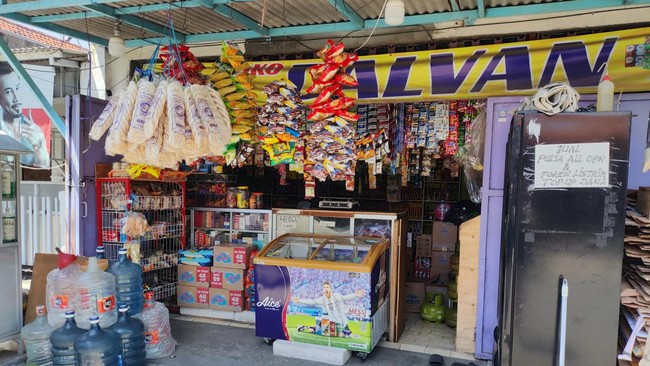
Bu Siti runs a small shop in a village. It stocks the usual things: rice, cooking oil, eggs and a few everyday essentials. But one service brings the neighbours in more often: they can withdraw cash and pay their electricity bills there.
The nearest bank branch is an hour away by motorbike. To withdraw money, residents have to set aside time, pay for transport and leave their work. At Bu Siti’s shop, they can take care of it while buying sugar.
Her shop is not a branch. But for local residents, it is where the bank feels present. Bu Siti is a fictional character, but her story is familiar. According to BSI, its agent network has exceeded 135,000 across Indonesia, from Sabang to Merauke, with transactions worth Rp52.80 trillion by August 2026—up 38.41 per cent on the previous year. The number of agents has also risen by an average of 8.13 per cent a year.
Those figures point to both an opportunity and unfinished work. Agents bring Islamic banking closer to communities, but physical proximity does not necessarily mean the legal relationship is clear. When a transaction goes wrong, residents still ask the simplest question: who is responsible?
A bank representative, not just a shopkeeper
So what is Bu Siti’s position in relation to the bank? She does not own the bank. Nor does becoming an agent automatically make her a bank employee. She is a partner who provides certain services under an agreement and within the authority granted by the bank.
This relationship can be understood through the concept of agency. Article 1792 of the Indonesian Civil Code defines it as an agreement to conduct an affair on behalf of the principal. In Sharia principles, representation is known as wakalah and is governed by DSN-MUI Fatwa No. 10/DSN-MUI/IV/2000.
Where remuneration is involved, DSN-MUI Fatwa No. 113/DSN-MUI/IX/2017 on the wakalah bil ujrah contract applies. In other words, the agent exercises delegated authority; they do not act as a bank at their own discretion.
For that reason, what agents may do, and who bears the consequences, must be clear from the outset. Customers may not care about legal terminology. What matters is that their money is safe, transactions are recorded and problems are resolved without being passed from one party to another.
Responsibility must not become more distant
There are three things to safeguard when a bank operates through a local shop. First, responsibility must be clear. When an agent acts within the scope of their authority, the bank should not treat any resulting problem as a private matter between the agent and the customer.
Article 19 of Law No. 8 of 1999 on Consumer Protection provides a general basis for holding businesses responsible for consumer losses caused by the services they provide or market.
Responsibility will, of course, depend on the facts and the legal relationship between the parties. But customers should not have to work all of that out before they can make a complaint. The bank should receive the report, investigate the transaction and provide a resolution. Banking services should not be close at hand while the route to a remedy remains distant.
Second, the limits of the agent’s authority must be clear. An agent is a trusted representative who needs to know which services they may provide, which procedures they must follow and which actions are prohibited.
An agent may be held responsible for misconduct or negligence, but that does not automatically remove the bank’s responsibility, including where its training and supervision have been inadequate. Increasing the number of agents must therefore go hand in hand with more support: agents should be trained and monitored, and given access to an assistance channel.
Third, transactions must be documented. A receipt or notification may seem trivial. But if money is debited and not received, or the amount is disputed, the record shows what happened.
Evidence protects both customers and agents. OJK Regulation No. 1/POJK.03/2022 on Branchless Financial Services in the Context of Inclusive Finance even requires banks to provide customers with proof of transactions, as stated in Article 26(2). Bu Siti should not have to handle a complaint based on memory alone, and customers should not have to say, ‘I paid earlier.’
Sharia principles must not stop at the bank’s door
Because the service is called Islamic banking, residents are entitled to expect Sharia principles to apply at Bu Siti’s shop too. That expectation has a legal basis. Article 26(1) of Law No. 21 of 2008 on Sharia Banking requires Sharia business activities, products and services to comply with Sharia principles, while Article 32 requires Islamic banks to have a Sharia Supervisory Board (DPS) to oversee their activities for compliance.
OJK Regulation No. 2 of 2024 on the Implementation of Sharia Governance for Islamic Commercial Banks and Sharia Business Units strengthens the DPS’s role, including a requirement to report to OJK every six months.
In my previous article for CNBC Indonesia, ‘The Forgotten Radar: Reading Sharia Compliance Before a Crisis Speaks’, I highlighted how the DPS is often brought in at the end of a process. At the local shop, the issue is similar—and closer to home.
Does that oversight extend to the shop? Laku Pandai agents, including BSI Agents, are an extension of the bank. Article 20(1) of OJK Regulation No. 1/POJK.03/2022 requires banks to monitor and train agents and makes them responsible for agents’ actions within the scope of their services.
Since agents’ services form part of the bank’s activities, in my view DPS oversight should cover them too. For wakalah bil ujrah contracts, Fatwa No. 113/2017 even requires a DPS opinion before the contract is applied to a business activity or product.
Beyond that, extending the DPS’s reach to agents is my interpretation and proposal. DPS members need not visit every shop, but they should ensure from the outset that the wakalah contract, agent remuneration and limits on the agent’s authority are clear.
Fatwa No. 113/DSN-MUI/IX/2017 requires remuneration to be clearly specified, whether as a fixed amount, a percentage or an agreed formula. It also states that an agent is not obliged to bear losses resulting from their actions—unless they do something they should not, fail to do something they should, or breach an agreed condition. An agent who charges fees beyond those agreed therefore breaches the contract and obscures remuneration that should have been clear.
The agent training already required under the OJK regulation could be expanded to include the key Sharia principles, particularly which fees may be accepted and which requests must be refused. DPS reports should also cover agent services, so that Sharia compliance does not depend solely on good intentions.
Trust needs to be supported by a system
Residents’ trust in Bu Siti is an important asset for Islamic banking services, but it needs to be underpinned by clear rules and institutions that fulfil their responsibilities. Lawrence Friedman’s framework of legal substance, structure and culture explains why: consumer protection does not end with the existence of rules; it also depends on implementation and everyday practice.
In Islamic banking agent services, all three come together in a very simple place: a shop. The substance lies in the agency agreement Bu Siti signs. The structure consists of bank staff who monitor her, the Sharia Supervisory Board that assesses the contract, and a complaints number that customers can call.
Culture is reflected in one small habit: giving and asking for a receipt. Among all these elements, trust has a special place. Residents go to Bu Siti because they know her. They know her shop, her home and even her family, and almost none of them will have read a fatwa or cooperation agreement before handing over their money.
Personal trust opens the way to financial services, but it must not replace institutional protection. Precisely because residents trust the agent, the bank must ensure that this trust is supported by sound procedures and clear accountability. A single transaction handled poorly can leave a stronger impression than a hundred that go smoothly.
For that reason, the number of shops and the value of transactions are not enough as measures of success. We should also ask whether agents understand their duties, customers know their rights, complaints are genuinely resolved and Sharia principles are applied consistently—in a village shop just as in a branch.
Banks should equip their agents, regulators should ensure that the allocation of responsibilities is clear to the public, and customers can start with a simple habit: check the transaction, ask for proof and keep it.
Bu Siti’s shop can remain simple. But protection for the people who transact there must not be makeshift. Islamic banks need to be close at hand—and clear in the eyes of the law. Wallahu a’lam bish-shawab.
Source: jawawa.id (https://jawawa.id/newsitem/the-sharia-bank-next-door-close-to-us-clear-in-the-eyes-of-the-law-1793587858)
Originally published by CNBC Indonesia (https://www.cnbcindonesia.com/opini/20261102084046-14-781371/bank-syariah-warung-sebelah-dekat-di-mata-kita-jelas-di-mata-hukum), translated from Indonesian