
The shadowy network of brokers exploiting maritime interns
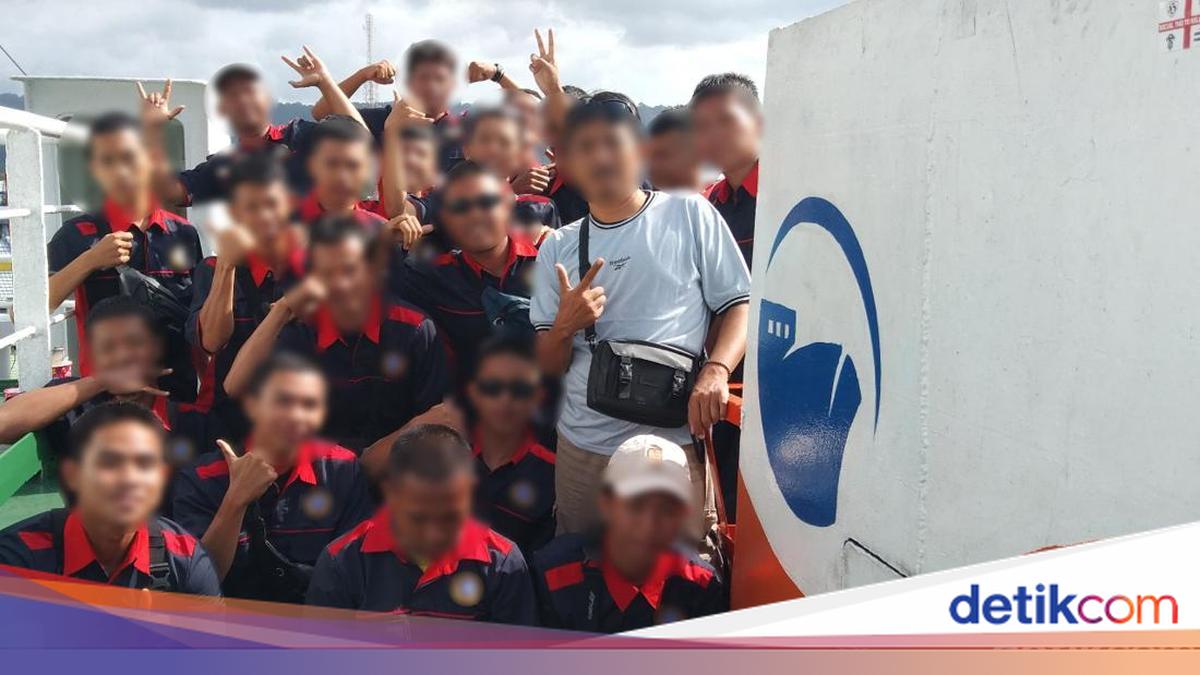
Kamal—not his real name—is a vocational-school graduate in maritime studies who now spends his days working as a waiter at a restaurant. Since graduating a few months ago, he has had few options. He also says he has had enough and is unwilling to work in his trained profession as a seafarer.
The teenager studied maritime affairs at a vocational secondary school in Central Java. Over the three years of his education, he says he spent tens of millions of rupiah. But misfortune struck in his final year, shortly before graduation: Kamal became a victim of an alleged scam involving a broker or placement company running an internship programme, known as practical work experience (PKL), aboard fishing vessels.
In the run-up to mid-2025, Kamal’s school opened a compulsory internship programme for Year 12 maritime students. The school did not work directly with a ship-owning or operating company, but instead with a placement agent, Abdul Rohman, also known as Abdul Rachman.
The students were due to go to sea on fishing vessels departing from Benoa Port in Denpasar, Bali. Kamal was required to pay the school more than Rp3.5 million to take part. He was later asked to pay a further Rp3 million, allegedly to cover basic safety training and the production of a seafarer’s pocketbook.
The school sent Kamal and 19 classmates to Bali by road, arriving on 19 June. On arrival, they were met by Rohman, the broker.
Under Rohman’s direction, Kamal and the other students were taken to South Denpasar and housed in a temporary shelter. Kamal says the accommodation was deeply inadequate: they had to sleep close together in a cramped room, without proper bedding.
For food, they were given takeaway rice with an egg as a side dish twice a day. Kamal says he was disappointed because the arrangements did not match the fees they had paid.
“It was completely unacceptable. There were no beds or proper rooms. We slept on the floor, with just a mat, and even that was completely unsuitable in that empty house,” Kamal told detikX.
At the shelter, the students began to suspect that something was wrong. They never received the promised basic safety training, despite having paid for it. Kamal and his classmates were also forbidden from wearing school clothing or other identifying items.
“They said we weren’t allowed to wear our school uniform there. We were told to remove the school name. For the internship, we were given overalls, but we weren’t allowed to wear them because they had the school name on them. He told us to say we were ordinary crew members, like the others,” he said.
It later emerged that the students had allegedly been deceived and trapped by the placement agent. They were threatened and forced to conceal their status as students. The plan was to place them on several fishing vessels as regular crew or deckhands, rather than as cadets or students. The broker was said to receive payment from the company for arranging the placements.
Although the students were eventually rescued and the internship cancelled, Kamal says he was traumatised and has no intention of working at sea after graduation.
“I’ve had enough. Never again. I feel like I’ve been cheated,” he said.
His trauma was compounded by what he saw as the school’s failure to take responsibility. Kamal believes the school and teachers tried to cover up the case. Parents were not directly told why the students’ internships had fallen through.
“The school told the parents the internship had been cancelled because of bad weather and a shipwreck. That was how it was explained to them,” Kamal said.
The case involving Kamal’s year group was not the first of its kind. The school had apparently worked with the broker for some time, and students in earlier cohorts had faced similar problems. They were afraid to report them.
“Students from earlier years wanted to report that the internship conditions weren’t as promised, but they didn’t dare. This has happened before, but our cohort was the first to speak up. The earlier cohorts were afraid,” Kamal said.
After the incident, the students received neither full refunds nor compensation. Some were given about Rp3 million back—roughly half of what they had paid—while the rest of the money could not be accounted for. Some victims were offered a replacement internship free of charge, but others refused because of their trauma.
“The school didn’t compensate us. They said the Rp3 million for the basic safety training and seafarer’s book would be returned, but we don’t know what happened to the rest,” he said.
Nevertheless, all the students received internship certificates at graduation, even though not all of them had completed a replacement placement. The events left most of them unwilling to work at sea.
Kamal says most of his classmates have also rejected work aboard ships. Since graduating a few months ago, they have chosen other professions or gone on to university. They believe work on Indonesian fishing vessels does not offer adequate pay for the risks involved.
“The pay is low and the work is hard. Safety is poor too. There are risks on board; if you fall out with someone, it’s frightening. You’re afraid someone might throw you into the sea,” Kamal said.
Many students affected
Kamal and his classmates were not alone. The case, which occurred in mid-2025, allegedly involved students from at least four vocational schools in different regions. A total of 76 students are believed to have been affected.
According to documents and witness accounts, the case came to light after crew members at Benoa Port reported to staff from Destructive Fishing Watch (DFW) Indonesia that they had seen several young people who appeared to be underage moving around the port.
On Friday, 27 June 2025, the report was passed to the harbourmaster at Benoa Fishing Port in Bali. An investigation found that students who said they were undertaking internships were allegedly being forced to work as crew members for PT Bandar Nelayan.
At 1.13pm that day, PT Bandar Nelayan was found to have applied for sailing clearance for five vessels: KM Bandar Nelayan 310, 298, 588, 232 and 502. A review of the applications showed that KM Bandar Nelayan 588 had six people suspected of being underage or students on board, while KM Bandar Nelayan 502 had three suspected students.
At about 1.30pm, the harbourmaster inspected the five vessels. Nine students were found aboard KM Bandar Nelayan vessels 588 and 502.
“The students and the school believed he was a representative of the company that owned the vessels in Benoa. It turned out he wasn’t a company representative at all. He was a recruitment agent—or, to put it bluntly, a broker,” Fariz, a member of DFW Bali’s staff, told detikX.
PT Bandar Nelayan’s management told the harbourmaster it did not know the nine people were still students. The company said they had been referred by a crew recruitment agent who had described them as graduates or people undertaking internships.
The harbourmaster asked the nine students to provide statements at the Fishing Vessel Service Office and reported the findings to senior officials for follow-up.
Investigators found that the students came from several schools: 14 from Indramayu, 11 from Balikpapan, 19 from Cilacap and 32 from Sukabumi. They had paid varying amounts, from around Rp6 million to Rp10 million each, allegedly for basic safety training. They said they had not received any training.
“When we met them, the students were panicking and asking for help. They were worried because things had seemed wrong from the start. First, they had been handed over to someone who wasn’t actually a company representative. Second, their work status was wrong: they were supposed to be cadets learning, but had become deckhands,” Fariz said.
In statements to officials, the students said Rohman had forbidden them from telling the company they were students and from wearing clothes identifying their school. They said Rohman selected students over 18 to work as crew for PT Bandar Nelayan, while the others were housed in an unfit shelter with few facilities.
“When the students were taken from the shelter to the port to be placed on vessels, they were briefed repeatedly: if anyone asked, they were not to say they were students,” Fariz said.
“He specialises in recruiting students for internships. He takes them from many schools,” he added.
According to examination documents, Rohman admitted receiving students from the school and offering them work at PT Bandar Nelayan on the basis that they were not students, or had already graduated. One explanation given to the students was that they might be sent to South Korea.
The harbourmaster then instructed that the students’ status must no longer be concealed. The company was warned not to employ students who were still in school, even if they were old enough to work.
Fariz said DFW had reported the case to Bali Regional Police. The report was accepted and a raid was carried out. Rohman was briefly detained and questioned, while the students were evacuated. However, he was reportedly not prosecuted.
“At the case conference, it was decided that this was not a human-trafficking offence or a labour violation. In the end, the evidence was considered insufficient and the case was closed. We were told that the Manpower Office had suspended the business licence of Rohman’s company, CV Sudiwa Utama,” Fariz said.
When asked about the case, Hartono, a representative of PT Bandar Nelayan, said the company had never used brokers to recruit crew members.
“Our company does not use brokers to recruit crew. We recruit crew in accordance with the applicable procedures and regulations,” he told detikX.
Rohman, the alleged broker and a representative of CV Sudiwa Utama, told detikX he was still arranging placements for crew on fishing vessels. He claimed, however, that he could no longer place internship students.
Still happening today
Despite a violation of Ministry of Marine Affairs and Fisheries Regulation No. 4/2026, some vocational schools still use brokers or placement agents to arrange student internships. The government now requires students undertaking sea-based practical training to contract directly with the ship-owning company, without an intermediary.
DetikX spoke to education staff at several secondary schools in different parts of Java’s northern coastal region that offer maritime courses. Almost all said they still used brokers.
Egi—not his real name—a teacher at one school, said using a broker or third-party agent had long been standard practice. Schools resorted to it because they said they struggled to supervise students placed outside their home area.
“We usually work with a third party for student internships. It’s been that way for a long time. We trust the third party to support students if there are problems with the vessel, the company and so on. They act as the intermediary,” Egi told detikX.
But because schools did not contract directly with vessel owners, Egi said he found it difficult to monitor students on placements. He could not ensure that they worked normal hours or in line with the rules, arguing that work at sea required interns to be on call at all times.
“They follow the vessel’s working hours, even though they’re cadets,” he said.
Egi acknowledged that the practice had caused problems. On one previous occasion, a placement agent engaged by the school had neglected students.
“We’ve cut ties with a few agents before. We usually move the students to another placement company. The students said the agent didn’t really look after them or provide proper support,” he said.
Aan—not his real name—a teacher responsible for maritime studies at another vocational school in Central Java, said his school was also forced to use brokers because many vessel-owning companies were reluctant to accept interns.
“We still use third parties. We usually pay the agent Rp1.7 million per student, and in some cases Rp2.1 million,” Aan told detikX.
The costs charged by placement companies were said to keep rising. During the process, agents would often demand additional payments from students.
“They monetise everything. If you haven’t spent enough time at sea, you have to pay more. If you need something, you have to pay again. It would be easier if we could deal directly with the vessel owner. Strangely, companies seem afraid to work with schools. I’ve approached companies and spoken to them, but they tell me to contact this particular man—the broker or agent—instead,” Aan said.
Aan also said he could not guarantee that students received decent working conditions or that regulations were followed. The school had no direct communication with the vessel owners, while brokers were said to be unwilling to provide sea-employment agreements.
The communication problems also affected the length of internships. Some students ended up at sea for nearly a year because they were not brought back on time.
One document provided by an agent deliberately listed students as deckhands or crew members, rather than cadets, which was their proper status.
“There were eight students here who missed their national exams because they were away. They didn’t graduate until the following year. If the exams are in April, for example, the students might not return from sea until June,” Aan said.
Students also faced a culture of violence aboard fishing vessels, which was widespread and treated as normal.
“We’ve told them that if they’re working on a vessel and ask for a spoon but get a hammer, the hammer might be thrown at them. Violence may happen on board, but it’s treated as normal,” he added.
Aan said student internships were therefore risky. “To be honest, using a third party carries a high risk. There was a student from another school who went missing,” he said.
He urged the government to take a more active role in coordinating the recruitment of students for fishing-vessel placements.
“So there won’t be brokers any more. If students go aboard a vessel, it should be through a single channel. If there are lots of channels, I’m sure there will be more violence and other problems. With one channel, there should be fewer,” he said.