
The Seriousness of Shutting Off the Rice Import Tap
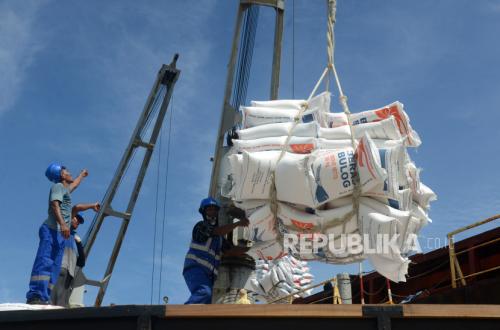
It must be honestly acknowledged that Indonesia has succeeded in stopping rice imports thanks to several key factors. Firstly, the government focused on increasing local rice production by strengthening grain absorption from farmers by Bulog. Secondly, it has preserved agricultural land from conversion. In line with this, Coordinating Minister for Food Zulkifli Hasan emphasised the importance of regional governments’ role in supporting food self-sufficiency and protecting agricultural land. The halt on rice imports starting in 2025 was also determined by various supporting factors, including increased local production, a strategic main harvest, and optimal grain absorption by Bulog. Additionally, inflation was controlled at 1.54 percent in 2024, one of the lowest rates since 1958. The policy also contributed to lowering international rice prices from 640 US dollars to around 400 US dollars per metric ton. A critical note is whether this import halt policy will be sustainable or only for 2025. As citizens, we certainly hope the government can perpetuate the cessation of rice imports. Despite many negative sentiments regarding its continuity, we remain optimistic that the government will be able to sustain this policy. President Prabowo Subianto’s administration’s determination to stop rice imports starting in 2025 deserves praise from all citizens. For an agrarian nation that has several times achieved rice self-sufficiency, importing rice could be considered an embarrassment that must be avoided. Rice imports are not a policy to be proud of. If Indonesia was once recorded as one of the world’s largest rice importers, that should never be considered a national achievement. Instead, it should serve as a moment of self-reflection: why must a nation with abundant agricultural resources implement a rice import policy? The government aspires to stop rice imports by the end of 2025 as part of its effort to achieve national food self-sufficiency. President Prabowo stressed the importance of adopting advanced technology, increasing productivity, and investing in human resources to reach this goal. The government’s rice stock is currently quite secure, with the government’s rice reserve reaching 3.8 million tonnes, the highest stock in history. The estimated national rice stock until the end of 2025 is 12.5 million tonnes, sufficient to cover consumption needs for nearly five months into 2026. The Head of the National Food Agency, Andi Amran Sulaiman, stated that the national rice stock is very adequate and safe for the upcoming Ramadan and Eid periods. The government is also continuously maintaining price and stock stability across various regions. The government appears very serious in managing the national rice sector. Although the government is quite optimistic that the nation will be able to stop rice imports in the future, all these hopes will be buried forever if we are negligent in managing rice affairs in this free land. Several factors could cause Indonesia to import rice again next year, including population growth, high per capita rice consumption, a decline in harvested area due to climate change or irrigation issues, low national rice stocks, and a weak rupiah exchange rate. Regardless of these factors, the effort to sustainably shut off the rice import tap requires an absolute prerequisite: abundant domestic rice production. This is one reason why the government’s serious push to maximise rice production towards self-sufficiency deserves appreciation.