
The Secret to Starfish Fertility: A Key to the Future of Human Reproduction
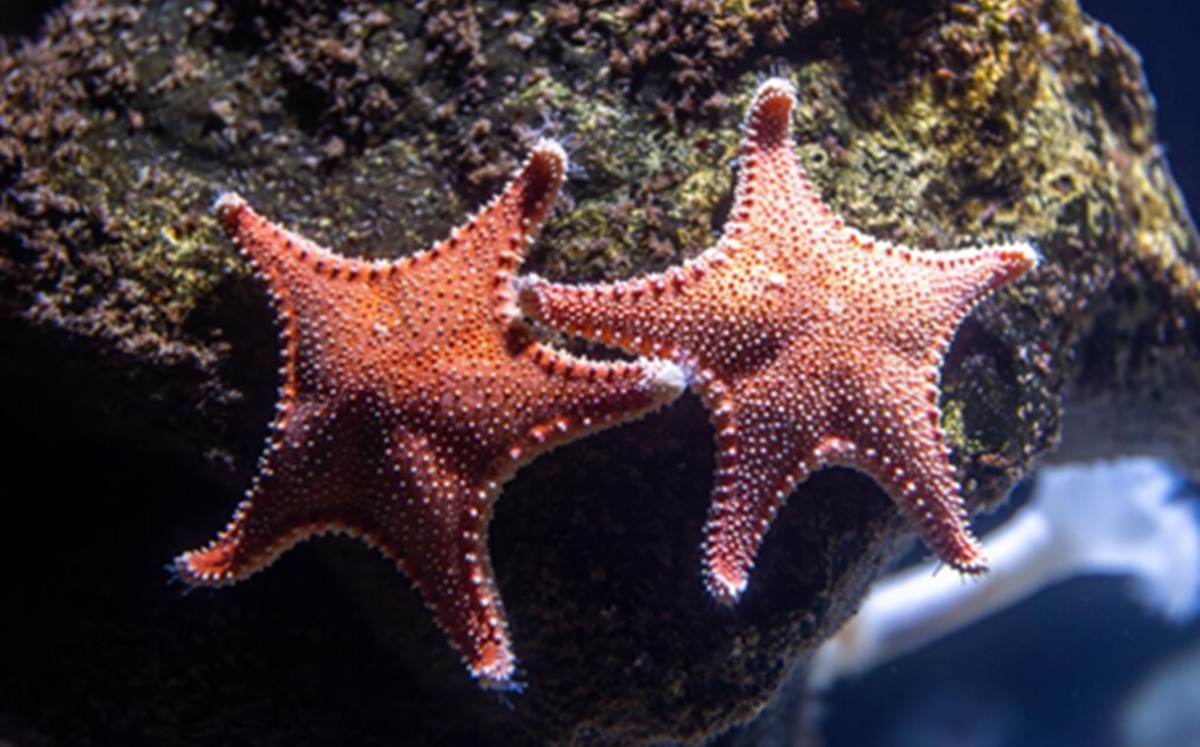
The bat sea star, a spiny orange creature inhabiting the ocean floor capable of living up to 200 years, holds a surprising biological secret. A recent study has revealed that sea star ovaries possess genetic similarities, cell types, and signalling processes remarkably similar to human ovaries, despite the two species having diverged evolutionarily over 500 million years ago.
The research, published in the journal Nature Communications, was led by Zak Swartz, a research scientist at the Eugene Bell Center in the Marine Biological Laboratory. Swartz’s team successfully mapped the cell types forming the bat sea star’s ovaries and compared them with human reproductive biology. These findings position the sea star as a promising new model for studying human fertility, oocyte development, and reproductive ageing.
Visually, the reproductive strategies of humans and sea stars are polar opposites. Humans produce their entire lifetime supply of eggs while still embryos in the womb. These eggs remain dormant for years, maturing gradually after puberty, and are depleted with age, eventually triggering menopause.
In contrast, sea stars can live for up to two centuries and continue to produce millions of new eggs throughout their lives. These eggs are released directly into the sea for external fertilisation. However, when Swartz’s team examined the cellular architecture behind these vastly different strategies, they found that the underlying mechanisms are actually very similar.
In human ovaries, each egg is surrounded by supporting cells known as granulosa cells. These cells are responsible for keeping the egg dormant until there is a signal for it to develop and be released. The research team found that bat sea star eggs are also surrounded by similar supporting cells that perform the same fundamental function.
“From an evolutionary perspective, this shows that these cell types play a very fundamental role in reproduction,” said Swartz.
Furthermore, the research team discovered a network of interconnected neuron-like cells in the outer layer of the sea star’s ovaries. In vertebrates, reproduction is regulated by signals from the brain to the reproductive organs via hormonal pathways. Given that sea stars lack a brain, scientists believe that their ovaries possess an inherent neuroendocrine system capable of regulating their own functions.
“There are many animals out there that do not have a brain but do have ovaries. How do they regulate reproduction in such a situation?” Swartz remarked.
The most medically significant aspect of this research is the presence of germline stem cells within the fractal-like branching structure of the sea star’s ovaries. These cells are believed to be capable of continuously renewing their egg supply for centuries. Unlike mammals, where egg-producing cells are depleted once used, sea star cells can produce eggs while simultaneously renewing themselves.
“Because sea stars genetically possess a gene sequence quite similar to ours as humans, they must activate or deactivate those same genes in very different ways to allow long-term stem cells to survive,” Swartz concluded.
Understanding how these genetic switches operate is the next step in the research. If the genes are similar but regulated differently, scientists hope these findings could pave the way for new therapies to restore fertility or optimise stem cell treatments in humans in the future.
Source: jawawa.id (https://jawawa.id/newsitem/the-secret-to-starfish-fertility-a-key-to-the-future-of-human-reproduction-1782373844)
Originally published by Media Indonesia (https://mediaindonesia.com/humaniora/904114/rahasia-kesuburan-seumur-hidup-bintang-laut-kunci-masa-depan-reproduksi-manusia), translated from Indonesian