
The Secret of Interstellar Comet 3I/ATLAS: Born in the Coldest, Darkest Region
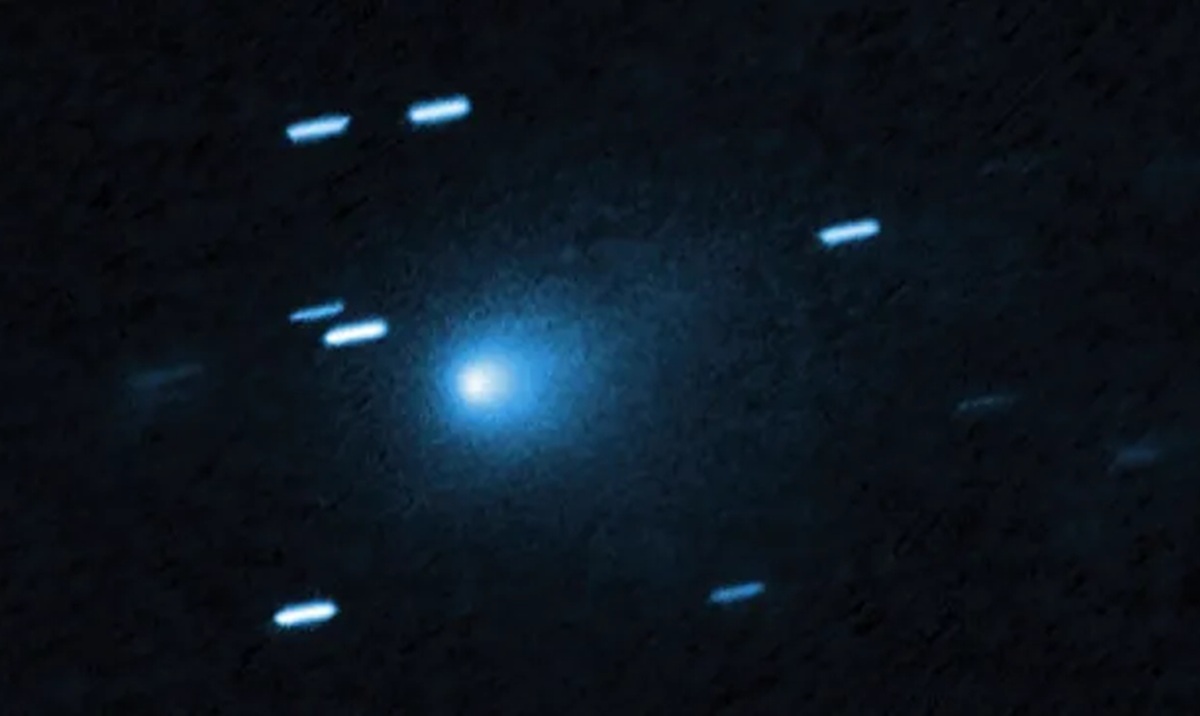
It has been more than a year since interstellar comet 3I/ATLAS first captured the world’s attention as the third object from outside the solar system detected passing through our cosmic neighbourhood. To this day, astronomers continue to uncover new clues about where this alien object actually came from.
For the first time in the history of astronomy, researchers have succeeded in analysing charged particles (ions) in the tail of an interstellar comet. The analysis revealed that 3I/ATLAS has a far higher nitrogen content compared to ordinary comets originating from our solar system. The finding provides an important clue about the formation process of this unique object.
“Finding that this comet is very rich in nitrogen tells us that it most likely formed in extremely cold conditions, far from its parent star,” said Lea Ferellec, a researcher at Northumbria University, in an official statement.
Ferellec’s team used the William Herschel Telescope, located in the Canary Islands, Spain. They employed a sophisticated optical fibre instrument called WEAVE to capture the spectroscopic data.
Previously, most astronomers focused only on observing the coma, the envelope of gas that forms when the Sun’s heat sublimates the ice on the comet’s nucleus into vapour. However, the coma is not the only structure that forms as a comet approaches the Sun.
At closer range, the comet is battered by high-energy solar wind, which pushes its material outwards to form its characteristic tail. In this process, high-energy particles from the solar wind strike the comet’s molecules and transfer electrical charge, turning them into charged ions.
Identifying the types of ions in a comet’s tail allows scientists to detect chemical compositions that cannot be observed through the coma alone. When interstellar comet 2I/Borisov passed by in 2019, astronomers detected traces of ions but failed to identify their types precisely. The WEAVE instrument, operational since 2023, finally overcame that obstacle.
When WEAVE was pointed at comet 3I/ATLAS in late 2025, the team succeeded in measuring nitrogen, carbon dioxide and carbon monoxide ions in the comet’s tail. Theoretically, comets with a higher ratio of nitrogen to carbon monoxide tend to form in colder places.
According to the Ferellec team’s calculations, the ratio in 3I/ATLAS far exceeds that of the majority of local comets in our solar system. They estimate that this comet was born in an environment of extreme temperature disparity, colder than -240 degrees Celsius. This means that if the comet was born in a distant star system, it formed in the outermost region, where light from its parent star barely reaches.
“This object gives us a rare opportunity to study material that formed in a place entirely different from our own solar system,” Ferellec added. “Every object we study helps us understand a little bit more about how planets form around other stars.”
Source: jawawa.id (https://jawawa.id/newsitem/the-secret-of-interstellar-comet-3i-atlas-born-in-the-coldest-darkest-region-1789447855)
Originally published by Media Indonesia (https://mediaindonesia.com/teknologi/933408/rahasia-komit-interbintang-3iatlas-terbentuk-di-wilayah-paling-gelap-dan-dingin), translated from Indonesian