
The Secret of Abell 2029: the 'Calmest' Galaxy Cluster That Harbours a Colossal Cosmic Collision
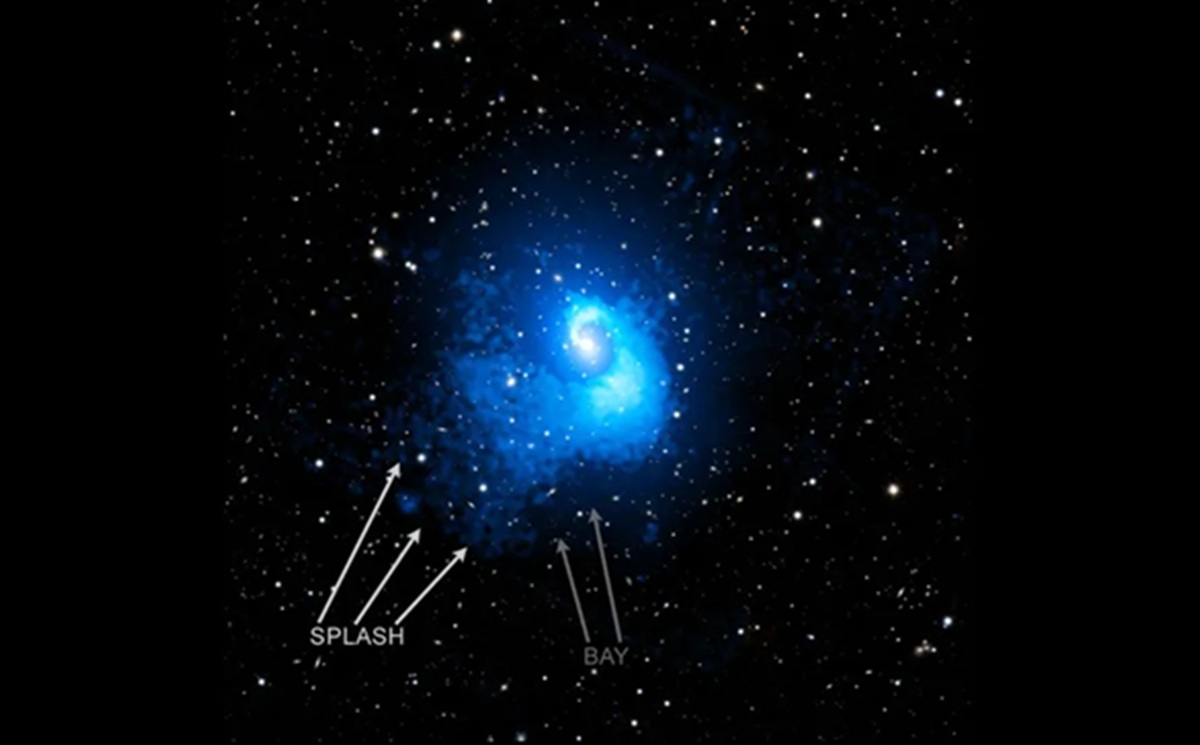
For decades, astronomers have dubbed the galaxy cluster Abell 2029 as one of the universe’s most tranquil places. Nestled in the Virgo constellation, the giant galaxy city appears calm from the outside. Yet new observations from NASA’s Chandra X-ray Observatory reveal the cluster’s interior remains unsettled by an ancient cosmic collision.
The cluster is among the largest, housing more than a thousand galaxies bound by gravity and enshrouded by superheated gas. At its centre lies IC 1101, a colossal elliptical galaxy spanning almost six million light-years, making it one of the largest galaxies known.
Since the 1990s, scientists have considered Abell 2029 to be exceptionally placid. In fact, two studies in 2025 using the XRISM observatory showed extremely low turbulence in the gas there. However, a third XRISM study begins to detect pockets of cooler gas in the cluster’s atmosphere.
Now, the latest data from the Chandra telescope provide fresh evidence about this dark history. Using 21 new observations gathered in 2022 and 2023 along with archival data, the research team mapped a hidden giant structure. One of the most spectacular findings is a giant spiral structure produced by ‘sloshing’ extending nearly 2 million light-years from the cluster’s centre.
‘Overall, our results indicate A2029 is still stabilising after past interactions,’ wrote the team led by astrophysicist Courtney Watson of Boston University in a paper published December 2025 in The Astrophysical Journal. ‘This shows that even clusters that initially appeared the calmest can conceal a rich history of dynamical activity.’
Through computer simulations, scientists estimate that the spiral structure, shock waves, and basin-like depressions in Abell 2029 formed when a smaller galaxy cluster collided with it about 4 billion years ago. The collision caused the superheated gas to churn and swirl within the gravitational field, much like wine being swirled in a glass.
These massive shocks play a crucial role in redistributing heat throughout the cluster’s gas. For years, scientists had thought gas heating was driven solely by energy from the actively accreting supermassive black hole at the centre of IC 1101. But these findings show that black hole activity alone is not enough, and the relics of the ancient collision play a major role in keeping the gas from cooling too quickly.
Based on analyses involving the European Space Agency and international observatories, the primary black hole in the system has a mass of about 18 billion solar masses.
More recent research suggests Theia, the colossal body that collided with Earth to form the Moon, may have originated from within the Solar System and once been Earth’s ‘neighbour’.
The blast originates from WSB 52, where a jet blast at high speed strikes the surrounding gas, forming a large ball of hot, pressurised material.
ALMA succeeded in mapping the internal structure of the early galaxy and provided evidence for the formation of a galactic disc as well as remnants of cosmic collisions in the early universe.