
The Search of an Islamic Boarding School and the Proportionality of Police Powers
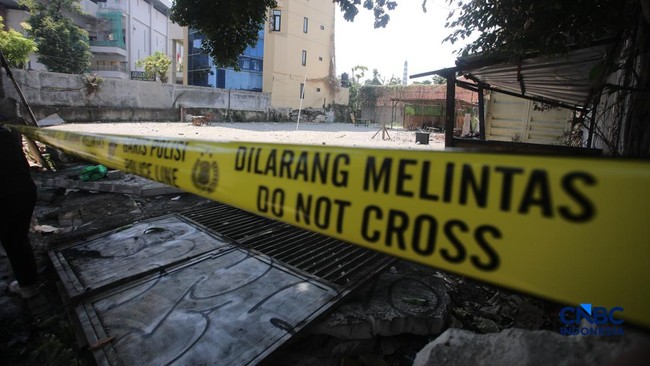
The search of Hamalatul Qur’an Islamic boarding school (ponpes) in Laban village, Mojolaban district, Sukoharjo regency, Central Java, has attracted public attention. The incident, which took place on 27 October 2026, sparked controversy, particularly over the procedures and manner in which police conducted the search on the school premises.
The matter drew further attention after the Indonesian National Police Headquarters removed the Sukoharjo Police Chief and three other officers involved in the incident.
As reported by Tirto.id on 30 October 2026 in an article entitled “Timeline of the Raid on a Sukoharjo Islamic Boarding School and Alleged Intimidation”, the search was part of the development of an investigation into the burning and vandalism of a pork noodle stall in the area.
Police have named two people as suspects in the case, one of them identified by the initials AS, while another person remains at large. As part of the investigation, officers then searched the grounds of Hamalatul Qur’an. Their actions came under scrutiny after allegations emerged of intimidation and the seizure of items without official documentation, which the boarding school’s management contested.
The issue received further public attention after Tribunnews.com reported on 3 November 2026 in an article entitled “Timeline of the Search at a Sukoharjo Islamic Boarding School, Leading to the Removal of the Police Chief and Three Officers”.
The report said the search began over suspected involvement by residents of the boarding school in the burning of the pork noodle stall. The police operation, however, became controversial after the school’s management described the officers’ arrival and the questioning of several female students.
In a circular, numbered 010/RTQ-HQ/SE/X/2026, the management of Hamalatul Qur’an set out its account of the search. It said police arrived at about 3.20 am, while most of the female students were still asleep. The arrival of several fully armed Mobile Brigade Corps (Brimob) officers, accompanied by dozens of police personnel, reportedly caused panic at the school.
This account warrants scrutiny not only in the context of efforts to uncover the crime under investigation, but also to assess whether officers exercised their investigative and search powers in accordance with legal procedures and human rights protections.
According to the management’s account, some students who woke up tried to hide in a teacher’s room because they were not wearing their headscarves. The door to the room was reportedly also forced open and nearly damaged.
After the door was opened, several female students were allegedly pulled out, shouted at and threatened with long-barrelled firearms while they were not wearing headscarves or properly dressed.
The account circulated widely on social media after it was posted by the Threads account Salsabilaazlf on Friday, 30 October 2026. The post called for public attention and action by the authorities.
In the same circular, the school’s management also alleged that a female student in a back room was subjected to a disputed search. She was reportedly ordered to lie face down, then rolled over and grabbed by the face while repeatedly being asked, “Are you a boy or a girl?” She was also allegedly told to show her hair while a long-barrelled firearm was pointed at her.
If the events occurred as described by the school’s management, they raise serious questions that must be examined objectively, particularly concerning the propriety of the officers’ actions, the protection of human dignity and respect for the students’ rights. Nevertheless, these accounts remain allegations by the school’s management and must be tested through a thorough investigation.
At the same time, the matter must be considered carefully and even-handedly. Public judgement should not pre-empt the investigation into the officers who were on duty at the time.
A search is, in principle, part of law enforcement’s authority in the process of enforcing the law. That authority, however, is not unlimited and must be exercised in accordance with legal provisions and the principle of proportionality.
In a subsequent development, CNN Indonesia reported on 2 November 2026 in an article entitled “Sukoharjo Police Chief and Three Officers Removed Following Pre-dawn Boarding School Search” that the National Police Headquarters had removed AKBP Andika Dharma Sena from his post as Sukoharjo Police Chief.
Three other officers involved in the search were also removed from their posts. The decision followed an examination by the National Police’s Professional and Security Division (Propam) of four personnel: AKBP Andika Dharma Sena, Sukoharjo Police Chief; Iptu AS, head of the Criminal Investigation Unit; Ipda FA, head of the General Crimes Unit; and Ipda RAP, head of the Women and Children Protection Unit.
National Police Public Information Bureau head Brigadier General Trunoyudo Wisnu Andiko, as quoted by CNN Indonesia, said the four officers had been examined. National Police Headquarters also apologised for the trauma experienced by the students. The criminal case concerning the alleged burning of the stall is continuing separately.
These developments deserve attention not only from the perspective of law enforcement but also from that of the rule of law. Law enforcement loses legitimacy if officers disregard the limits of their authority.
Conversely, criticism of police conduct must not set aside the presumption of innocence or objectivity in the investigation. In a state governed by the rule of law, it is not only the public that must obey the law: state officers must also be held accountable under the law for every use of their powers.
The search of Hamalatul Qur’an should therefore not be reduced to the controversy surrounding the removal of the police chief and three officers. The more fundamental question is how to ensure that every police action taken in exercising law enforcement powers remains within the bounds of the law, respects human rights and upholds proportionality.
Any assessment of the officers’ conduct must also take into account the concrete circumstances they faced during the search. Law enforcement in the field does not always take place in ideal conditions, so officers’ actions should be assessed in full, with regard to the factual context, the level of urgency and the challenges they faced. At the same time, any investigation of police personnel must be objective and based on sufficient evidence, rather than solely on pressure from public opinion.
Ultimately, the authority of the police is measured not only by their success in identifying those responsible for crimes, but also by their ability to exercise their powers professionally, proportionately and responsibly. In this context, positive law should not be applied rigidly and formalistically; the concrete situation and factual circumstances surrounding police action in the field must also be considered.
This is important to ensure that assessments of officers’ conduct consider not only procedural matters but also the reasonableness and proportionality of their actions in the circumstances they actually faced. The purpose of law is not merely to provide certainty through the application of rules, but also to deliver justice.
Legal certainty and justice must therefore be balanced. In a state governed by the rule of law, the goal of law enforcement cannot justify the use of any means, but the application of the law must not lose sight of justice. The law must be enforced, and the process of enforcement must itself remain subject to the law and oriented towards justice.
Source: jawawa.id (https://jawawa.id/newsitem/the-search-of-an-islamic-boarding-school-and-the-proportionality-of-police-powers-1794279080)
Originally published by CNBC Indonesia (https://www.cnbcindonesia.com/opini/20261110092144-14-783776/penggeledahan-ponpes-dan-proporsionalitas-kewenangan-kepolisian), translated from Indonesian