
The School That Doesn't Accept Applications: Indonesia's 'People's Schools' Seek Out the Poorest
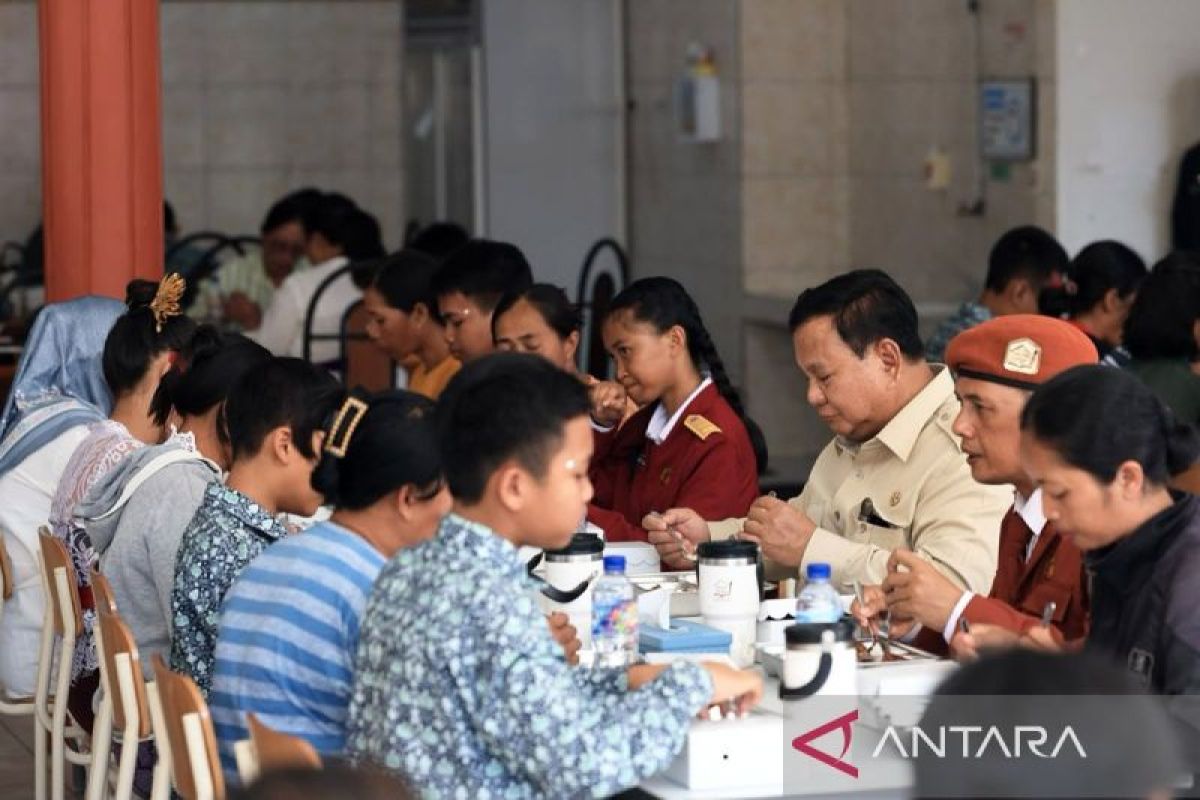
Bullying, physical and sexual violence, and intolerance are strictly prohibited within the Sekolah Rakyat environment.
Jakarta (ANTARA) - Rizky never applied to any school after finishing primary school. It was not due to laziness. His mother, Ni Putu Yuniawati, a farm labourer in Tabanan, did not have enough money. Of her six children, five had previously dropped out at the same level, finishing only after junior high school.
Education was not a dream they pursued; it was a luxury they had learned to forgo. That changed when a government representative arrived at their home.
There was no registration form, nor an announcement via social media. Instead, a facilitator from the Family Hope Programme (PKH) of the Social Affairs Office knocked on their door, checked a name on a list, and asked: Is Rizky willing to return to school? This is how Sekolah Rakyat operates. The state does not wait; it seeks.
The Sekolah Rakyat programme is designed differently from traditional educational logic. There are no new student admission notices posted on boards, nor are there queues of parents in front of school gates at dawn. Instead, the process is reversed: the government goes out to find the students. Sekolah Rakyat is the only school that does not open for registration.
Prospective students are identified based on the National Socio-Economic Single Data (DTSEN) managed by the Central Bureau of Statistics. Using this data, PKH facilitators and the Social Affairs Office conduct field visits to check on families and verify conditions before inviting eligible children to join. Only those in deciles 1 and 2, the lowest groups in the national welfare scale, are targeted.
The Principal of SRMP 17 Tabanan, I Putu Jaya Negara, described this as a ‘ground check’. “We conduct a ground check to see if they truly meet the requirements and if they are willing. Once they meet the criteria, they are accepted,” he said.
Parents of students in Tabanan are mostly farmers and daily labourers. For I Nyoman Sukoncaldo, a farm labourer whose child was caught by this programme, the offer was something he had never imagined. Free schooling, boarding, three meals a day, uniforms, and learning supplies—all provided without any fees.
Sekolah Rakyat is more than just a standard free school. It is designed as a full boarding school for children from extreme poverty, a model that separates students from the environment of poverty during school hours while relieving parents of daily living expenses.
The available levels include primary, junior high, and senior high school. While the curriculum follows national standards, there is an emphasis on character building and discipline. Minister of Social Affairs Saifullah Yusuf emphasised that three things are intolerable within the Sekolah Rakyat environment: bullying, physical and sexual violence, and intolerance. If these occur, violators will be strictly disciplined and expelled immediately.
The results are becoming visible. Gede Bagus Abimanyu, a student at SRMP 17, shared with President Prabowo that he was frequently bullied since primary school. Being quiet and socially withdrawn, he had almost dropped out of school. Since joining Sekolah Rakyat, his personality has transformed. He now aims to prevent bullying within his own school.
“I hope that with this position, I can prevent bullying and protect my friends so they do not experience what I went through,” said Gede Bagus Abimanyu.
Meanwhile, Rizky, whose mother once had no hope for him beyond junior high school, now aspires to become an agricultural engineer.