
The Sacred Tradition of the Indonesian Armed Forces: Why Are Indonesia's Weapons Bathed in Flower-Water?
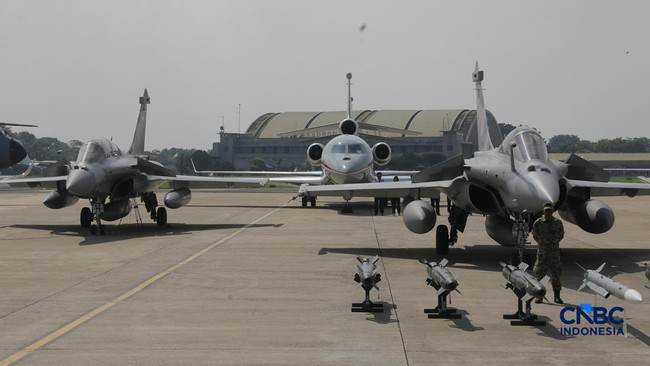
The government has just inaugurated a number of Indonesia’s main weapons systems (alutsista) to strengthen national air power. The ceremony was conducted by President Prabowo Subianto at Halim Perdanakusuma Air Base, Jakarta, on Monday, 18 May 2026. He handed over several strategic alutsista to the Indonesian National Armed Forces (TNI), including six MRCA Rafale fighter aircraft, four Falcon 8X jets, one Airbus A400M MRTT, Meteor missiles, Hammer smart weapons, and the GCI GM403 radar. However, one moment drew particular attention. Prabowo appeared to perform a flower-water bathing ceremony on the Rafale fighter jet. This kind of ritual is not new in our culture. The flower-water bathing tradition is usually interpreted as an act of gratitude, prayers for safety, and a marker that the asset is officially part of the nation’s defence duties. In Javanese culture, flower-water bathing is a long-standing symbolic rite. The process typically uses water mixed with fragrant blooms such as jasmine, roses, and kenanga. It is commonly understood as a form of cleansing, a prayer for safety, and a sign of gratitude, especially at important moments or phases. In the context of alutsista ceremonies, the meaning is applied symbolically. A new aircraft, ship, or combat vehicle is welcomed as a vital national asset that will begin important tasks. Therefore, the flower-water bathing ceremony is viewed as a gesture of respect, gratitude, and safety prayers for the assets and the personnel who operate them. A similar tradition was observed when Indonesia’s first Airbus A400M transport aircraft landed in Jakarta. The aircraft touched down at Halim Perdanakusuma Air Base on Monday, 3 November 2025, and during the handover ceremony Prabowo also performed the flower-water bathing of the aircraft’s wheels, as a symbol of gratitude for the asset and a prayer for the fleet’s safety. The practice is not unique to Indonesia. In Brazil, on 25 March 2026, President Luiz Inácio Lula da Silva attended the christening ceremony for Brazil’s first F-39E Gripen fighter, produced domestically by Embraer with Saab of Sweden, at Embraer Gavião Peixoto Airfield, São Paulo. The ceremony symbolises not only the official introduction of the aircraft but also the importance of domestic production and technological transfer, signifying Brazil’s status as the first country in Latin America capable of assembling supersonic combat jets domestically. The christening ceremony represents official recognition, honour, and affirmation that the assets have formally joined the nation’s defence capabilities. The origins of the christening tradition are most closely associated with ships, where a newly launched vessel is celebrated as a national asset that will carry a crew and fulfill missions. In the United States, christening is well known in the Navy, where a sponsor is designated to name or commission the ship and a champagne bottle is shattered against the hull to mark the vessel’s launch. The act carries a message of safety and a hope that the ship can perform its duties. Champagne is the most widely used liquid today, though history shows ships have been christened with water, wine, or cider. The same kind of ritual exists in Britain, in which launching a ship marks its first move from land to sea, with a bottle of wine or champagne broken on the hull to mark departure and to pray for the crew’s safety.
Source: jawawa.id (https://jawawa.id/newsitem/the-sacred-tradition-of-the-indonesian-armed-forces-why-are-indonesias-weapons-bathed-in-flower-water-1779531655)
Originally published by CNBC Indonesia (https://www.cnbcindonesia.com/research/20260522163743-128-737175/tradisi-sakral-tni-kenapa-alutsista-ri-dimandikan-air-kembang), translated from Indonesian