
The Rp3,000 Fare Driving Millions of Journeys: Rangkasbitung–Merak Local Train and Farmer-Trader Train as Economic Connectors in Banten
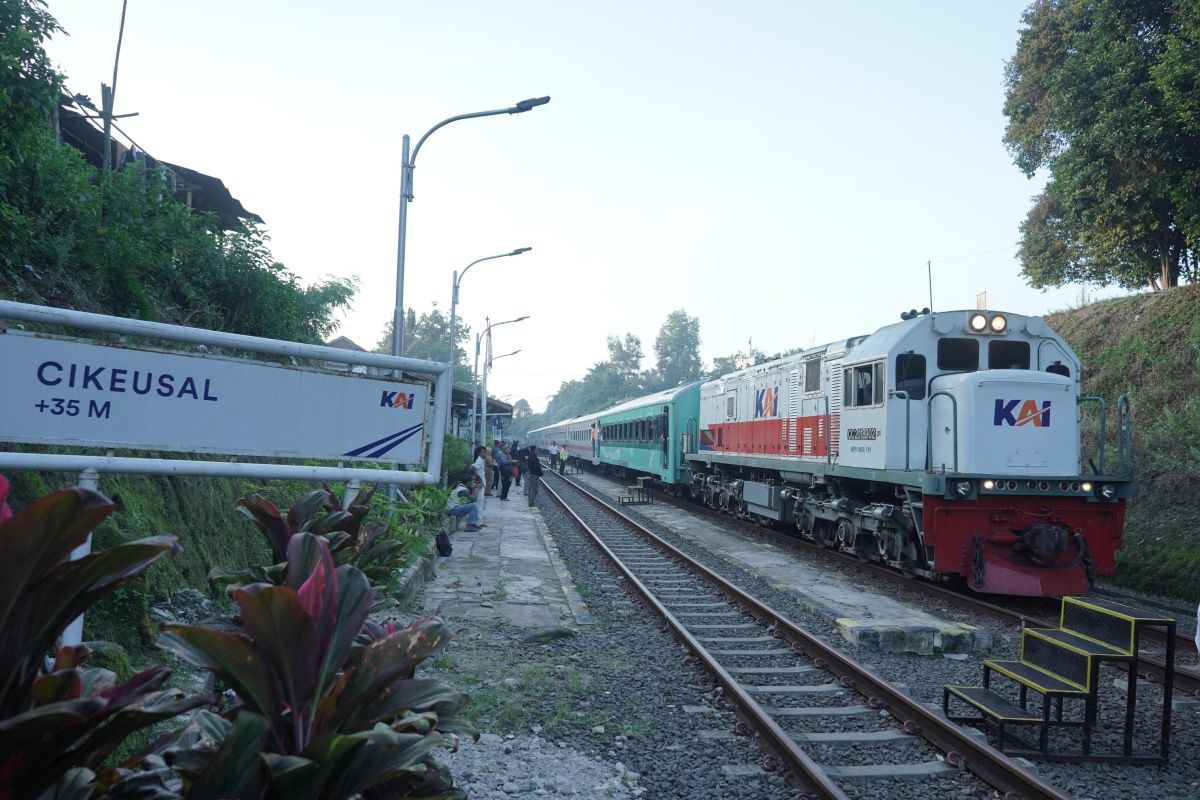
Jakarta (ANTARA) - Almost 2 million passengers utilised the Rangkasbitung–Merak Local Train between January and May 2026, while the Farmer and Trader Train has recorded 25,023 passenger trips since its commencement.
When discussing the economic growth of a region, attention is often focused on investment, industrial zones, or large-scale infrastructure development. However, one factor present in the daily lives of the community and having a direct impact on productivity is the ability of the people to move easily, quickly, and affordably. This mobility is what allows economic activities to proceed sustainably.
In Banten Province, this role is fulfilled by the Rangkasbitung–Merak Local Train. With a fare of just Rp3,000 for a single trip, this service daily connects residential areas, trade centres, industrial zones, government hubs, educational facilities, and the Merak Port—one of the most vital transport nodes connecting Java and Sumatra.
For many, Rp3,000 may seem like a simple figure. However, from a household economic perspective, low transport costs provide greater scope for the community to allocate their income to other needs such as education, household consumption, or business development. At this point, public transport serves as both a means of travel and a supporter of community economic efficiency.
Public enthusiasm for this service is reflected in the continuous growth of passenger numbers in recent years. In 2023, the Rangkasbitung–Merak Local Train served 3,617,478 passengers. This number increased to 4,269,154 in 2024 and rose again to 4,463,498 in 2025. Meanwhile, from January to May 2026, the service has been used by 1,978,799 passengers.
This growth demonstrates that the railway is becoming increasingly integrated into the daily lives of Banten residents. More citizens are using the train as their primary means of commuting for work, studying, trading, or accessing various public services. With a network connecting Rangkasbitung, Jambu Baru, Catang, Cikeusal, Walantaka, Serang, Karangantu, Tonjong Baru, Cilegon, Krenceng, and Merak, the service acts as a link between various activity centres along the western corridor of Banten.
KAI Vice President of Corporate Communication, Anne Purba, stated that the success of a public transport service is measured not only by the number of passengers served but also by the benefits felt by the community in their daily activities.
“Affordable public transport has a broad economic impact. The community can travel more efficiently, have greater access to employment, and reach economic centres that previously required higher travel costs,” said Anne.
This role is even more vital considering the characteristics of the regions traversed. The Rangkasbitung–Merak line connects Lebak Regency, Serang Regency, Serang City, Cilegon City, and the Merak Port area. According to 2024 data from the Central Bureau of Statistics, the population of Serang City reaches approximately 756,000, while Cilegon City has around 465,000. Both regions are economic growth centres supported by the trade, services, manufacturing, and port sectors.
Under these conditions, the community’s need to move between regions occurs daily on a large scale. The railway helps connect residential areas with productive zones, ensuring that distance is not a barrier to accessing jobs, running businesses, or accessing education. The easier community mobility becomes, the greater the economic opportunities available.
This economic role is even more evident through the presence of the Farmer and Trader Train, which began operations on 1 December 2025. This service was created to meet the needs of the community whose economic activities rely on traditional markets, trading centres, and agricultural areas along the Merak route.
From January to May 2026, the Farmer and Trader Train recorded 20,908 passenger trips. Since its launch on 1 December 2025 until the end of May 2026, the service has recorded a total of 25,023 passenger trips.
This data shows consistent daily economic mobility. Interestingly, behind these travel statistics lies ongoing trade and distribution activity. There are traders travelling to procure goods, farmers heading to markets to sell harvests, and micro-entrepreneurs utilising the train as a cost-effective and accessible means of transport.
For these groups, transport cost efficiency has a direct impact on their income. The lower the travel costs, the more space is available to develop businesses, expand market reach, and increase profits. Therefore, the benefits of this service extend far beyond recorded passenger numbers, supporting economic activities growing at various points connected by the railway line.
Anne added that the benefits of public transport are often felt in a chain reaction within the community.
“When a trader can save on travel costs, their business competitiveness increases. When farmers can more easily reach markets, access to buyers expands. When the community can travel affordably, economic opportunities become greater. That is where public transport provides benefits that transcend the mere function of moving people,” explained Anne.
Source: jawawa.id (https://jawawa.id/newsitem/the-rp3-000-fare-driving-millions-of-journeys-rangkasbitung-merak-local-train-and-farmer-trader-train-as-1780854794)
Originally published by Antara (Indonesian) (https://www.antaranews.com/berita/5592075/tarif-rp3000-yang-menggerakkan-jutaan-perjalanan-ka-lokal-rangkasbitung-merak-dan-kereta-petani-pedagang-menjadi-penghubung-aktivitas-ekonomi-banten), translated from Indonesian