
The Role of Prabowo's Grandfather in the Establishment of the First Bank in Indonesia
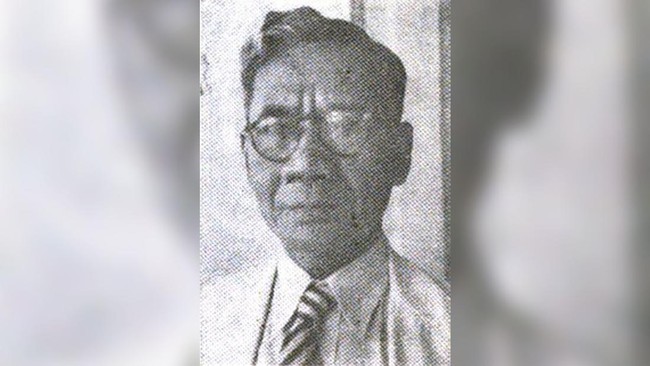
Jakarta, CNBC Indonesia - The first bank in Indonesia was established shortly after the Proclamation of Independence on August 17, 1945, spearheaded by two national economists, Margono Djojohadikusumo and Soerachman Tjokroadisurjo. Margono is known as the grandfather of Indonesian President Prabowo Subianto.
At that time, both agreed that Indonesia needed its own central bank, but they had different views on how to achieve it. Margono, who served as Chairman of the Supreme Advisory Council, believed that the central bank should be built on the strength of the nation itself, rather than continuing the legacy of foreign financial institutions.
According to him, since the colonial era, Indonesia had never had a national bank that was truly founded by the Indonesian people. The spirit of independence and nationalism at that time was considered the right moment to build a national financial institution from scratch.
On the other hand, Soerachman had a more pragmatic view. Citing the book From De Javasche Bank to Bank Indonesia (2014), he argued that Indonesia could simply revive De Javasche Bank, which was previously established by the Dutch colonial government. The reason, the bank had long managed the financial system and had experienced human resources so there was no need to build a new institution from the beginning.
Amidst this debate, the situation became more heated after the Dutch returned to Indonesia with the ambition of regaining control of the country after independence.
“The Dutch wanted to revive DJB as a central bank based on a decree from the Governor-General of the Dutch East Indies on January 2, 1946,” wrote the authors of the book Semarang as an Economic Hub (2022).
The existence of DJB clearly threatened the country’s economic sovereignty. Moreover, DJB intended to print and circulate Dutch-made currency to disrupt the Indonesian economy. As a result, efforts to establish a new central bank increased.
This situation made Margono’s views even more logical. At the same time, Prabowo Subianto’s grandfather had moved quickly to realize his idea.
He was reportedly granted approval from Sukarno and Hatta to establish a national bank called Bank Negara Indonesia since September 1945. He had also taken care of the state-owned banking foundation called the Yayasan Poesat Bank Indonesia.
Then, it didn’t take long, on July 5, 1946, the government officially established Bank Negara Indonesia (BNI) as a central bank based on Emergency Law No. 2 of 1946. In addition to its function as a central bank, BNI was also given the authority to carry out activities as a commercial bank, such as providing credit, issuing bonds, and accepting giro, deposit, or savings.
The initial leader of BNI was Margono himself. Its initial capital was obtained from contributions from the Indonesian people.
At that time, BNI also had to fight against the Dutch in the economic field, which was increasingly rampant with the expansion of DJB. So, it can be said that BNI at that time functioned as the spearhead of the battle in the economic sector: BNI vs. De Javasche Bank.
“The war” between the two created a dual central bank system in Indonesia. This became even more heated when BNI issued currency with the name Oeang Republik Indonesia (ORI) to compete with DJB’s currency, which issued NICA currency. As a result, a currency war occurred.
In the field, the battle against the Dutch became more intense. Many areas were re-colonized by the Dutch. As a result, BNI’s function as a central bank was not optimal. BNI was unable to do anything because its operations were stalled.
In many areas, BNI branches were closed and its assets were seized by the Dutch. However, this failure could not be attributed to BNI’s management because it was purely due to external factors, namely the Dutch.
As time went on, the situation changed. The war against the Dutch ended in 1949. BNI began to be active again. However, in 1953, BNI’s function as a central bank faded after the government took over DJB and turned it into Bank Indonesia. Bank Indonesia was then assigned as the central bank. The peak occurred in 1968 when BNI’s status as a central bank was officially revoked and changed into a state-owned bank.
(hsy/hsy)
Source: jawawa.id (https://jawawa.id/newsitem/the-role-of-prabowos-grandfather-in-the-establishment-of-the-first-bank-in-indonesia-1780614634)
Originally published by CNBC Indonesia (https://www.cnbcindonesia.com/market/20260516141413-17-735196/ada-peran-kakek-prabowo-di-balik-berdirinya-bank-pertama-di-ri), translated from Indonesian