
The Role of Prabowo's Grandfather in Establishing Indonesia's First Bank
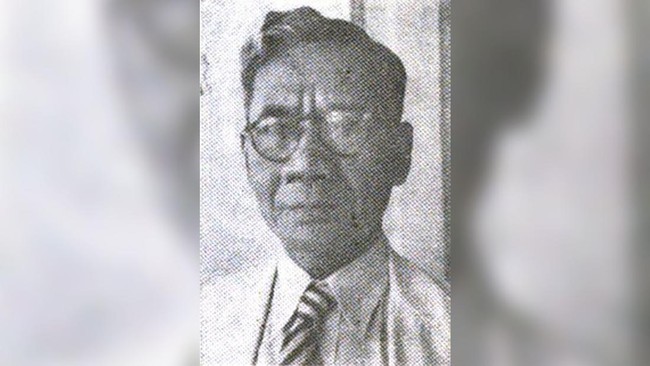
Jakarta, CNBC Indonesia – Margono Djohohadikusumo, grandfather of President Prabowo Subianto, played a pivotal role in establishing Indonesia’s first bank. Together with Soerachman, he was a founder of Bank Negara Indonesia (BNI).
In the early days of independence, the two economists saw the importance of establishing a central bank in Indonesia, but held differing views on how to do so.
Margono, who sat on the Supreme Advisory Council, argued that Indonesia needed to establish a central bank using the nation’s own resources rather than inheriting a foreign bank. Soerachman, serving as Minister of Prosperity, held the opposite view: the Dutch-created De Javasche Bank (DJB) should be revived.
That bank was seen as having safeguarded the Indonesian economy for longer, and it had capable staff. It would also mean Indonesia would not need to build a bank from scratch.
Amid the debate, the Dutch arrived with news that they intended to recolonise Indonesia. The Netherlands would revive DJB as the central bank.
“The Dutch wanted to revive DJB as the central bank based on a permit issued by the Governor-General of the Dutch East Indies dated 2 January 1946,” wrote the authors of the book Semarang Sebagai Simpul Ekonomi (2022).
Its existence clearly threatened Indonesia’s economic sovereignty, not least because DJB planned to print and circulate Dutch-made currency to disrupt the Indonesian economy.
This situation made Margono’s idea increasingly logical. He had also moved faster to realise it, securing the blessing of President Soekarno and Vice-President Hatta to establish a national bank named Bank Negara Indonesia.
Its establishment dated from September 1945. Beyond BNI itself, he also sought approval to manage a state-owned banking foundation called Yayasan Poesat Bank Indonesia.
The government officially established BNI as the central bank on 5 July 1946 under Emergency Law No. 2 of 1946. Alongside its central bank duties, BNI also functioned as a commercial bank, extending credit, issuing bonds and accepting current accounts, deposits and savings.
Margono occupied BNI’s early leadership seat, while its capital came from contributions pooled by the Indonesian people. In its early days, however, BNI faced difficulties.
BNI had to spearhead the economic battle against the Dutch DJB, issuing currency known as Oeang Republik Indonesia (ORI) to counter NICA money produced by DJB.
On the ground, however, the Dutch managed to seize many territories. This meant BNI could not perform its central bank role optimally: stalled operations forced many regional branches to close and their assets were seized by the Dutch.
After the war against the Netherlands ended in 1949, BNI became active again, but its function as central bank faded in 1953.
At that time, the government took over DJB and converted it into Bank Indonesia, which assumed the role of central bank. BNI’s central bank status was formally revoked in 1968, when it became a state-owned commercial bank.
Source: jawawa.id (https://jawawa.id/newsitem/the-role-of-prabowos-grandfather-in-establishing-indonesias-first-bank-1783860685)
Originally published by CNBC Indonesia (https://www.cnbcindonesia.com/market/20260712171329-17-750194/ada-sosok-kakek-prabowo-di-balik-berdirinya-bank-pertama-di-ri), translated from Indonesian