
The Role of Majelis Sayur, a Collective Network of Urban Farmers in South Jakarta
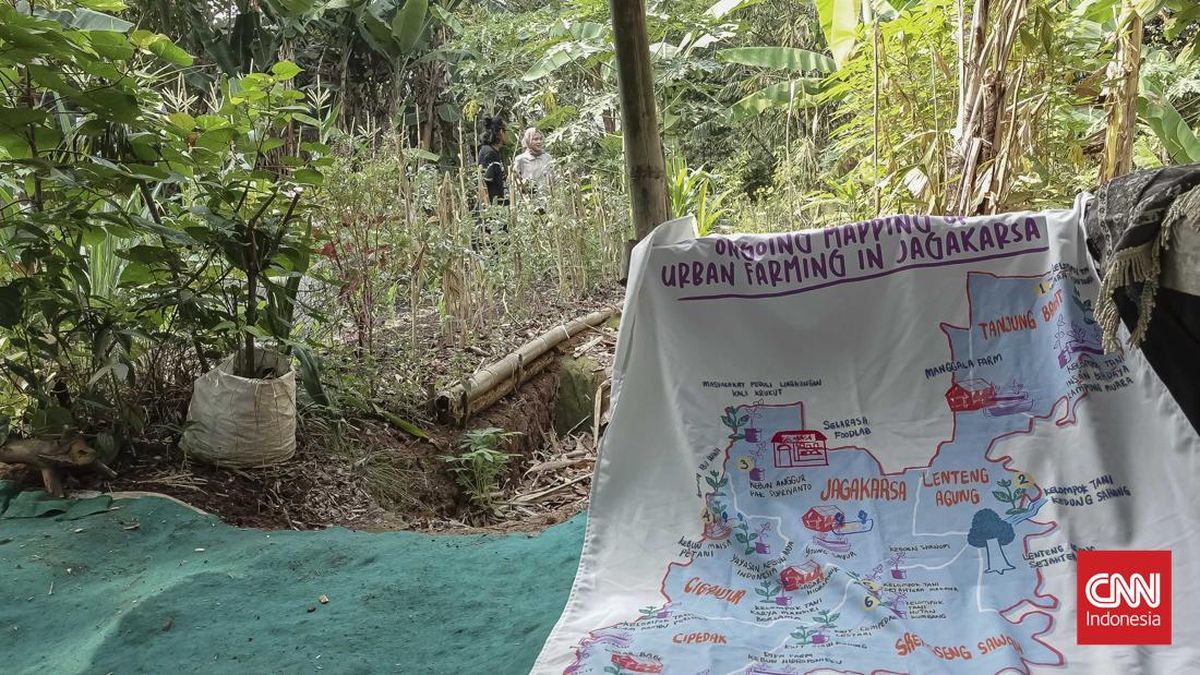
Originating from a creative hub in a corner of the Jagakarsa district, South Jakarta, five young individuals began exchanging ideas regarding the utilisation of food sources cultivated around their ‘playground’.
Julian Riezky (40) and his colleagues, who established the Selarasa Foodlab culinary creative movement in the Gudskul area, Jagakarsa, subsequently reached out to various urban farmers in the district, which serves as the border between Jakarta and Depok. Through continuous communication and networking, they and the plant cultivation enthusiasts in Jagakarsa agreed to establish a forum, which they named Majelis Sayur.
Formally, some activists stated that Majelis Sayur began around 2021, originating from an event related to food and horticultural plants that brought them together. “Majelis Sayur is essentially a place for us to gather and communicate,” said Latif (36), a resident of Cipedak, Jagakarsa, during a conversation in early September.
Latif works daily on land along a riverbank near his home. Promoting his daily harvests via a social media account named Pojok Aselih, he explained that Majelis Sayur does not aim to create a market for their garden produce, but rather to facilitate networking through the forum. Latif noted that before the formation of Majelis Sayur, some members already possessed their own farmer groups, such as avocado farmer groups or forest farmer groups (KTH).
Over time, Latif stated that Majelis Sayur is now collaborating to create an Urban Farming School. For the curriculum, they are working with several parties, including individuals from the creative arena in Jagakarsa, Gudskul. Beyond educational collaboration, Latif expressed hope that Majelis Sayur could also establish a ‘Shared Market’, at least within Jagakarsa.
“The market in Jakarta is huge; the supply from Bogor comes here. We want to see how we can build something to capture that market locally, right here in this district,” said Latif. “We want to be part of the solution.”
Julian, often called Juli, originally resided in Kemayoran, Central Jakarta, before moving to Jagakarsa with Gudskul. Having an interest in horticultural cultivation, he and several others sought out ‘urban farmers’ in Jagakarsa when they began their activities in the district. Juli is one of the founders of Selarasa Foodlab, which he built with four companions: Risya, Tahlia, Erbi, and Bonit.
“Selarasa is essentially our space; the Foodlab is the kitchen,” he said. He emphasised that Selarasa is not the ‘owner’ or founder of Majelis Sayur, but rather a part of the forum. “Selarasa is part of Majelis Sayur. You can see it written on our window,” Juli remarked, pointing to the glass window featuring agricultural illustrations.
Selarasa functions as a cooperative, currently acting as a bridge between farmers and consumers in Jagakarsa alongside Majelis Sayur. Juli described Jagakarsa as moving beyond mere urban farming towards ‘urban agriculture’.
“In my view, Jagakarsa is no longer just urban farming, but urban agriculture. It is no longer just ‘planting in the city’, but there is a bond between residents and the source of life. It is a place of life production with its own culture,” he said.
One of the five founders of Selarasa Foodlab noted that this definition was rooted in history, as the Jagakarsa area was traditionally a landscape of plantations and livestock. This is evident in the toponymy of local areas named after horticultural commodities, such as Jalan Durian, Pepaya, Kecapi, Matoa, and the Srengseng Sawah sub-district.
Furthermore, the community of Jagakarsa once held harvest thanksgiving ceremonies, such as the Serentaun or Sumbang Bumi. Therefore, Majelis Sayur exists as part of a shared awareness among Jagakarsa residents who engage in farming and gardening to communicate, strengthen, and grow together.
“The concept of Majelis Sayur is like being neighbours. When we meet, though not always scheduled, we move around different gardens,” said Juli. “Why call it a ‘Majelis’ (assembly)? Because we agreed that everyone is equal. There is no single leader; everyone is a leader, and everyone is a member.” Juli emphasised that the assembly is not linked to any specific interests, especially politics.
Latif echoed this sentiment, confirming there are no ‘chairpersons’ within Majelis Sayur. However, if outsiders wish to learn about the group, there are certain members who can act as initial points of contact. Alongside Juli and Latif, other members include Ibnuh, who focuses on hydroponics at the Youngsayur garden; Ahmad Fahrizal, who manages avocado nurseries and vegetable cultivation with Peralpukatan Duniawi; Sophia Louretta, who specialises in compost and planting media through Tani Alit; and Lily Almasih, a homemaker who gardens on her rooftop.
Source: jawawa.id (https://jawawa.id/newsitem/the-role-of-majelis-sayur-a-collective-network-of-urban-farmers-in-south-jakarta-1790236793)
Originally published by CNN Indonesia (https://www.cnnindonesia.com/nasional/20260922052733-20-1406572/kiprah-majelis-sayur-jaringan-kolektif-petani-kota-di-jaksel), translated from Indonesian