
The Role of Food in Global Warfare
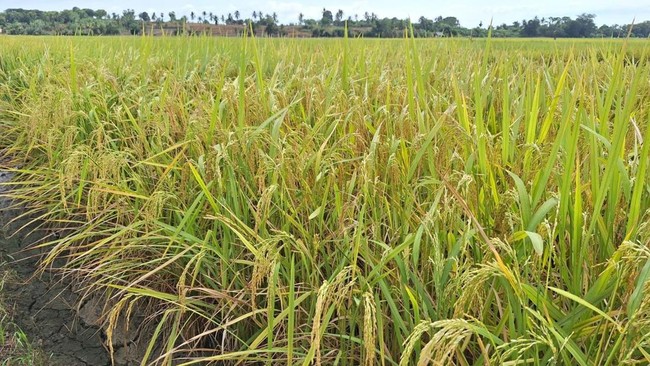
Food has become one of the keys to global peace as well as energy. Chaos often begins due to food conditions. Currently, food can be a deadly weapon for those in power over food supplies. Sultan Agung’s defeat in the war against the VOC in the past was due to the VOC burning his food granaries, leaving Sultan Agung short on food logistics.
A modern case can be seen in 2016 when Venezuela experienced inflation reaching 65,000%. That country, which has the world’s largest oil reserves, collapsed because the price of ten eggs had to be paid with 650 million rupiah carried in two large suitcases.
Japan is currently feeling the effects, with a 20% rise in fuel prices prompting the country to release oil reserves that have never been tapped before. A rise in fuel prices will certainly trigger a global food price increase.
Indonesia is beginning to prepare for APBN efficiency due to predictions of swelling energy subsidies and fiscal capacity being disrupted by the crisis resulting from the Iran-US war.
This is not to mention the fact that 30% of supplies for nitrogen and phosphate fertiliser raw materials pass through the Strait of Hormuz, which are currently disrupted. In India, Africa, the US, and Europe, fertiliser availability has been disrupted by the Iran-US war. So, what is the world’s food position in this war condition?
Current Food Situation: Yellow Light?
The global food production side is actually sufficient. World rice production is around 525 million tonnes, with 90% produced in Asia as the world’s rice producer. There are shocks in management related to distribution, leading to rises and concentration of food in producer countries.
The impact of the Russia-Ukraine war has left approximately 13 million people worldwide facing hunger threats. FAO data for 2022 indicates that 183 million Indonesians cannot meet nutritional standards of 69,000 per day.
An evaluation of the food situation in a UN-initiated programme through the FAO states that over the last 10 years, the world’s food condition has not been well. The sign? The world’s failure to reduce hunger figures.
The MDGs and SDGs programmes related to reducing hunger for 1 billion people have failed, and global agricultural development and nutrition fulfilment have contracted since the Russia-Ukraine war. Global food pressure due to the Iran-US war is predicted to cause distribution and food prices to rise by 32%-40%, especially since of the nine national strategic foods, Indonesia is only self-sufficient in rice and corn for daily consumption.
Seven food items, nearly 70%-80% of which must be imported, include 11 million tonnes of wheat per year, 2.5 million tonnes of soybeans per year, 3.1 million tonnes of sugar per year, and 550,000 tonnes of salt per year. Eggs and chicken meat are in surplus at around 300,000 tonnes per year. This means that with the above data, the possibility of food crisis shocks will remain, but specifically for staple foods, Indonesia is still capable and relatively safe due to its own capabilities.
The rise in prices of six strategic food types over the last five years serves as a warning. From 2020-2025, there has been an average increase of 32%, with rice up 28.3%, soybeans 64.45%, beef 16.3%, chicken 26.2%, consumption sugar 27.5%, and cooking oil 34.6%. The average rise across all commodities is nearly 32%, an increase that exceeds the purchasing power and economic growth of the small people.
“Hunger” in Indonesia is hidden hunger or micronutrient deficiency that causes stunting among golden-age children. Approximately 19.8% of our population experiences stunting, with the largest distribution in West Java (638,000), Central Java (485,893), East Java (430,780), North Sumatra (316,456), NTT (214,143), and Banten (209,600).
It is recorded that 1.7 million toddlers suffer the consequences of nutritional deficiencies. This means that hunger due to lack of nutritious food actually occurs in fertile areas and the largest food production regions in Indonesia. This indicates a problem with food distribution reaching the smallest unit, the family.
The Strength of Local Food
The impact of the US-Iran war will cause global food shocks; Indonesia must prepare with its own strength to survive and even play a significant role in the global food chessboard. All of this requires the courage of national leaders to implement our own capabilities, our local production capabilities.
There are three main keys. First, food from own production. Our rice is sufficient because there are 4 million tonnes of national rice stock, enough until 2027. Animal protein sources can come from chicken and fish, which are currently abundant, can be produced domestically, and fish prices are relatively affordable.
Cultivating one pond of catfish and tilapia can provide economic added value for the family. Even eggs can be produced by raising chickens oneself; a minimum of 15 birds is enough for family needs.
Vegetables can be grown in home yards. Spinach and water spinach are sufficient for daily needs. A movement for self-produced food must be called for by the president, governors, down to the household level.
Second, returning to local food, future food, and hopeful food. Local food is more than sufficient to meet domestic needs. Food is not merely a commodity. Essentially, food is nutrition that provides added value for strengthening human resources today.
Local food can be in the form of blue food or blue-based food from coastal areas or white food or traditional white food. There are 77 carbohydrate sources, 75 protein sources, 110 spice and seasoning sources, 389 types of fruits, 228 types of vegetables, 26 types of nuts, and 40 types of drinks.
This is more than enough if the map of local food development is optimised by all regions with APBN/APBD support of 20% focused on food security. Political courage in food and budgeting is needed.
Third, Family Food Bank. This idea stems from