
The Rocky Road to Gender Equality
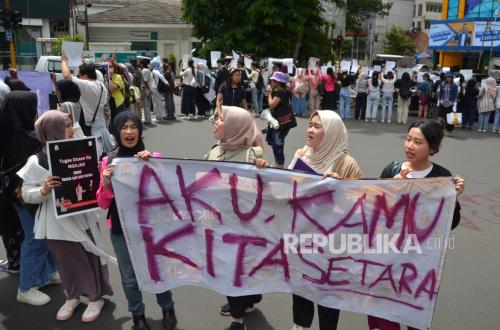
Kartini Day, which we generally interpret as a day of women’s emancipation, should serve as a moment to reflect once again on how far we have come in achieving gender equality at both national and global levels. Kartini Day is a reminder that the struggle for gender equality is an essential part of sustainable social change.
This article aims to strengthen the narrative on gender equality as a crucial element of modern civilisation-building and as a form of support for eliminating discrimination and resisting all forms of violence against women wherever and in whatever form.
Data on Achievements: Between Reality and Hope
Gender equality is one of the foundations of inclusive and sustainable development in line with the 2030 Development Goals. Ironically, the Equal Measures (EM) 2030 report paints a dramatic picture—that no country will succeed in achieving gender equality by 2030. The report even reveals that a baby girl born today will only experience gender equality at the age of 97 (EM2030, 2024).
Meanwhile, the World Economic Forum (WEF) 2024 report states that the global gender gap index (IKGG) has only improved by 0.1 percent, from 68.6 percent to 68.5 percent. At this slow pace, the world is estimated to still need five generations to fully close the gender gap if the rate of improvement remains consistent.
In the meantime, Indonesia is ranked 100th in the IKGG, a decline from the previous year’s 87th position. Quoting the statement from the Minister of Women’s Empowerment and Child Protection (KPPPA), this is due to reduced economic opportunities and low political empowerment for women. Data from the Inter-Parliamentary Union (IPU) shows that the global average representation of women in parliament has reached 26 percent, while Indonesia only manages 21.9 percent for the House of Representatives (DPR RI) (KPPPA Press Release, 2024). Even so, much of this has been criticised because women’s involvement in politics, for example, is more directed towards fulfilling quotas rather than as a form of support to provide access, opportunities, and capacity building for women.
Yet Indonesia has ratified global norms known as the Convention on the Elimination of All Forms of Discrimination against Women (CEDAW), or the Convention on the Elimination of All Forms of Discrimination Against Women, in 1984 through Law No. 7 of 1984. This implies Indonesia’s obligation to implement the norms contained in the convention, including submitting periodic reports to the CEDAW Committee.
The presence of these global norms can be said to provide a strong basis and impetus for the government to introduce relevant policies. However, the global dynamics of recent years, which have leaned towards conservative policies and populism, present major challenges in realising these global norms. Especially since this trend is occurring in major countries like the United States and European Union countries, which are seen as “norm makers” and “norm setters.” In addition, these global norm challenges appear in the form of friction with local culture, national orientations, and interests.
Women’s Empowerment Programmes in the Trap of Patriarchal Capitalism
In many international aid and development projects, women’s empowerment programmes as one of the gender equality initiatives are still often trapped in the framework of patriarchal capitalism, which links the economy with gender hierarchies, reinforces male dominance, and perpetuates inequality in institutions, culture, and division of labour. This framework positions women merely as passive objects (beneficiaries), not as main actors (subjects) who determine the direction of development (decision makers). As a result, indicators of programme success are more often measured by participation numbers or economic contributions, sidelining substantive aspects such as leadership, control over resources, and decision-making spaces.
This situation becomes even more complex when viewed from the Global South perspective. Women in developing countries often face structural pressures from the patriarchal capitalism framework brought by Global North countries through development agendas and international aid. Far from liberating, these agendas instead reproduce dependency, placing women in subordinate positions by following market logic and global economic interests. Microfinance programmes in South Asia, claimed as best practices for women’s empowerment, but in practice, many women end up trapped in debt cycles (Bateman, M., & Chang, H.-J, 2012).
Export-based agriculture programmes in Sub-Saharan Africa employ many women but only as additional labour in processing and distribution (FAO, 2025 & 2026). Regarding female migrant workers, particularly in Southeast Asia, reports from the ILO (2017) and UN Women (2019) state that they generally have weak bargaining power, low wages, and are placed to meet international market needs, often without adequate legal protection.
This shows that the principle of women’s inclusivity in development is trapped in market and production logic (merely as symbols), rather than being implemented in meaningful empowerment programmes that should be designed based on the experiences and perspectives of the women themselves.
Obstacles to Gender Equality in Indonesia
History records that thinking about gender equality in Indonesia began with RA Kartini through her collection of letters published in 1922 under the title Habis Gelap, Terbitlah Terang. This idea was then strengthened by