
The Rocky Road for 8 Tourism SEZs to Attract Investment
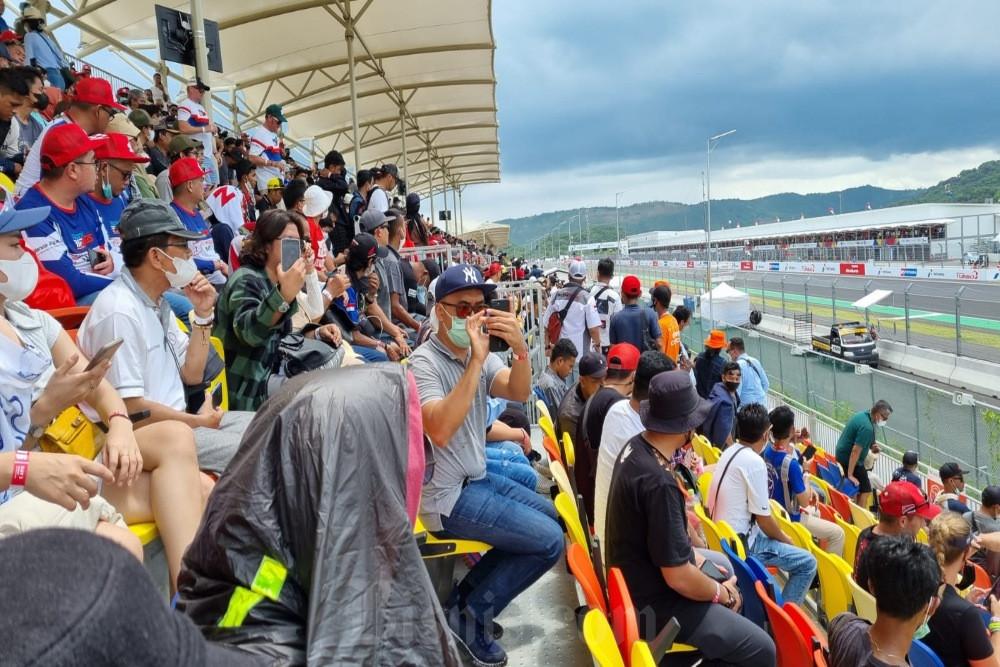
Special Economic Zones (SEZs) are being developed as a driving force for national tourism sector investment. However, despite increasing investment realisation, the development of these areas is still overshadowed by classic problems such as legal certainty, licensing, transport connectivity, and supporting infrastructure. The development of SEZs is part of the implementation of long-term tourism destination development policies. During a hearing with House of Representatives Commission VII on Wednesday (1/7/2026), the Ministry of Tourism’s Acting Deputy for Destination and Infrastructure Development, Reza Fahlevi, stated that destination development is currently directed towards strengthening priority and regenerative tourism destinations. According to him, the government needs an instrument that can accelerate regional development while attracting large-scale investment. Therefore, SEZs are built with special provisions offering various investment incentives and ease of doing business for investors. “Tourism SEZs function as an acceleration instrument through investment, by providing various incentives and area-based ease of doing business,” Reza said at the Parliament Complex in Senayan, Jakarta. In addition to SEZs, the government also relies on Tourism Authority Bodies to accelerate development through cross-ministerial coordination, local governments, and the business sector. These bodies manage authoritative areas while facilitating investment and providing basic infrastructure in priority destinations. He explained that there are currently eight SEZs with tourism as their main activity: Mandalika in West Nusa Tenggara, Kura-Kura Bali, Tanjung Lesung in Banten, Sanur in Bali, Tanjung Kelayang in Bangka Belitung, Lido in West Java, Likupang in North Sulawesi, and the Batam International Health and Tourism SEZ. Additionally, four other SEZs are also developing the tourism sector: Nongsa in the Riau Islands, Singhasari in East Java, Morotai in North Maluku, and Industropolis Batang in Central Java. Reza further explained that up to the first quarter of 2026, cumulative investment in tourism SEZs had reached Rp45.04 trillion, with a workforce absorption of 53,278 people. Over the past five years, Tourism Authority Bodies also recorded 2.4 million tourist visits in authoritative areas, non-tax state revenue of Rp22.22 billion, and investment commitments worth Rp1.18 trillion. According to him, the development of SEZs cannot rely solely on core area construction. He mentioned several efforts such as strengthening tourism villages, buffer destinations, improving human resource competencies, and organising various international events. Regarding investment, he said the Ministry of Tourism continues to encourage investment promotion and provide assistance in resolving investment barriers, known as debottlenecking. “This approach is part of debottlenecking efforts, namely ensuring that obstacles faced by investors and area managers can be immediately followed up and solutions found,” Reza said. At the same hearing, the acting President Director of ITDC, Ahmad Fajar, said that Mandalika SEZ has attracted 29 investors with realised investment exceeding Rp6 trillion and has absorbed around 26,424 workers. The company also recorded six new investors in 2026 who are starting to build hotels, villas, and various premium tourism support facilities. “So, this area is an Indonesia Strategic Tourism Economic Hub. That is what we want for the future,” Ahmad said. According to him, hosting international events such as MotoGP Mandalika has become a means to introduce Indonesia to global investors and tourists. He cited research from the Bandung Institute of Technology which stated that the Mandalika MotoGP event generated an economic impact of around Rp4.8 trillion. However, he stressed that physical development alone is not enough to accelerate investment. Ahmad stated that legal certainty remains the primary need for investors. In addition, there are aspects of licensing acceleration, strengthening supporting infrastructure, increasing international flight connectivity, and logistics flow support. He also views human resource development as an important factor in maintaining the destination’s competitiveness. “Strong collaboration between the central government, local governments, the House of Representatives, the business sector, and the community will drive Mandalika to continue developing into a world-class tourism destination as well as a new economic growth centre,” Ahmad said. A similar view was conveyed by PT Minahasa Permai Resort Development, the manager of the Likupang SEZ. The management representative stated that the area’s development had been delayed due to the Covid-19 pandemic, which caused many investors to postpone their investment decisions. The developer is continuing construction by carrying a regenerative tourism concept that integrates environmental conservation, marina development, resorts, real estate, and agricultural and aquaculture zones.