
The road home for street heroines
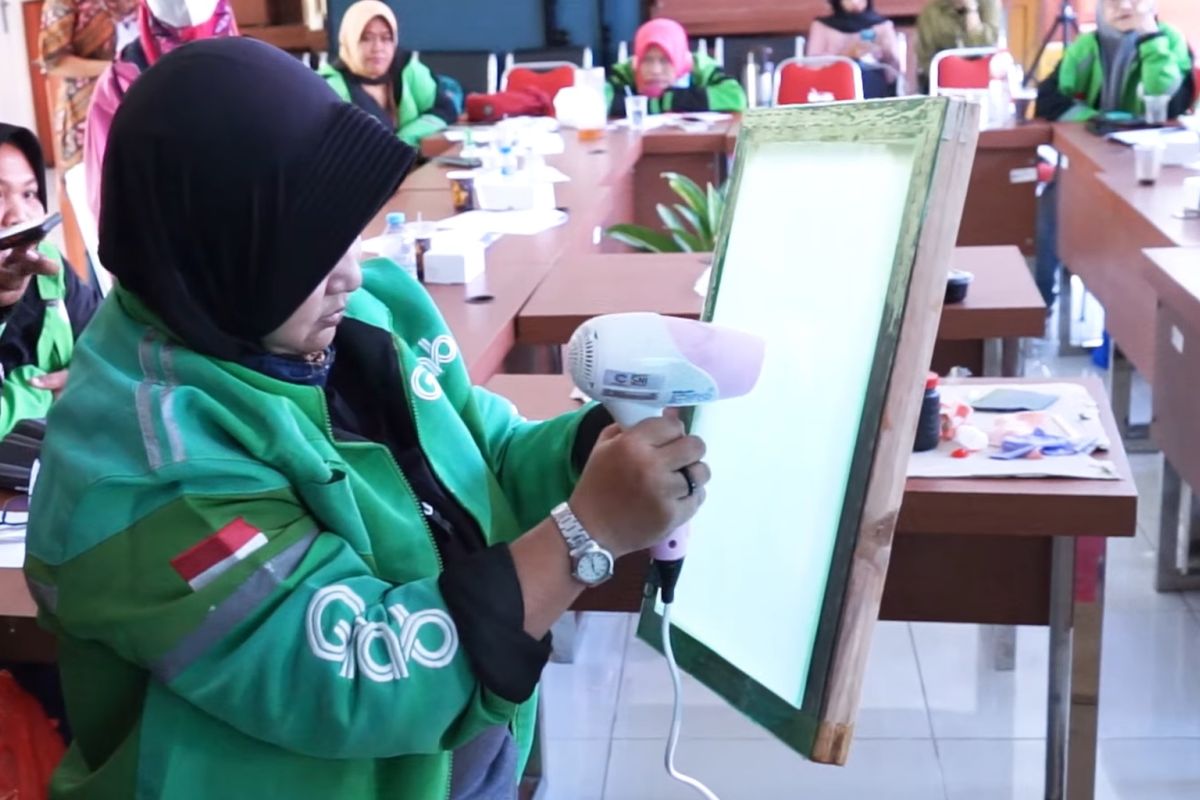
Amid the almost ceaseless traffic of Surabaya, more and more women can be seen wearing ride-hailing jackets, gripping motorcycle handlebars, and navigating street after street to deliver passengers or food.
Behind these journeys lie stories of mothers chasing their children’s school fees, wives replacing husbands who have lost their jobs, and women who choose to keep working despite circumstances that restrict their room to move.
This phenomenon reveals a changing face of the urban economy. Work once identified with men has now become a survival space for many women. Flexible hours make the ride-hailing driver profession an option when formal employment is hard to reach.
However, that flexibility also carries risks. Income depends on the number of orders, work protection is limited, and safety is at stake every time the wheels start turning.
In Surabaya, East Java, the city government has begun reading this problem not merely as a labour issue, but as part of family development.
Data from the Surabaya Industry and Manpower Office shows there are around 21,000 to 22,000 ride-hailing drivers in the city, of whom at least 1,008 are women.
That figure is not yet dominant, but it sufficiently illustrates that women are now an important part of the urban digital economy.
Beyond assistance
Attention to ride-hailing drivers has often stopped at social assistance or the provision of work equipment. Yet their greatest needs are far more complex.
The Surabaya city government is trying to shift that approach. Protection through BPJS Ketenagakerjaan (employment social security) has been extended to drivers as a first step to reduce the risk of new poverty when breadwinners suffer accidents or die. This policy matters because social security not only protects workers, but also safeguards the continuity of families who depend on daily income.
The next step is empowerment. Female drivers are being encouraged to acquire other skills, from sewing and make-up to home-based businesses. The idea is simple, but strategic: the more sources of income a family has, the smaller its dependence on high-risk work on the roads.
This approach aligns with a development direction that positions women as drivers of the family economy, not merely recipients of aid. Various parties have even begun to get involved.
In July 2026, for example, the Surabaya City Government collaborated with the Alumni Association of Ciputra University’s Master of Management programme to support 100 female ride-hailing drivers through the Ride to Hope programme, as a form of recognition and, at the same time, a boost to their spirit.
Even so, field experience shows that training alone does not automatically improve welfare. Some participants have received training and equipment assistance, yet their businesses have not grown. The problem is no longer physical capital, but the courage to start, the ability to manage a business, market access, and long-term mentoring.
This is where empowerment often faces its greatest challenge. Giving someone a sewing machine is far easier than building an entrepreneurial mindset. Holding a one-day training session is far simpler than ensuring a business survives for years.
A growing ecosystem
Strengthening women’s economic participation cannot be borne by government alone. Digital platforms, companies, universities, communities, financial institutions, and society at large all have room to collaborate.
Such collaboration is becoming increasingly important because the problems faced by female ride-hailing drivers relate not only to income, but also to access to social protection, capacity building, and the opportunity to develop sustainable businesses.
Source: jawawa.id (https://jawawa.id/newsitem/the-road-home-for-street-heroines-1785804737)
Originally published by Antara (Indonesian) (https://www.antaranews.com/berita/5678627/jalan-pulang-para-srikandi-jalanan), translated from Indonesian