
The Rise of 'Cireng Asik' and Dinda's Macramé Bracelets in the Marketplace Era
Ika Safitri (27) and her husband, Harun, have tried various businesses in the past, none of which lasted long. Undeterred, in 2024, they sought a new fortune by selling a traditional snack: stuffed cireng (tapioca fritters).
Ika and Harun sell several varieties of stuffed cireng, ranging from original chicken, spicy chicken, minced meat, and sausage to cheese. Their reason for choosing simple cireng was that it is not a ‘viral’ snack that gains sudden popularity only to fade away quickly.
“That was one of the reasons we chose cireng, because it is not a viral food that lasts only a short time,” Ika told CNNIndonesia.com during an interview at her home in Depok, West Java, on Thursday (13/8). Ika believes cireng is a food that can adapt and be accepted by many palates.
Driven by this belief, the couple began their venture by making the cireng themselves, scouring the internet for knowledge. Harun actively joined Facebook groups for cireng sellers to learn how to make the dough, eventually finding the perfect recipe that customers loved.
With an initial capital of Rp2 million, Ika and her husband began selling cireng from a stall in front of a school on Jalan Merdeka, Depok. Her husband is usually at the location, while Ika looks after their three-year-old child.
“Since our target is snacks, we focus on school children,” she said. Ika is a housewife, and her husband is a victim of redundancy (layoffs). Therefore, for this couple, trading stuffed cireng is a way to survive and meet daily living expenses.
Their efforts have paid off. The stuffed cireng, sold at Rp1,000 per piece, is popular among schoolchildren and passers-by. Slowly but surely, sales have increased. From an initial 200 pieces per day, they were able to sell up to 500 pieces in the following months.
According to Ika, quality and consistency are key for food traders like herself. Consequently, she pushes her business to continue running even if it means waking up in the early hours to prepare production ingredients. “If we sell today and not tomorrow, people will complain, ‘Why is it closed?’ or ‘Why didn’t they open?’” she remarked.
Ika’s business expanded further when school canteen vendors offered to become resellers. She immediately accepted the offer, which increased her production due to the demand from canteen vendors. From sales at the canteen and in front of the school, Ika can earn a turnover of around Rp400,000 per day.
Ika and her husband’s entrepreneurial spirit continues to grow. They are confident that this stuffed cireng business can last longer than their previous ventures.
Opening New Opportunities
For small business owners, especially those just starting, finding customers does not always require opening a roadside shop and waiting for passers-by. The digital era allows customers to arrive from anywhere, including via mobile phones.
Ika, who had never previously ventured into the online market, is now attempting to sell cireng through marketplaces. She has been doing this since mid-last year by opening a Shopee account. She knows many cireng sellers are already on the platform, but she continues to learn from siblings and colleagues who established Shopee stores earlier.
“We use Shopee. Why choose it? Because it is the largest marketplace,” Ika said. Selling on Shopee, Ika uses the brand name ‘Cireng Asik’.
Ika has had to teach herself many things to develop her online store. Initially, she did not pay much attention to visual photos in the storefront or product packaging. Several times, the cireng she sent arrived in an inedible, spoiled condition. After various trials, Ika and her husband finally found a solution: par-frying the cireng and using vacuum packaging.
“After finding the method of par-frying and vacuum-packing, it became safe. We have even sent it to areas outside Java several times and it arrived safely,” said Ika. However, she limits her shipping to South Sumatra, Lampung, Java, and Bali. For areas beyond that, she remains anxious about whether the product quality will hold up.
Ika did not expect her online store to attract so many buyers. Almost every day, there are orders through the Cireng Asik Shopee account. Currently, her daily turnover for Cireng Asik is around Rp700,000 to Rp800,000. The income from the Shopee online stall has surpassed the income from the school canteen.
“Currently, online is more significant. Perhaps online accounts for 60 percent, and the school for 40 percent,” she said. With the business becoming more promising on Shopee, Ika and her husband can now smile, as their business is more sustainable than their previous ones. She is also grateful to be able to set aside some earnings for her parents and to employ a relative to help with production. Ika noted that running an online store allows her to spend more time at home to care for her now four-year-old child.
Dinda’s Perseverance through Macramé Bracelets
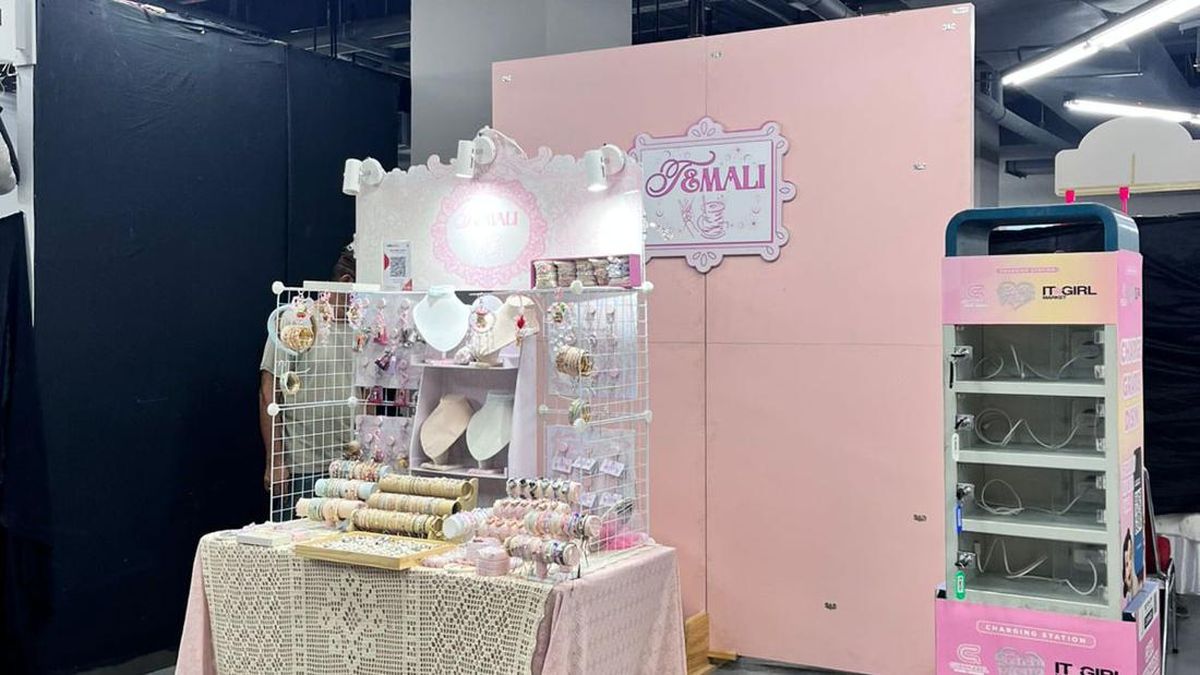
Dinda (25) has a similar story. Starting from a hobby of collecting handmade bracelets, Dinda wanted to produce and sell them herself. She was inspired by Balinese bracelets, which are known for using various types of cord and beads. She believes both materials possess high handmade value, which serves as a selling point.
Dinda studied and developed her product materials and techniques through Pinterest and YouTube. “You could say the production results were achieved through self-teaching,” Dinda told CNNIndonesia.com.
Since deciding to sell handmade bracelets, she immediately opened a stall on the Shopee marketplace. She started this venture when she was 18 years old, around 2019.
Source: jawawa.id (https://jawawa.id/newsitem/the-rise-of-cireng-asik-and-dindas-macrame-bracelets-in-the-marketplace-era-1788090877)
Originally published by CNN Indonesia (https://www.cnnindonesia.com/nasional/20260830012728-20-1397863/geliat-bisnis-cireng-asik-dan-gelang-temali-dinda-di-era-marketplace), translated from Indonesian