
The Rich Splash Out on Jets and Yachts While Ordinary People Face Layoffs and Rising Electricity Bills
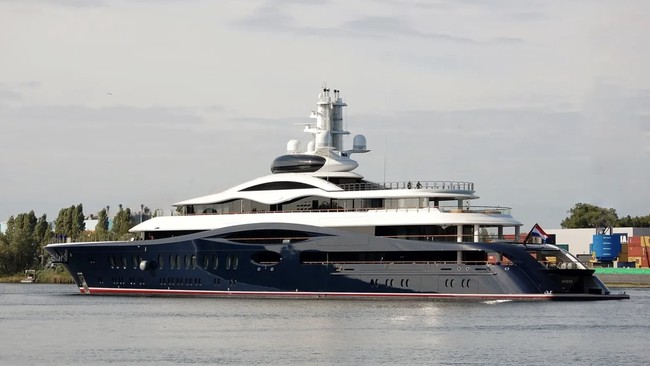
While the wider public is tightening its belt amid soaring fuel prices and global inflation, a small number of people are splashing their cash thanks to the artificial intelligence boom. Their rapidly soaring wealth has prompted them to snap up luxury goods, from superyachts to private jets, according to Futurism on Monday (18/8/2026).
According to a UBS report summarised by the Financial Times, the number of billionaires worldwide jumped 13 percent between April 2025 and April 2026, reaching a record 3,302 people with net worth above US$1 billion. More than 1,000 of them are based in the United States. Their combined wealth rose by an average of 25 percent, far outpacing global personal wealth growth of just 10.8 percent, driven mainly by the soaring value of AI and semiconductor companies.
The newly minted billionaires who became suddenly rich thanks to AI are no longer satisfied with merely owning luxury homes. They are now flocking to order super-luxury yachts, private jets and custom-specification luxury cars.
But their tastes differ from the old-money generation. Toby Edwards, deputy director of luxury aviation company FlyVictor, explained that old luxury standards such as champagne and caviar have been left behind. Instead, AI billionaires are asking for things that seem simple but are highly specific, such as particular types of drinking water and healthy menus.
“They charter private jets for efficiency and confidentiality, not to show off,” Edwards said, quoted from the report.
Paul Charles, a luxury travel consultant, added that the emergence of new rich from the AI world has triggered a wave of new demand for providers of jets, yachts and luxury cars. “The concept of the discerning customer is now outdated. Companies must adapt to serve a new generation of luxury travellers born from AI wealth,” he said.
This wealth concentrated in the hands of a few has emerged at a time when the purchasing power of the wider public is increasingly under pressure.
Mass layoffs replaced by AI
Moreover, the wealth piled up in the hands of a few is born from technology that threatens millions of workers. According to an S&P Global survey in 2026, the impact of AI adoption on employment has turned negative. Over the past 12 months, the number of companies reporting workforce reductions thanks to AI was 5 percentage points higher than those adding staff. The trend is expected to worsen by another two points next year.
Generative AI and increasingly autonomous artificial intelligence are now beginning to replace entire job functions, not merely assist as work tools.
Fresh graduates, administrative staff, content creators and creative workers are among the most vulnerable groups. Bank of America warned that the emergence of “AI agents” that can work independently without human supervision could create a far larger wave of workforce reductions than previous ones.
Even when companies still employ humans, AI tends to suppress wages and shift profits to capital owners, namely the technology billionaires whose names are now increasingly prominent.
Residents’ electricity and water bills also rise
Another cost borne by the wider public comes from the voracious energy consumption of data centres that train AI machines. An ordinary-sized data centre already consumes electricity equivalent to 100,000 households. By 2028, data centres are estimated to draw 12 percent of all electricity consumption in the United States.
As a result, electricity bills for residents near data centre developments are also soaring. Research from Carnegie Mellon University estimates the increase could reach 25 percent or more. The companies causing the surge do not fully bear the burden; instead it is shifted to ordinary household customers through higher electricity tariffs.
There is also the enormous water demand for cooling AI machines. According to a United Nations report, AI-related water consumption is estimated to be equivalent to the basic drinking water needs of 1.3 billion people by the end of this decade.
In some areas, AI companies require millions of litres of water per day, forcing local residents to share increasingly scarce water supplies.