
The Rhythm of the Hammer in Matraman: The Story of Manual Number Plate Artisans Refusing to Vanish
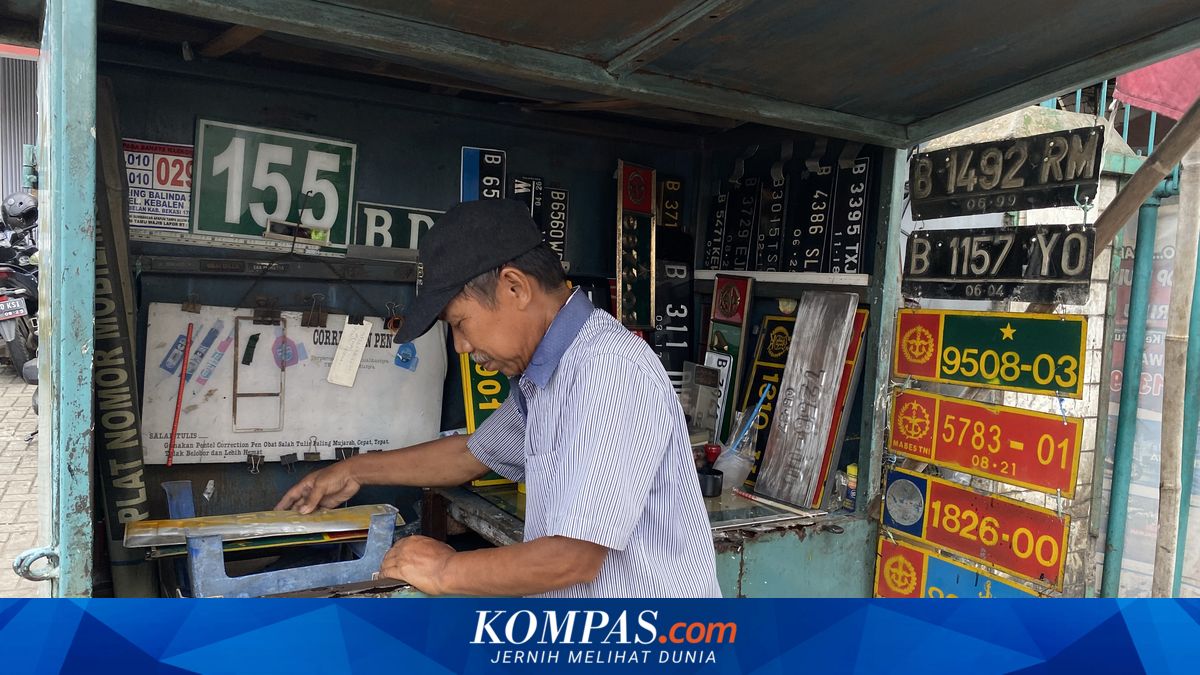
JAKARTA — A row of small stalls along Jalan Matraman, East Jakarta, continues to persist despite the heavy tide of digitalisation and the modernisation of the automotive industry. Although they remain operational, the existence of these roadside number plate printing services actually occupies a grey area. This is because the plates produced by these artisans are not the official vehicle registration plates (TNKB) issued by the Indonesian National Police Traffic Corps through the Samsat system.
Based on observations at the location, these stalls occupy narrow spaces along the roadside. At the front of the kiosks, various types of number plate samples are displayed, hanging as a moving showcase. The colourful displays are striking, ranging from the legendary black plates and the latest standard white plates to yellow plates for public transport, as well as plates with blue lines at the bottom, a special marker for electric vehicles that are increasingly common in Jakarta.
In addition to civilian vehicle plates, some stalls even display replicas of official government plates in red, green, and yellow, complete with specific institutional logos. This sight illustrates that the artisans in this area have been accustomed to handling various customer requests for decades.
Nearby, other artisans sit behind simple wooden tables filled with various iron letter stamps and cans of spray paint. The process of making plates here still relies entirely on manual labour. There are no modern computers or noisy automated printing machines. On their worktables, hammers and rows of cast iron pieces in the shapes of letters and numbers are visible. The plates are manually sprayed with black or white paint and then dried under the sun. When the weather is cloudy or raining, the drying process automatically takes longer.
Although they still endure, the atmosphere in this legendary number plate centre is much quieter compared to its heyday a dozen years ago. Some artisans spend much of their time on mobile phones or tidying up aluminium scraps while waiting for customers to arrive. One artisan, Ari, admitted he has known the plate printing world since his youth. “I started from junior high school until I finished university. So, you could say it has been over a decade,” Ari told reporters on Friday.
Ari noted that the manual printing business is increasingly being pushed back by the development of digital technology. In the past, services such as banner making, signage, and stamp production were still largely performed manually.
Source: jawawa.id (https://jawawa.id/newsitem/the-rhythm-of-the-hammer-in-matraman-the-story-of-manual-number-plate-artisans-refusing-to-vanish-1780910384)
Originally published by Kompas (https://megapolitan.kompas.com/read/2026/05/18/15502411/irama-ketukan-palu-di-matraman-kisah-perajin-pelat-nomor-manual-yang?utm_source=ABC&utm_medium=rss), translated from Indonesian