
The Return of Java Man and the Strategy to Transform Museums into National Infrastructure
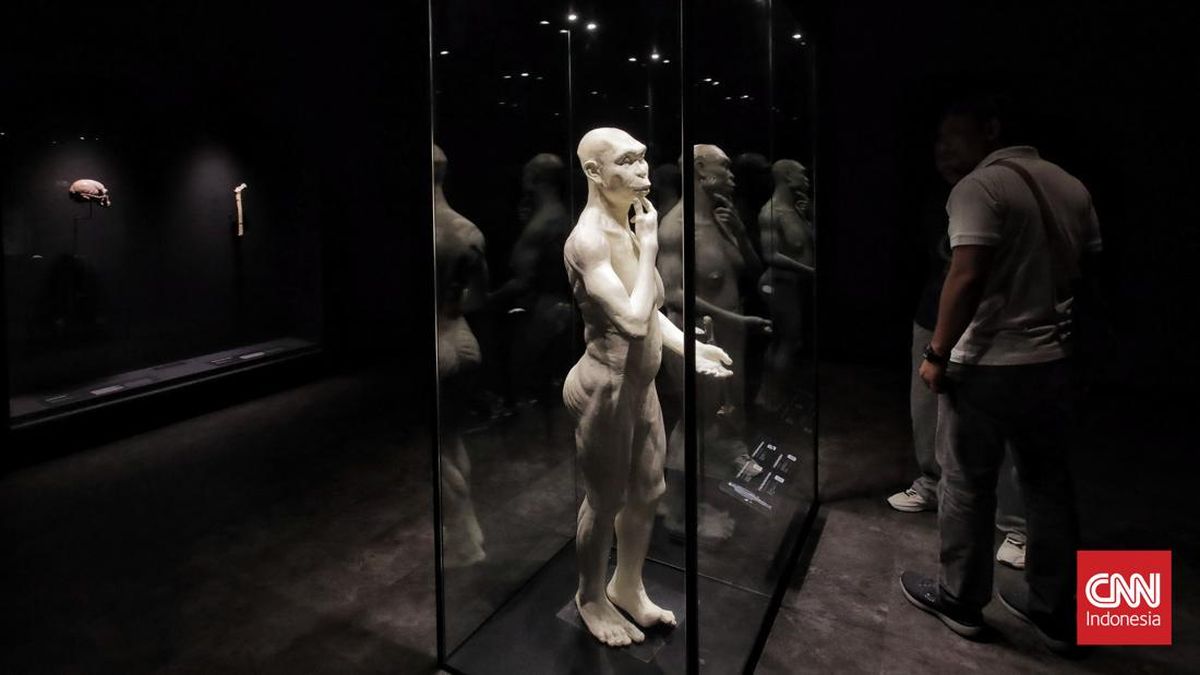
The ‘Java Man’ fossils—Homo erectus specimens discovered in East Java in 1891 by Dutch anatomist Eugène Dubois—have finally returned to Indonesia. After more than a century in the Netherlands, international media have described this process as part of colonial restitution, a form of scientific justice, and a point of national pride for a nation that has persistently demanded the return of its precious artefacts from its former coloniser.
These fossils represent one of the world’s most significant discoveries in human evolution. For over 130 years since their discovery, the narrative of Java Man’s history was largely controlled by European scientific institutions and authorities. Therefore, the repatriation of Java Man to Indonesia is more than just the physical relocation of ancient human remains; it is a symbolic message that Indonesia is not merely a site where world history was discovered, but a nation capable of curating its own history.
Indonesia possesses one of the richest archaeological and paleoanthropological heritages in the world, spanning ancient human evolution, maritime trade, Hindu-Buddhist kingdoms, Islamic civilisation, megalithic cultures, and some of the oldest rock art ever found. While Java Man is an extraordinary find, hundreds of thousands of other artefacts worthy of the global stage currently reside in Indonesian museum collections. The National Museum of Indonesia, for instance, is regarded as one of the richest and most complete museums in Southeast Asia, with collections reaching 190,000 objects, including prehistoric, archaeological, ethnographic, and anthropological artefacts.
Despite this wealth, Indonesia has yet to establish a global brand associated with its historical treasures, unlike the British Museum’s association with British scientific dominance or the Louvre’s role as a global cultural and fashion pivot. The key lies in museums, or more accurately, museum infrastructure.
Nations that understand the importance of such cultural branding have long treated museums as strategic investments. The Louvre in France is not merely a space for displaying the Mona Lisa; it is part of a machine that establishes Paris as a global cultural capital. The Metropolitan Museum of Art strengthens New York’s prestigious image, and the British Museum remains one the UK’s most powerful instruments of soft power and tourism. Similarly, South Korean museums serve as anchors for the creative economy and tourism, while Abu Dhabi is strategically investing in museum infrastructure with world-renowned names like Frank Gehry and the Guggenheim to quintuple its tourism figures within a decade.
In Indonesia, the return of Java Man forces us to address an old question: should we consider museums important? If so, are we willing to invest in them not just as ceremonial buildings, but as national infrastructure? Generally, we understand infrastructure as physical structures dominated by motorways, airports, ports, and industrial zones. This may be the core issue; Indonesia tends to view museums as cultural accessories rather than engines of economic, educational, and geopolitical power. If bridges move goods and airports move people, museums move narratives and build influence. In today’s global climate, narrative and influence are economic forces packaged as soft power.
In reality, for decades, much of the Indonesian public has viewed museums as mere display cabinets for cultural objects. Museums occupy a relatively marginal position in national policy. While they are symbols of national pride, their importance lags far behind when discussing budget priorities. Consequently, museums often become rigid, underfunded state bureaucracies used primarily as ceremonial sites for school field trips.
Following the 1998 Reformation, Indonesia experienced political democratisation and decentralisation, yet the museum sector failed to join this modernisation. Meanwhile, neighbouring nations and global cities are increasingly aggressive in using museums for tourism branding, soft power, and urban regeneration. The National Gallery Singapore, for example, is a strategic move to position Singapore as the hub of Southeast Asian art. Such branding is vital for nations aspiring to be regional leaders in modern culture, rather than merely domestic collectors of art.