
The Resonance of Workers' Voices Amid Economic Challenges and Social Justice
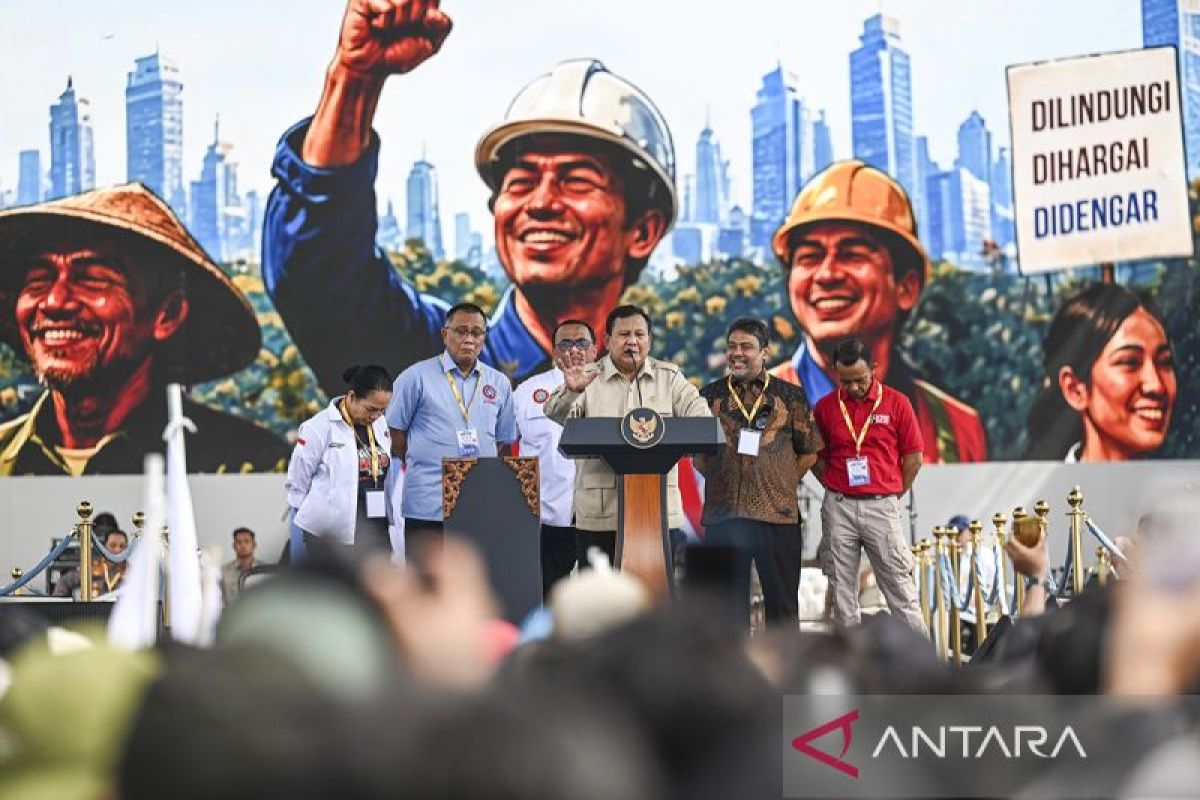
Workers’ voices are not merely demands but strategic input in formulating inclusive economic policies.
Jakarta (ANTARA) - The commemoration of International Labour Day on 1 May is fundamentally not just an annual ceremony, but a collective space for workers to articulate their rights and justice.
On May Day 2026, waves of actions expected to involve hundreds of thousands of workers in various regions will serve as a strong catalyst that labour issues are still far from ideal.
The concentration of crowds in the National Monument (Monas) area in Jakarta reflects that workers’ voices remain relevant amid increasingly complex economic dynamics.
Data from the Central Statistics Agency (2025) shows that Indonesia’s working-age population exceeds 147 million people, making labour issues a strategic concern in national development.
However, May Day should not stop as a symbol. It becomes a resonance of deeper problems: how workers face changes in the global economic structure that increasingly demand flexibility, but often sacrifice job security.
The International Labour Organization in 2024 noted that around 60 percent of workers in developing countries are still in the informal sector, including Indonesia where the figure reaches about 59 percent. This indicates that the majority of workers have not yet enjoyed adequate labour protections, making their voices increasingly important to be heard.
The resonance of workers’ voices cannot be separated from the mounting global economic pressures. The Russia-Ukraine conflict has triggered volatility in energy and food prices, which directly impacts workers’ cost of living.
The International Monetary Fund in the World Economic Outlook (2023) noted that global inflation reached 8.7 percent in 2022, while economic growth slowed to around 3 percent. This situation creates double pressure: workers’ real wages are eroded, while job opportunities do not grow as fast as the needs of the working-age population.
In Indonesia, this pressure is reflected in the employment structure. The Central Statistics Agency (2025) records an open unemployment rate of around 5.3 percent, although this figure does not fully capture job quality. Many workers are in conditions of low working hours and unstable income.
In addition, labour-intensive sectors, such as textiles and manufacturing, face global pressures that lead to potential layoffs (PHK). This situation strengthens the urgency of labour protection in national economic policies.
Source: jawawa.id (https://jawawa.id/newsitem/the-resonance-of-workers-voices-amid-economic-challenges-and-social-justice-1777618381)
Originally published by Antara (Indonesian) (https://www.antaranews.com/berita/5549995/resonansi-suara-buruh-di-tengah-tantangan-ekonomi-dan-keadilan-sosial), translated from Indonesian