
The Repatriation of Indonesia’s Wildlife
Repatriation is the return of a person, object or living creature to its country or place of origin. In Indonesia today, the repatriation of wildlife can no longer be viewed merely as a technical conservation agenda; it has become a major mission tied to the survival of the nation’s ecological identity. Its urgency is most acute in the case of the Sumatran rhinoceros (Dicerorhinus sumatrensis), one of the world’s rarest large mammals, now on the brink of extinction (IUCN, 2023).
The return of individual Sumatran rhinoceroses, such as Harapan from Cincinnati Zoo in 2015, was an effort to restore a genetic chain that had nearly been broken (International Rhino Foundation, 2016). With the global population estimated at fewer than 80, every rhinoceros returned to its natural habitat in Sumatra represents an invaluable biological investment (WWF, 2022).
In recent years, Indonesia has also seen the return of other animals from abroad, showing that the country is seeking to reclaim its biological sovereignty, long eroded by cross-border illegal trade (KLHK, 2021). In this sense, repatriation is not merely the transfer of animals, but a process of restoring the dignity of ecosystems that have long been impaired by the loss of keystone species (Sodhi et al., 2010).
To fully understand the urgency, we must examine its underlying cause: illegal wildlife trade. For decades, Indonesia’s biodiversity has flowed out of the country through complex, organised smuggling networks. Animals have been brutally taken from their habitats and traded as global commodities, stripped of their ecological roles in the wild (TRAFFIC, 2020). This is not simply ordinary criminal activity, but a systematic extraction of genetic resources that damages ecological balance (UNEP, 2016).
Every seizure of wildlife abroad places Indonesia in a legal and diplomatic dilemma. The animals’ status as evidence often impedes their return, leaving them trapped for years in foreign facilities where their condition may continue to deteriorate (CITES Secretariat, 2019). In these circumstances, environmental diplomacy is an important instrument for asserting that each animal is part of the national heritage and cannot be separated from its habitat.
Repatriation also presents complex technical challenges, particularly concerning genetic integrity. In conservation biology, each population has unique genetic characteristics shaped by adaptation to its local environment (Frankham et al., 2010). Incorrect placement can trigger new ecological disruptions. DNA testing is therefore crucial to ensure that animals are returned to the appropriate habitat (Allendorf et al., 2013).
Physical return, however, is only the beginning. Many repatriated animals carry ‘invisible wounds’: behavioural disorders, chronic stress and a loss of wild instincts resulting from prolonged interaction with humans (Reading et al., 2013). They may also carry new pathogens that could threaten wild populations (Daszak et al., 2000). This is why adequate quarantine and rehabilitation facilities are essential.
Rehabilitation is the most fragile stage of the entire process. Not every animal succeeds in returning to the wild; some must live permanently in sanctuaries because they have lost the ability to survive independently. Their presence nevertheless remains important for education and as a reminder of the effects of human exploitation (Conway, 2011). Funding is another major challenge. Repatriation entails substantial costs, from transport and quarantine to release, and requires a long-term commitment from the state (McCarthy et al., 2012).
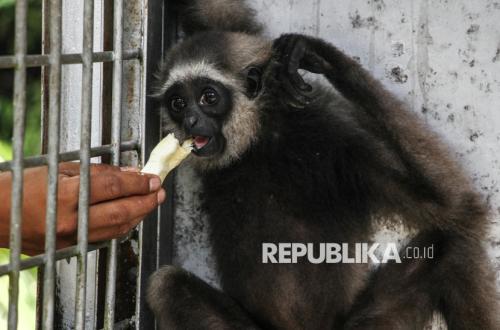
It is important to understand that repatriation is not limited to one species, but covers a wide range of animals. Primates such as Sumatran and Bornean orangutans are among the animals most frequently repatriated from other countries, including Thailand and the Middle East (KLHK, 2021). These individuals generally undergo rehabilitation at organisations such as the BOS Foundation before being released into the wild (BOSF, 2020).
Source: jawawa.id (https://jawawa.id/newsitem/the-repatriation-of-indonesias-wildlife-1791528739)
Originally published by Republika (https://analisis.republika.co.id/berita/tmmlzx483/repatriasi-satwa-liar-indonesia), translated from Indonesian