
The Relevance of the Old Teacher Sayid Idrus's Thoughts in the Modern Era
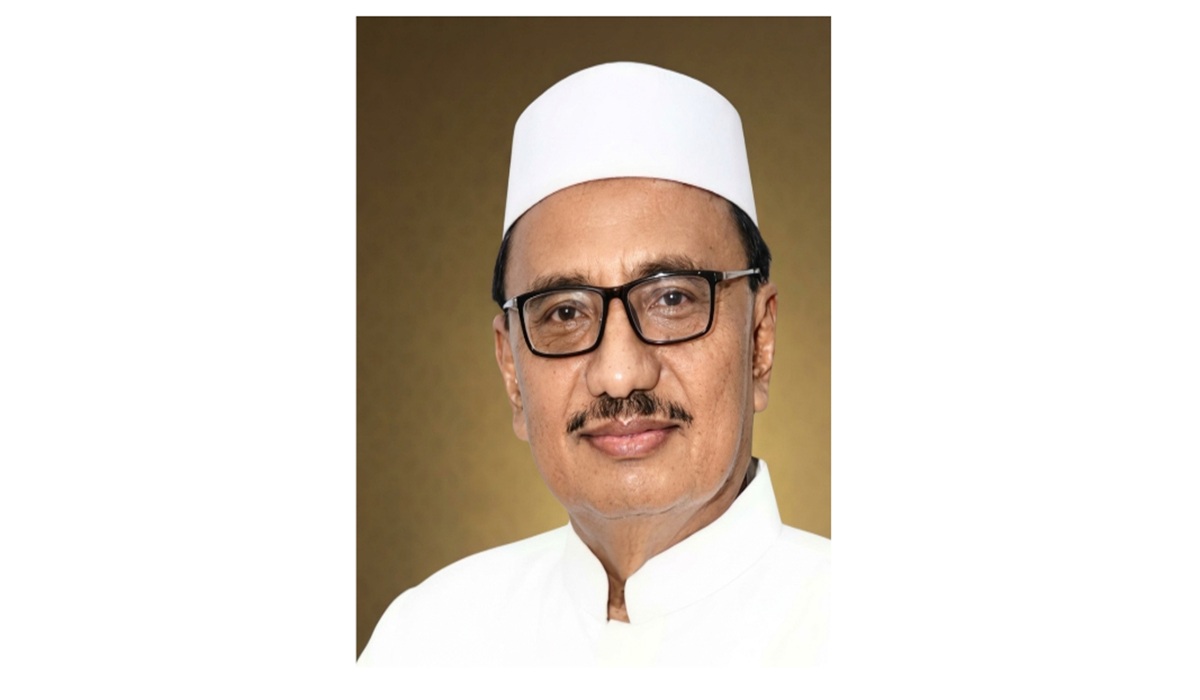
Indonesia’s pre-independence history was not solely shaped by political speeches, large gatherings, or bursts of gunfire. There was also quiet work progressing through other channels: education, economics, and networks of trust across the nation.
In the eastern regions of Nusantara, one of the most important actors in this quiet work was Sayid Idrus bin Salim Al-Jufri, a Hadrami ulama who served as an educator, merchant, preacher, and informal diplomat before the birth of this republic.
He was not recorded as a member of a political party. Nor was he known as an official negotiator with colonial powers. However, his networks spanned Hadhramaut, Hijaz, East Africa, Singapore, and Nusantara, making him a key node in communication for the Muslim ummah and religious nationalism in eastern Indonesia.
Sayid Idrus was born in Tarim, Hadhramaut, in 1891, a city that for centuries produced ulama-merchants with transoceanic mobility. From Tarim, he inherited two traditions at once: strict religious scholarship and an ethos of economic self-reliance.
From a young age, he was accustomed to moving from one Islamic centre to another—Aden, Mombasa, Zanzibar, Singapore—building relations with ulama, merchants, and Muslim community leaders. This mobility shaped him into a cosmopolitan ulama who understood colonial politics not from books, but from field experience and cross-network conversations.
Unlike some ulama who depended on political patrons, Sayid Idrus built economic independence through trade. He was involved in textile business networks, agricultural products, and the distribution of essential goods to Muslim communities—a typical Hadrami diaspora model based on trust (trust-based networks).
For him, economics was not an end goal. It was a strategic tool. With financial independence, Sayid Idrus had ample room for manoeuvre:
The most intriguing role of Sayid Idrus was his function as an informal diplomat for the ummah. Through Hadrami ulama and merchant networks in the Middle East and East Africa, he conveyed the conditions of Muslims in Indonesia to the outside world, maintaining the inflow of books, teachers, and moderate Islamic ideas, and facilitating connections between local figures in eastern Indonesia and international Islamic networks.
In an era when the Indonesian state did not yet exist, this kind of diplomacy became a channel for moral and intellectual legitimacy. The Islamic world knew Indonesia not just as a colony, but as a living and dynamic Muslim community.
Sayid Idrus never founded a political party. He understood that in eastern Indonesia, frontal politics risked dividing society. His strategy was different: building people and institutions.
This approach is clearly evident when he established Alkhairaat in Palu in 1930. On the surface, Alkhairaat was an educational institution. But strategically, it was a long-term social-political project: producing knowledgeable, ethical Muslim cadres with national awareness.
The Alkhairaat network, which later spread to Sulawesi, Maluku, Kalimantan, and Papua, became one of the foundations for the social integration of eastern Indonesia into the republic. In his preaching, Sayid Idrus was known for intelligently reading contexts and being firm in principles. He rejected syncretism that blurred aqidah, but also opposed rigid puritanism that severed traditions. For him, preaching must be grounded in knowledge, delivered with ethics, and directed towards social welfare.
His firmness was not born from emotion, but from scholarly argumentation. He educated with patience, built with perseverance, and admonished with authority.
There are reasons why Sayid Idrus’s name does not often appear in national history books:
Source: jawawa.id (https://jawawa.id/newsitem/the-relevance-of-the-old-teacher-sayid-idruss-thoughts-in-the-modern-era-1774958102)
Originally published by Media Indonesia (https://mediaindonesia.com/opini/874988/relevansi-pemikiran-guru-tua-sayid-idrus-di-era-modern-), translated from Indonesian