
The Relevance of Ibn Khaldun's Thought in the Era of Global Competency Crisis
In this fast-paced modern era, we often feel as though we are living in a race without a finish line, leaving no room to simply breathe. Every day, social media bombards our consciousness with uniform standards of success, demanding that every individual be productive without pause, pursue the most prestigious careers, achieve fantastic financial milestones at a young age, and master various aspects of life simultaneously.
As a result, many of us feel anxious, lost, or experience existential disorientation simply because our personal life paths do not follow the linear success narratives displayed by others in the digital space. This psychological pressure not only limits creative movement but also erodes the essence of true happiness, as humans are forced to live within rigid, standardised industrial moulds.
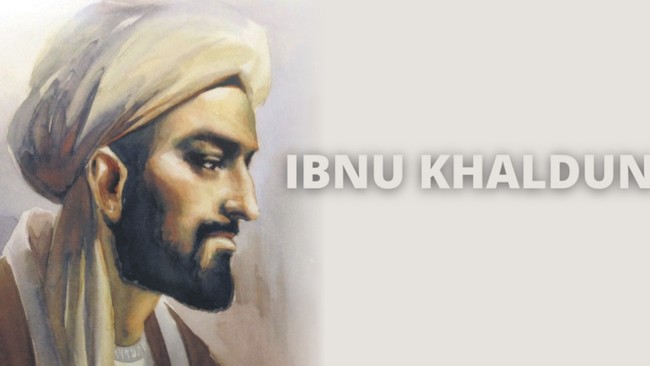
Long before the era of digital algorithms, urban culture shocks, and modern anxieties emerged, the visionary great Islamic thinker, Ibn Khaldun, laid a profound and calming philosophical foundation in his eternal magnum opus, the Muqaddimah. He wisely viewed that humanity was essentially created by the Creator with diverse and rich capacities, characters, inclinations, orientations, and thinking potentials. This existential diversity is not a curse, a social defect, or a civilisational inequality, but rather a natural blueprint allowing humans to succeed, live prosperously, and find true meaning in their respective fields without having to eliminate one another.
We can rediscover the relevance of Ibn Khaldun’s great reflections today, especially when faced with the reality of the global labour market characterised by an acute competency crisis. This involves a combination of deep skill shortages and waves of global competency drain and brain drain that threaten the long-term stability of various nations.
Humanity’s absolute limitations, both in intellect and physical capacity, give rise to the art of mutual need, known in Islamic socio-economic heritage as the concept of ‘ta’awun’. Ibn Khaldun firmly reminded us that no human being today can live entirely independently without the roles, contributions, and services of those around them. From this deep awareness of individual limitations, the most natural social law was born: the necessity for humans to form societies, interact, and work together synergistically. In today’s complex modern world, this principle of ta’awun manifests as a massive, unavoidable ecosystem of cross-sector collaboration for any business entity.
A cutting-edge tech startup or a massive global manufacturing corporation, for instance, could never launch great innovations into the market if the entity were comprised only of people skilled in a single, narrow technical aspect. Companies require harmonious work between creative visual designers, sharp business strategists, and capable communicators who can bridge the product with consumers on a large scale.
However, it is unfortunate that when looking at today’s empirical conditions, the world faces a worrying paradox. Based on recent global labour data from the World Economic Forum (WEF) Future of Jobs Report 2025, 63% of employers consistently identify skill gaps as the primary obstacle to business transformation globally. Furthermore, on average, about 39% of worker skills worldwide are changing or require updating, and 59% of the overall workforce requires reskilling or upskilling to remain relevant to technological dynamics and current industrial needs.
Although the number of job seekers appears abundant on the surface, the global labour market is experiencing a deficit of skilled labour capable of mastering specific, deep expertise, such as advanced digital technology, sustainable green energy transition, and artificial intelligence research. Companies across various industrial sectors struggle daily just to find competent, ready-to-use talent to meet the challenges of an exponentially moving era.
This structural inequality occurs because modern education systems have too often pushed for mass standardisation, producing uniform individuals from the same curriculum factory, rather than focusing on nurturing the unique, authentic potential possessed by every individual since birth. If we refer back to Ibn Khaldun’s philosophical view, these extraordinary differences in potential were intentionally created so that humans would naturally be distributed into various complementary social roles. When education systems and social ecosystems fail to nurture this natural distribution, the wheels of progress falter.
Source: jawawa.id (https://jawawa.id/newsitem/the-relevance-of-ibn-khalduns-thought-in-the-era-of-global-competency-crisis-1789977265)
Originally published by CNBC Indonesia (https://www.cnbcindonesia.com/opini/20260921133959-14-769582/relevansi-pemikiran-ibnu-khaldun-di-era-krisis-kompetensi-global), translated from Indonesian