
The Reason Why BPS is Requesting an Additional Rp1.47 Trillion from the House of Representatives
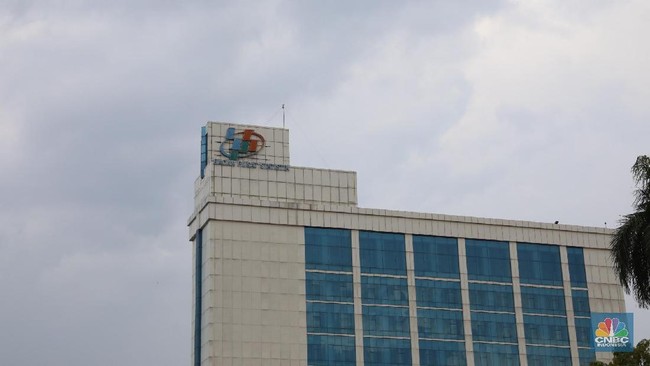
The Indonesian Central Statistics Agency (BPS) has received the green light from Commission X of the House of Representatives (DPR RI) to utilise a budget of Rp6.48 trillion for 2027. However, this figure is deemed insufficient to fund all national priority programmes, prompting BPS to propose an additional fund of Rp1.47 trillion.
The approval of the budget ceiling was granted during a Hearing Session with Commission X of the DPR RI following five rounds of discussions. Of the total Rp6.48 trillion budget, the largest portion, representing 77.18%, is allocated to BPS offices at the regency/city level across Indonesia.
BPS Principal Secretary Zulkipli explained that from the approved ceiling, Rp4.999 trillion is allocated to 502 regency/city BPS offices. Meanwhile, provincial BPS offices will receive Rp718.45 billion (11.09%), and the central working unit will receive Rp759.58 billion (11.73%).
“From the total 2027 budget ceiling, Rp2.82 trillion or 43.51% is allocated to the Statistical Information Provision and Service Programme (PPIS), while Rp3.66 trillion or 56.49% is used for the Management Support Programme (Dukman),” Zulkipli stated during the hearing on Wednesday (2/9/2026).
Breaking down the expenditure types, operational costs amount to Rp3.57 trillion, covering employee salaries and office operations. Non-operational expenditure totals Rp2.91 trillion, used to finance routine surveys, national priority programmes, and activities supporting the Management Support Programme.
Nevertheless, BPS maintains that the budget requirements for 2027 exceed the approved ceiling. The statistical agency has proposed an additional budget of Rp1.473 trillion.
This additional funding consists of Rp926.3 billion for the Statistical Information Provision and Service Programme and Rp546.87 billion for the Management Support Programme.
One of the most significant needs for the additional funds is to finance the Integrated Economic Survey, which follows up on the 2026 Economic Census.
This survey is essential to deepen information regarding business characteristics in Indonesia and serves as the basis for preparing Input-Output Tables, a vital instrument in national economic planning.
Furthermore, additional funds are required for the construction and revitalisation of BPS offices in various regions. The funds will be used to repair offices that are no longer fit for use and to restore BPS offices affected by disasters in Aceh, North Sumatra, and Flores, East Nusa Tenggara.
During the meeting, Commission X of the DPR RI also provided several notes to BPS. The Deputy Chairman of Commission X, Lalu Hadrian Irfani, urged BPS to continuously improve data accuracy and quality as the foundation for government policy formulation.
He noted that strengthening human resource capacity, utilising technology, and developing statistical methodologies must be priorities to ensure the resulting data is increasingly accurate and relevant to national development needs.
“Some programmes that must be strengthened include the quality and capacity of BPS human resources at both central and regional levels, including technical competence, the use of technology, and statistical methodology, so that statistical activities can be carried out more effectively, efficiently, accurately, and optimally,” said Lalu.
Moving forward, BPS will also oversee several national strategic programmes, ranging from the use of big data for official statistics, the preparation of inflation data, the ‘Statistical Love Village’ programme, the provision of supporting indicators for the Indonesia Gold Vision 2045, to coordinating the OECD accession process in the field of statistics.
With 539 working units spread across Indonesia and the growing need for high-quality data, the additional budget is considered key to ensuring BPS can optimally execute its entire national statistical mandate in 2027.