
The Reason the Middle East is Rich in Oil Happened Millions of Years Ago
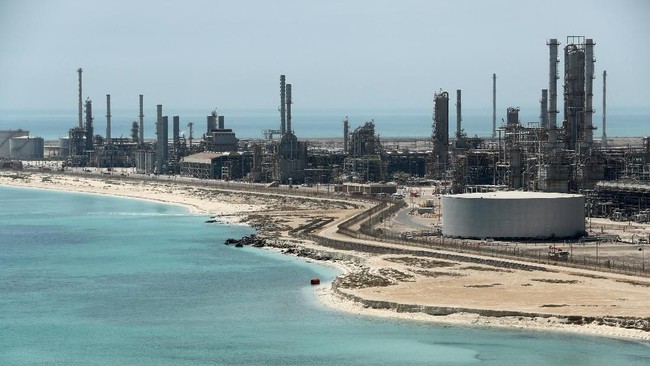
Countries in the Middle East are known as oil-rich nations. In reality, however, only half of the world’s oil reserves are located in that region.
The Middle East contributes 30 per cent of global crude oil production and 17 per cent of natural gas. The main suppliers are Saudi Arabia, Iran, and Iraq. Other countries with smaller territories also produce oil on a large scale, but it is small compared to those three nations.
However, the world’s largest oil producer is not a Middle Eastern country. Currently, the United States is the largest oil-producing nation. Meanwhile, the country with the largest oil reserves is Venezuela.
The Middle East’s advantage lies in its easily accessible oil reserves, buried in shallow sediments. Therefore, 50 per cent of the world’s “pumpable” oil reserves are in the Middle East.
Additionally, the oil buried in the Middle East is categorised as “light and sweet,” making it far easier to process than the oil found in the deep rock formations of Venezuela, which is “dense and sticky.”
The reason the Middle East holds vast and easily accessible oil reserves compared to other regions on Earth is an ancient body of water known as the Tethys Ocean.
Around 250 to 50 million years ago, the Middle East region was a body of water enclosed by two ancient continents called Gondwana and Laurasia. The Tethys Ocean was a tropical sea teeming with life such as plankton, coral reefs, fish, cephalopods, and marine reptiles known as ichthyosaurs.
As Earth’s tectonic plates shifted, the African and Arabian plates collided with the Eurasian plate. This collision, which occurred very slowly, caused the Tethys Ocean to shrink and eventually close. The sea was buried and transformed into a giant graveyard.
Crude oil is the product of processes that occurred over millions of years. Algae, plankton, and other marine organisms buried under sediments in the Middle East and the Persian Gulf were forged by heat, pressure, and time. As a result, the solar energy absorbed by those organisms over billions of years transformed into liquid and gaseous hydrocarbons.
The first oil field in the Middle East was an oil field in southwestern Iran. Exploration in the area known as Masjid Suleiman successfully discovered oil in 1908.
Currently, conflicts in the Middle East triggered by attacks between the United States and Iran are causing global oil prices to continue rising.
Source: jawawa.id (https://jawawa.id/newsitem/the-reason-the-middle-east-is-rich-in-oil-happened-millions-of-years-ago-1774921913)
Originally published by CNBC Indonesia (https://www.cnbcindonesia.com/tech/20260330123412-37-722461/alasan-timur-tengah-kaya-minyak-terjadi-jutaan-tahun-lalu), translated from Indonesian