
The Reason Pigs Disappeared from the Arabian Peninsula, Once a Favourite Meat
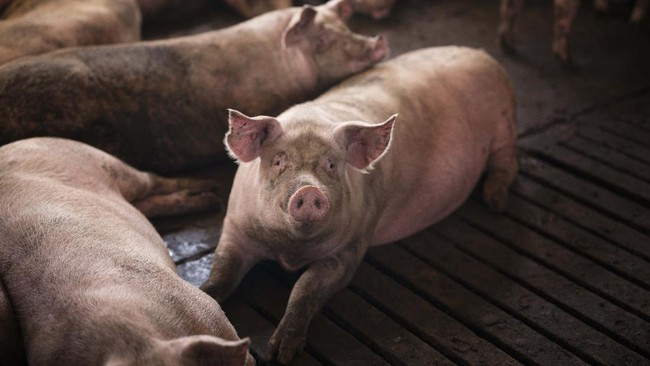
The reasons behind the disappearance of pigs in the Arabian Peninsula, once a favourite meat.
Jakarta, CNBC Indonesia - Pork products are difficult to find in the Middle East, given that the majority of its population is Muslim. Although prohibited by religion, thousands of years ago, pigs were not an alien animal in the Middle East.
How did it begin, and why are pigs now prohibited in the Arabian lands?
A research team from Kiel University, Germany, in their ‘Insights’ study titled ‘Into Early Pig Domestication Provided by Ancient DNA Analysis’ (2017), stated that it was precisely there—specifically in the Mesopotamian region—that pigs were first domesticated around 8,500 BC. It was only after this that pigs were brought to Europe for breeding.
As a result of being first domesticated in the Middle East, pigs also became a food source. Archaeological records from 5,000–2,000 BC reveal that Middle Eastern societies raised pigs as a food source. They tended to the pigs for months before they were slaughtered to serve as a delicious and nutritious primary protein source. The position of pigs as a food source rivalled the popularity of other livestock. However, the habit of consuming pork changed around 1,000 BC. Since then, the rearing and consumption of pigs have declined drastically.
There are at least two differing opinions regarding the shift in consumption from pigs to other livestock among the inhabitants of the Arabian Peninsula.
- Ecological Threat
This view is proposed by anthropologist Marvin Harris in ‘Cows, Pigs, Wars, and Witches’ (2019), which links pigs to the integrity of the natural ecosystem and Middle Eastern culture. According to him, pigs are animals that consume significantly more resources than humans and other livestock. A single pig requires 6,000 litres of water to breed. This figure applies to just one pig; if a farm has 100 pigs, they would collectively require 600,000 litres of water.
We know that most of the Middle East consists of arid deserts. Naturally, those hundreds of thousands of litres of water would be more beneficial if used by humans for survival. Consequently, Arab communities diverted water to their own needs rather than for pig farming.
‘Pigs may be tasty, but feeding them and keeping them cool would consume too many resources,’ stated Marvin Harris.
Furthermore, pigs are selective eaters. They cannot eat grass. To gain weight, pigs must be fed legumes, fruits, and wheat. The problem is that all these foods are also consumed by humans. Practically, humans in Arabia preferred to divert beans and wheat for personal consumption rather than feeding them to pigs. For this reason, Marvin Harris links the prohibition of pigs to ecological reasons.
- The Emergence of Chickens
This view is proposed by historian Richard W. Redding in ‘The Pig and the Chicken in the Middle East’ (2015). While Richard does not fully agree with Harris’s view, he confirms that pigs are animals that require a significant amount of water to survive.
This high demand was an obstacle to the nomadic lifestyle of the Arab people. When moving locations, pigs were unsuitable for travel because they required abundant water to survive. They needed to live in places that were not too dry and had easy access to water, which was not always possible during migrations.
For Richard, the disappearance of pigs from the Arab diet was not solely due to ecological factors, but rather due to the emergence of chickens. Most Arab households found that chickens were much easier to care for. Chickens only require 3,500 litres of water to produce 1 kg of meat. Additionally, chickens were considered an ideal protein source. Their small size meant they could be eaten in a single sitting.
This differed from pigs, which often left leftovers that tended to be wasted because there was no food preservation system at the time. Furthermore, chickens produced a secondary product: eggs. These eggs also became a vital household protein source. Based on this, when faced with the choice between raising chickens or pigs, humans practically chose chickens as their livestock.
‘In this situation, the chicken became the primary protein source. […] This made the pig no longer necessary,’ wrote Richard.
Since then, pigs gradually ceased to be livestock. The consumption of these heavy-bodied animals among the Arab population has also declined. Although it has not disappeared 100%, as some people in the Middle East still use pork as food.
Source: jawawa.id (https://jawawa.id/newsitem/the-reason-pigs-disappeared-from-the-arabian-peninsula-once-a-favourite-meat-1780820101)
Originally published by CNBC Indonesia (https://www.cnbcindonesia.com/lifestyle/20260607130447-33-740763/penyebab-babi-hilang-di-tanah-arab-dulu-jadi-daging-favorit), translated from Indonesian