
The Real Price of Pertalite: Not Rp10,000, but Rp16,100 per Litre
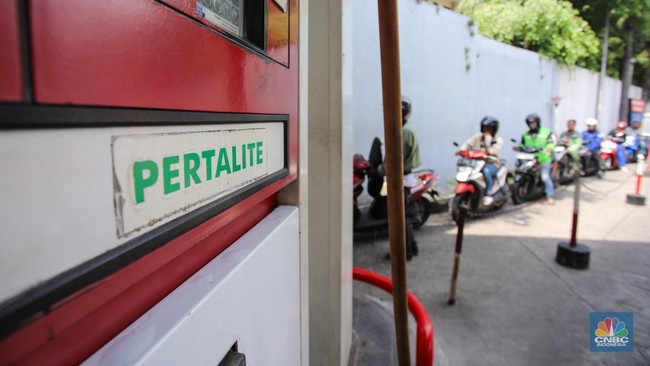
The Indonesian government has continued to provide subsidies for fuels such as Pertalite (RON 90) and subsidised diesel. The subsidies are intended to allow less affluent citizens to buy fuel at an affordable price compared to its actual economic value.
Deputy Speaker of the People’s Consultative Assembly (MPR) Eddy Soeparno explained that the price difference is a burden the state must bear through the state budget (APBN). The government has to cover the gap between the domestic selling price and the real price, making the state budget burden increasingly heavy.
Eddy revealed that the real price of Pertalite reaches Rp16,100 per litre, but after state subsidies it is currently sold at Rp10,000 per litre. Meanwhile, subsidised diesel, whose real price is Rp12,000 per litre, is priced at only Rp6,800 per litre on the market.
“Today we subsidise. If you buy biodiesel, the price is Rp6,800. What is the production cost? Rp12,000 economically. We buy Pertalite at Rp10,000, everywhere Rp10,000. What is its economic value? Rp16,100,” he said at a CNBC Indonesia Coffee Morning event some time ago.
Dependence on imported energy supplies is the main trigger of Indonesia’s energy vulnerability, given that national fuel demand reaches 1.6 million barrels per day (bpd) while production is only around 600,000 bpd.
Eddy stressed that this condition puts pressure on the fiscal position because the government has to spend more money to buy imported raw materials.
“Today, in terms of energy security, we still rely on imports to drive our overall economic mobility. This then brings pressure to our fiscal position,” he said.
In addition to fuel, the selling price of subsidised 3-kilogram liquefied petroleum gas (LPG) is also said to carry a very large subsidy burden in each canister.
Eddy revealed that the economic price of the canister gas reaches more than double the price currently paid by the public, namely Rp56,000 per canister. Meanwhile, what is sold to the public after being subsidised by the government is Rp20,000 to Rp21,000 per canister.
“3 kg LPG, ladies and gentlemen, costs around Rp20,000 to Rp21,000. Its economic value is Rp56,000. So in one 3 kg LPG canister there is a government subsidy of Rp36,000. Our LPG need is 8 million tonnes per year. 80% is imported,” he explained.
The large subsidy is considered a challenge because its distribution is deemed not yet well targeted. Based on data from the National Energy Council (DEN) cited by Eddy, most energy subsidies are not enjoyed by the groups that truly need them, so steps are needed to improve recipient data.
“According to the National Energy Council, 63% of our energy subsidies are mistargeted,” said Eddy.
Therefore, he assessed that the use of renewable energy and decarbonisation programmes are key for Indonesia to reduce the import burden in the future.
“So the energy transition we are carrying out today is part of our commitment to decarbonisation. And in my view, today the decarbonisation target through energy transition is not only being pursued by Indonesia, but by the whole world,” he concluded.