
The Quiet Story of Turning Waste into Rupiah
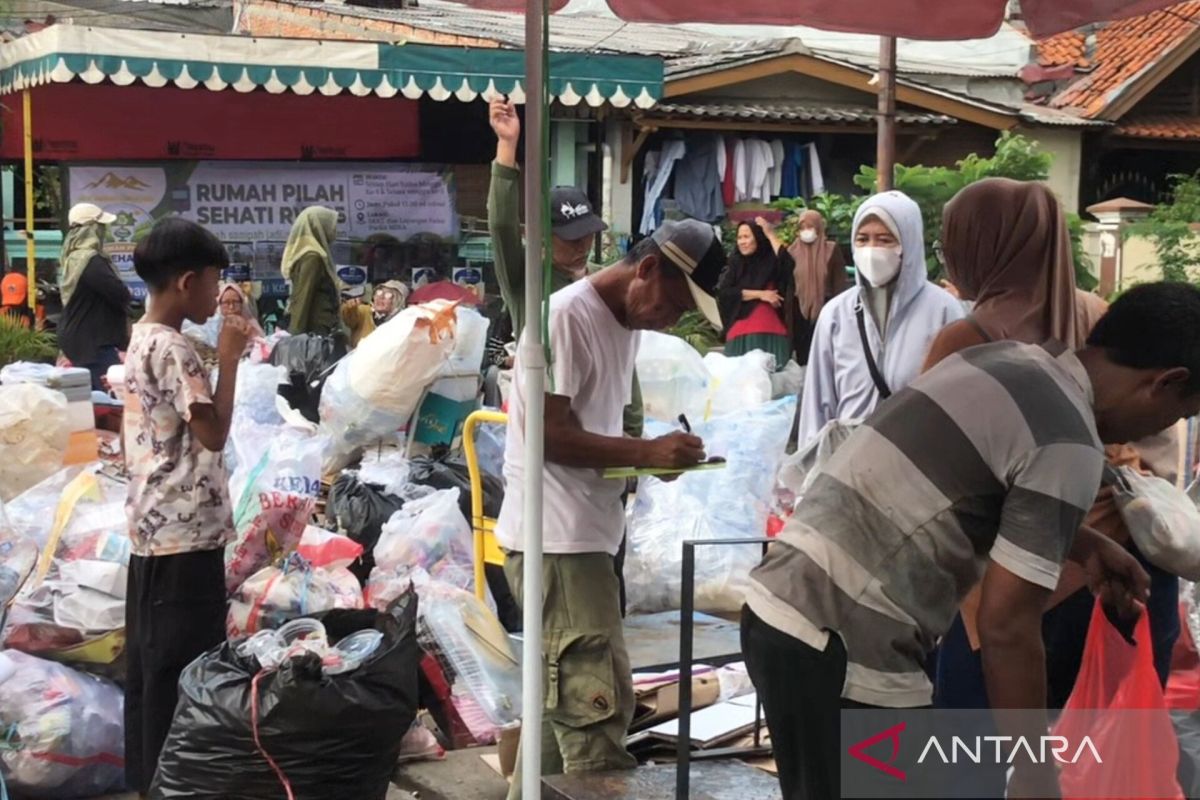
In a narrow alley once known for its squalor, rows of neatly arranged sacks filled with plastic bottles, cardboard, and cans now stand. The pungent odour that once characterised the area is slowly fading, replaced by the bustling activity of residents sorting through waste.
This is where change begins, turning something often considered useless into a source of additional income.
Waste sorting is no longer just an environmental slogan. For some communities, it is a survival strategy and an economic opportunity.
The concept is simple yet has a profound and tangible impact. Separating organic and inorganic waste at the household level and managing it properly.
Inorganic waste, such as plastic, paper, and metal, now has market value. Residents collect it, clean it, and deposit it at waste banks or with collectors.
From there, money starts to flow. Though not always substantial, it is enough to help with daily needs. In a month, one family can earn meaningful additional income, especially if done consistently.
In Kelurahan Utan Kayu Selatan, this habit is not new. In recent years, sorting inorganic waste has become a duty for Public Infrastructure and Facilities Handling Officers (PPSU).
Behind that policy, the practice of sorting waste actually grew organically in the community long before.
The waste collected daily is no longer simply discarded. Most of it is taken to a small warehouse behind the kelurahan office.
That simple building, about two by one metres in size, may seem ordinary, almost invisible. Yet inside, it holds hundreds of kilograms of neatly sorted waste awaiting transformation into money.
The warehouse serves as a meeting point between old habits and a new mindset. There, waste is no longer seen as the end of a process, but the beginning of a new economic cycle.
Plastics, cardboard, paper, and metals are arranged by type, as each has a different selling price when sold to collectors.
The movement of waste there follows a unique rhythm. Additions come daily, emptying occurs every few weeks, and when space can no longer accommodate, collectors are called.
Weighing takes place, sacks are opened, and each type of waste is valued one by one. From that simple process, hundreds of thousands of rupiah are generated each month.
A man in an orange T-shirt named Cecep explains that one kilogram of paper fetches Rp2,400, cardboard Rp1,800, mineral water bottles Rp2,400, light iron Rp3,500, filled iron Rp4,500, used beverage aluminium Rp25,000, and heavy aluminium Rp27,000. These values may not seem large on a city scale, but they hold significant meaning at the individual and community levels.
This additional income proves that work once considered trivial can provide real economic benefits.
Behind the routine, a new work pattern has formed. Each officer is responsible for collecting a certain amount of inorganic waste each month. Gradually, sorting waste no longer feels like a burden but part of daily life.
They no longer view this activity dismissively but carry it out without hesitation. There is awareness that every plastic bottle or piece of cardboard collected has value, however small.
It does not stop at inorganic waste; waste management also extends to organic types. Food scraps and leaves are processed into compost and maggots. Though not yet a main income source, this step shows efforts to maximise all types of waste.
On the other hand, limited facilities remain a real challenge. The current small warehouse can only hold limited amounts.
This condition indicates that the potential for waste management is actually much greater if supported by adequate infrastructure.