
The Putin-Xi Jinping Relationship: Between Political Bromance and Geopolitical Reality
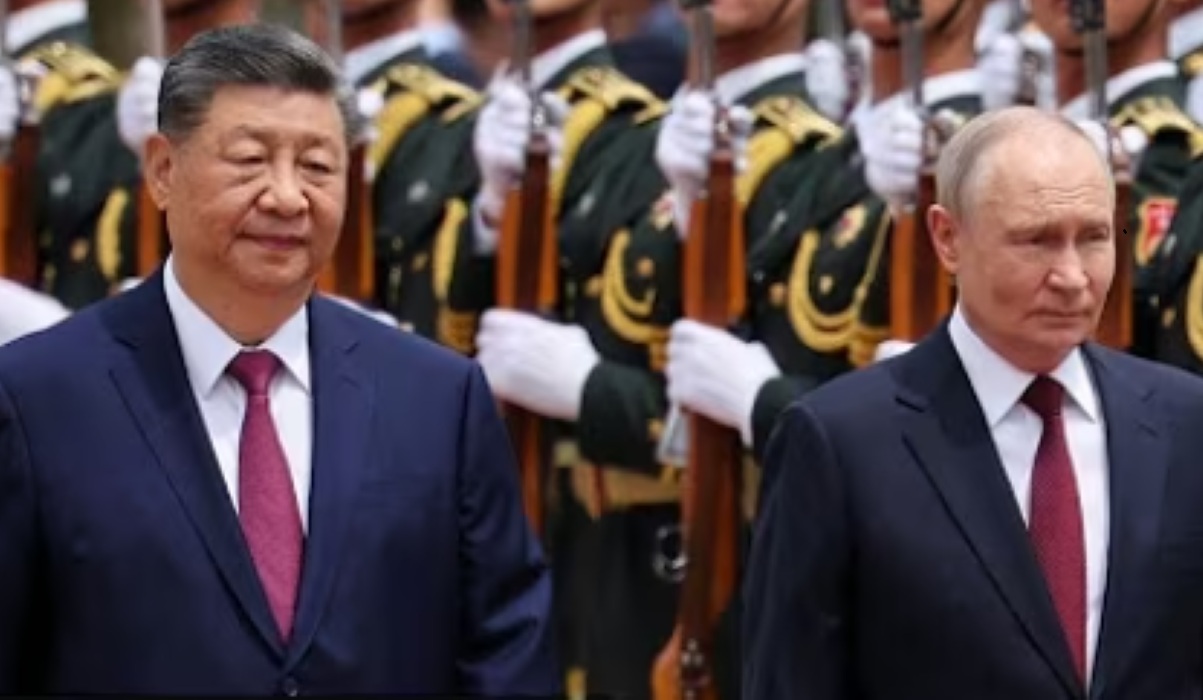
The atmosphere in Beijing instantly felt like Moscow. As Vladimir Putin and Xi Jinping walked the red carpet towards the Great Hall of the People, the Chinese military band played a romantic Russian staple, Moscow Nights. “And if you knew how much those nights in Moscow mean to me,” goes a snippet of the lyrics. Behind the notes, the question arises: Is there a message of political romance or even a bromance being built?
Old Friends Diplomacy
“My friend,” Putin greeted Xi. “My old friend,” Xi replied to Putin.
The language used reflects a special relationship nurtured over years through more than 40 official meetings. In public statements, the two emphasise strategic cooperation, partnership, mutual respect, and trust.
Collectively, the two leaders condemn the United States’ nuclear policy, which they regard as irresponsible, and criticise Donald Trump's Golden Dome missile defence plan. The visual message shown by Russian state media is strikingly contrasted, juxtaposing a solitary Trump with Putin and Xi walking side by side.
Borders of Interests: The Reality Behind the Symbols
However, the world of geopolitics is not a stage for a love song. Relations between states are rarely based on pure affection, but on pragmatic national interests. This Xi-Putin summit underscored limits within their relationship.
The energy sector becomes the real test. Russia is keen to push the Power of Siberia 2 gas pipeline project to redirect gas volumes from Western Siberia to Northern China via Mongolia. This project is crucial for Moscow to plug gaps caused by Western sanctions on European markets.
Although a memorandum of understanding was signed last year, Beijing does not seem eager to formalise the deal. Beyond issues of price negotiation, observers say China is reluctant to become overly dependent on Russian fossil fuels.
Great Power Psychology
State media in Russia itself concedes that the two countries' positions are not always identical. “Their interests are not always aligned,” the newspaper writes. With two such large nations, each possessing a psychology as a great power, differences in interests are inevitable.
The phenomenon brings to mind the term bromance once applied to Putin and Trump after their meeting in Alaska last summer. At that time, the term Anchorage Spirit suggested a shared understanding to end the war in Ukraine.
Yet the war continued and the Anchorage Spirit faded. Now, though Putin's foreign policy aide, Yuri Ushakov, insists that the Beijing Spirit is real, the reality on the ground shows that this partnership will be tested by cold-cost calculations, not merely by the tune of a romantic song.