
The pulse of life from the karst of Batu Hapu Cave in the heart of Meratus
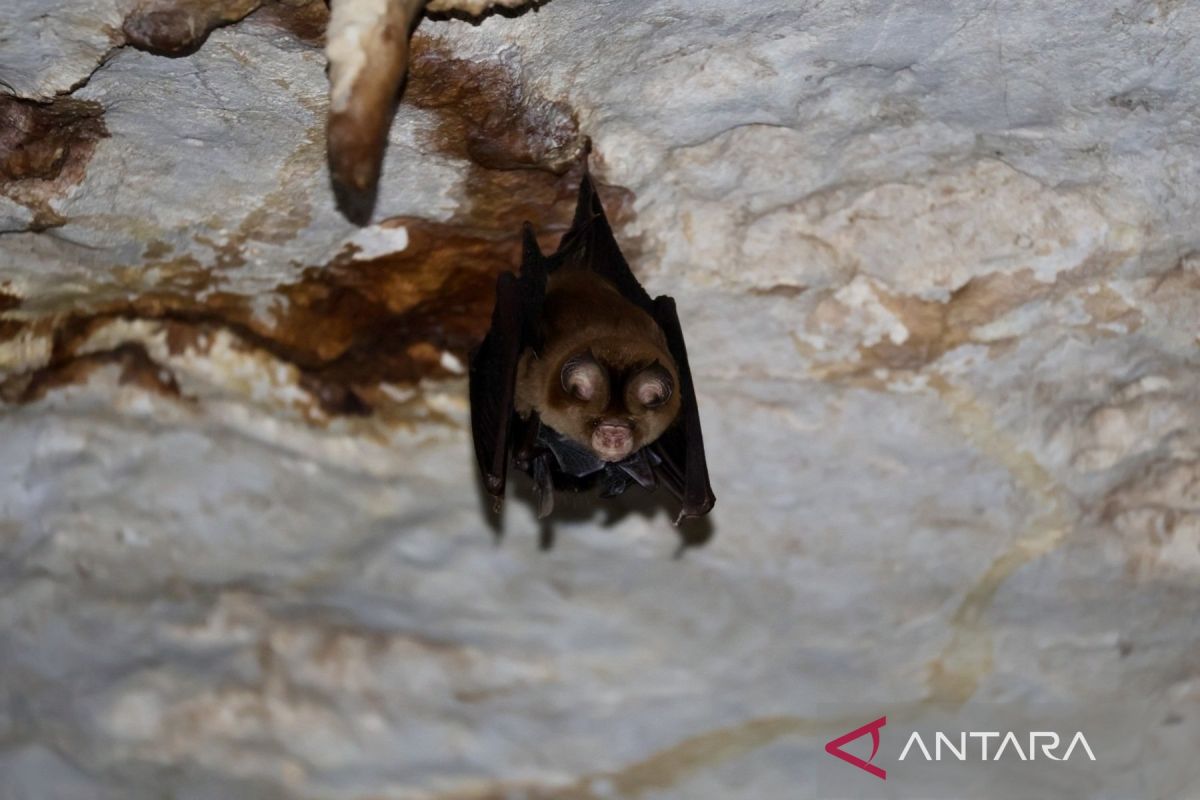
In the dark corridor of Batu Hapu Cave, the sound of footsteps slowly fades, replaced by silence. Between the damp stone walls and towering cave ceiling, bats hang quietly, waiting for nightfall before leaving their roost.
That atmosphere forms part of the hidden life preserved at the Batu Hapu Cave Site in Tapin Regency, South Kalimantan. The cave, located within the Meratus UNESCO Global Geopark area, not only holds a limestone landscape with natural ornamentation, but also serves as a habitat for wildlife that plays an important role in maintaining ecological balance.
The presence of bats inside the cave began to be mapped following a biodiversity survey conducted by the Meratus Geopark Management Agency. Initial observations found three bat species using the interior of Batu Hapu Cave as their habitat: Hipposideros larvatus, Taphozous melanopogon, and Taphozous longimanus.
The finding reveals another side of a karst area long known for its geological beauty. Behind rocks formed through lengthy natural processes, there is life dependent on the cave’s conditions, from humidity and protective space to the availability of food sources.
Ramadhan Jayusman, a biologist at the Meratus Geopark Management Agency, said the monitoring marks a first step towards understanding bat diversity in Batu Hapu Cave. According to him, further research needs to take into account observation times, seasons, and the animals’ activity patterns.
This initial monitoring opens up opportunities to further uncover the relationship between the karst ecosystem, bats, and the life that develops inside the cave.
From the belly of Meratus, Batu Hapu Cave teaches that the value of a landscape lies not only in the rocks that compose it, but also in the life that grows and endures within it.
When night falls over the Meratus karst, the bats begin to emerge from their roost. From the crevices of Batu Hapu Cave, the nocturnal animals fly out in search of food, performing an ecological role that has long gone largely unnoticed by humans.
Within the cave ecosystem, bats are not merely occupants of dark spaces. Their activity forms part of nature’s balance, including helping to control insect populations around their habitat.
The Meratus Geopark Management Agency’s monitoring found three bat species in Batu Hapu Cave, each with distinct characteristics and adaptive capabilities.
One of them, Hipposideros larvatus, possesses a noseleaf structure that supports its echolocation system. This ability allows it to recognise its surroundings and find prey, particularly insects, even in low-light conditions.
Meanwhile, Taphozous melanopogon is distinguished by dark hair resembling a beard on its chin and throat, and uses sheltered spaces within the cave as resting places. Taphozous longimanus, for its part, has relatively long wings, making it more agile in moving about and foraging around its habitat.
These character differences show that each bat species has its own way of adapting to the living space in Batu Hapu Cave.
Ramadhan Jayusman explained that further study is needed to determine species composition, population conditions, activity patterns, and habitat use by the bats in Batu Hapu Cave.
Such data is important for understanding the bats’ role in the area’s ecosystem, while also forming the basis for determining habitat management and protection measures.
Around the roosting places of the bat colonies, accumulated guano or bat droppings become part of another cycle of life inside the cave. This organic material supports the presence of small organisms that subsequently form part of the food chain in the subterranean environment.
Life in Batu Hapu Cave demonstrates the close interconnection between bats, small organisms, rocks, and humidity in maintaining the balance of the karst ecosystem. Far from the bustle of the surface, bats quietly play their part as guardians of the continuity of life in that landscape.
Source: jawawa.id (https://jawawa.id/newsitem/the-pulse-of-life-from-the-karst-of-batu-hapu-cave-in-the-heart-of-meratus-1783641060)
Originally published by Antara (Indonesian) (https://www.antaranews.com/berita/5643352/denyut-kehidupan-dari-karst-gua-batu-hapu-di-perut-meratus), translated from Indonesian