
The Public Procurement Bill, Transformation and the Urgent Need for a Government Procurement Agency
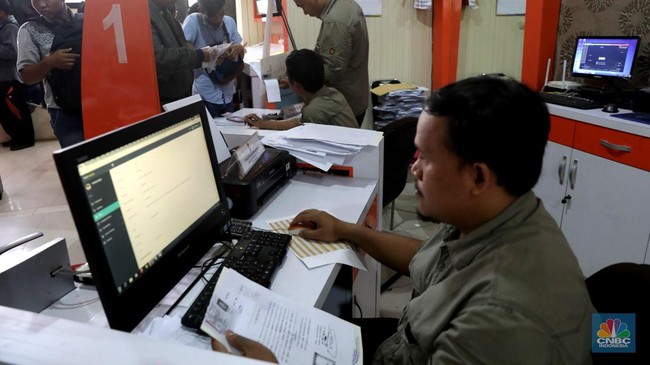
At a national seminar on drafting the academic paper for the Bill on Public Procurement, held by the House of Representatives’ Expertise Agency in collaboration with Muhammadiyah University of Surakarta (UMS) at the Siti Walidah Main Building seminar room on Friday (30 October 2026), attending experts said procurement reform should not focus solely on budget efficiency. It must also ensure transparency, integrity, fairness and public benefit.
Government procurement is currently governed by presidential regulations. The proposed Bill therefore needs to address several fundamental issues, including clarity on the parties and items covered by procurement, the Domestic Component Level (TKDN), support for micro and small businesses and cooperatives, oversight, digital transformation through electronic procurement (e-procurement), dispute resolution, legal protection, and stronger institutions and coordination.
The agenda is in line with President Prabowo Subianto’s policy direction, set out in his address presenting the government’s statement on the 2027 State Budget Bill and its Financial Note to a plenary session of the House of Representatives on 14 August 2026. The government plans to consolidate procurement of similar goods and services while upgrading the institutional status of the Government Goods and Services Procurement Policy Agency (LKPP) to become a Government Procurement Agency (BPP). (Cabinet Secretariat, 14 August 2026)
The proposal stems from price disparities, with local governments buying the same goods at different prices, sometimes higher than those achievable through consolidated procurement. This reflects the fact that government spending is not yet optimally integrated.
The State Budget and local government budgets should instead be managed through an integrated national procurement framework. The challenge is not simply to improve purchasing mechanisms, but to build a procurement system that ensures efficiency, standardisation and transparency, while giving the government greater bargaining power as a single entity.
LKPP head Sarah Sadiqa told a hearing with House Commission XI that the agency was preparing to establish the BPP. The institutional arrangements are still being developed, with the initial steps focused on making the best use of available human resources and the budget already allocated. (Antara, 2 September 2026)
In parallel, the Ministry of Administrative and Bureaucratic Reform is preparing a governance model for the government procurement institution. The Ministry of Law is preparing the draft Public Procurement Bill, which would provide the legal foundation for establishing the BPP.
The Bill is a strategic legislative instrument that would provide a legal basis for transforming LKPP into the BPP, while setting out its status, duties, functions and powers, as well as institutional coordination within the national procurement system.
LKPP has a strategic mandate to develop and formulate government procurement policy. That mandate extends beyond the central government to the wider procurement ecosystem, including local governments and other entities involved in public procurement.
Given this scope, procurement should no longer be viewed as an administrative matter for individual ministries, agencies or local governments. Public procurement is an important part of state financial governance because it determines how public money is converted into goods, services, infrastructure and services that deliver tangible benefits to the public.
Civil society organisations and non-governmental organisations that have long championed anti-corruption, transparency and accountability have also called for more systematic reform of public procurement. This points to common ground between the government’s agenda and civil society demands: procurement must be improved not only at the procedural level, but also in its institutional design and governance.
President Prabowo’s proposal to transform LKPP’s institutional status should therefore be welcomed as a strategic step. Upgrading LKPP to the BPP should not be merely a change of name; it should be an opportunity to build a more integrated national procurement ecosystem.
Transforming Government Procurement
As Ikman M. Saleh has noted, government procurement reform in Indonesia has not taken place in a single stage. Before 2000, procurement was part of the State Budget regime and had no dedicated regulation of its own. Reform began with Presidential Decree No. 18/2000, which for the first time set out separate rules for the procurement of goods and services by government institutions. (North Maluku Provincial Government, 2025)
The next milestone was Presidential Decree No. 80/2003, which mandated the creation of a dedicated agency to develop procurement policy. This led to the establishment of LKPP, a strategic institution responsible for formulating and developing procurement policy nationally.
The agency was established in response to Indonesia’s need for a more professional, transparent and accountable procurement system, as well as to align the country with international procurement practices.
Indonesia needed an institution capable of developing procurement standards and policies in line with those of other countries, such as the Office of Federal Procurement Policy (OFPP) in the United States, the Office of Government Commerce (OGC) in the United Kingdom, the Government Procurement Policy Board (GPPB) in the Philippines, the Public Procurement Policy Office (PPPO) in Poland, and the Public Procurement Service (PPS) in South Korea.
Regulatory reforms continued with Presidential Regulation No. 54/2010 and Presidential Regulation No. 16/2018. These brought significant changes, including strengthening procurement units within ministries and agencies (UKPBJ), simplifying processes, expanding self-managed procurement and increasing flexibility.
This development continued with Presidential Regulation No. 46/2025, which emphasised greater use of domestic products, faster digital transformation, support for micro, small and medium-sized enterprises, and the acceleration of government priority programmes.
Taken together, these regulations show how procurement reform has evolved from an administrative mechanism for government spending into a strategic instrument for efficiency, digital transformation, national economic empowerment and maximising the benefits of public budgets.
The proposal to transform LKPP into the BPP can therefore be seen as the logical continuation of this reform process: moving from regulatory improvements towards stronger national procurement consolidation and institutions.
President Prabowo’s address has created important political space to reorganise government procurement. I agree that the state cannot continue buying the same goods without coordination, forfeiting its bargaining power and allowing unexplained price differences to persist. Consolidation, data-based planning and stronger institutions could bring about a major advance if properly designed.
International practice shows that procurement institutions take different forms. In some countries they are agencies, in others ministries or policy boards.
However, it is important to note that the OECD publication OECD Public Governance Reviews: Implementing the OECD Recommendation on Public Procurement in OECD and Partner Countries 2020–2024 Report does not say that every country should establish a “procurement agency” or a “procurement ministry”.
The OECD stresses that procurement governance should not stop at institutional design, but should focus on functions and outcomes. Simplifying systems, eliminating overlapping functions, breaking down institutional silos and preventing waste are all important to ensure that procurement delivers genuine value for the state. (OECD, 2025)
The proposed institutional transformation should therefore be treated as a key part of procurement reform, not simply a change of name. If Indonesia intends to transform LKPP into the BPP, the goal should be broader: to build an integrated national procurement ecosystem spanning central and local government.
The transformation must strengthen the consolidation of needs, increase the government’s bargaining power, improve spending efficiency and transparency, and ensure that every rupiah of public money delivers the greatest possible benefit to the public.
There are also several regulatory options to consider. LKPP could be strengthened by improving existing regulations, including revising Presidential Regulation No. 46/2025. In the longer term, however, Indonesia could consider a dedicated law that comprehensively governs government procurement.
Such a law would cover not only procurement procedures, but also strengthen planning, procurement consolidation, digital transformation, the professionalisation of human resources, the use of domestic products and the institutional design of national procurement.
The legislation would also provide an opportunity to align procurement rules with the State Treasury Law, the State Budget Law, the Law on Financial Relations between the Central Government and Regional Governments, and other relevant sectoral laws.
Government Procurement Agency
Corruption in public procurement remains an unresolved problem. Corruption Eradication Commission (KPK) data show that nearly 90 per cent of corruption cases brought to trial during 2024 were related to procurement. This is consistent with the KPK’s finding that procurement is a corruption-prone sector at both central and local government levels.
According to Transparency International Indonesia, the Integrity Assessment Survey (SPI) found that more than 80 per cent of provincial governments and two-thirds of regencies and municipalities remained vulnerable to corruption because of weak procurement governance. Indonesia Corruption Watch (ICW) recorded at least 1,189 procurement corruption cases between 2019 and 2023, causing state losses of Rp47.18 trillion. (TII, 2025)
As I noted in an earlier analysis published by Antara News on 7 July 2026, one of the key issues discussed at the OECD Public Procurement Week in Paris in 2025 was the quality of the human resources managing procurement processes, commonly referred to as procurement personnel.
Highly competent staff who understand not only the regulations but also technical requirements and procedural integrity are essential to closing opportunities for misconduct. Transforming LKPP into the BPP could strengthen the agency’s ability to develop procurement experts at every level of government, from the centre to the regions.
In Why Nations Fail (2012), Daron Acemoglu and James A. Robinson argue that a state’s strength is determined not merely by the extent of its authority, but by the quality of its institutions. The transformation of LKPP into the BPP must therefore go beyond a change of name and an expansion of powers.
More important is ensuring that the new institution has robust mechanisms for accountability, transparency, oversight and checks on power. A powerful institution without sound institutional safeguards can itself become a source of new problems.
President Prabowo’s effort to transform LKPP into the BPP signals a new direction for institutional reform in national procurement governance. The transformation needs a strong legal foundation, provided by the Public Procurement Bill.
This legislative opportunity must be used to build a procurement system that is integrated, accountable, transparent and focused on the public interest. Protecting every rupiah of public money requires more than tighter oversight: it must begin with better regulation, stronger institutions and legal certainty, so that procurement works effectively and efficiently and delivers the greatest possible benefit to the public.
Source: jawawa.id (https://jawawa.id/newsitem/the-public-procurement-bill-transformation-and-the-urgent-need-for-a-government-procurement-agency-1795593104)
Originally published by CNBC Indonesia (https://www.cnbcindonesia.com/opini/20261125133042-14-788340/ruu-pbj-transformasi-dan-urgensi-badan-pengadaan-pemerintah), translated from Indonesian