
The Prophet's Character Was the Qur'an: What Does It Mean?
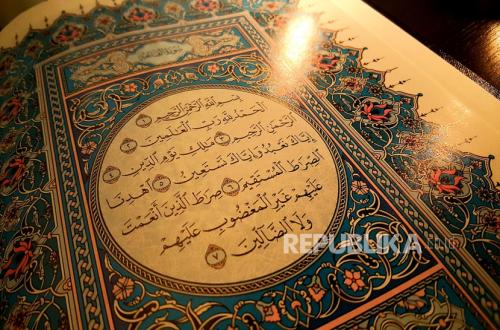
The personality of Prophet Muhammad SAW encompasses many noble virtues. Ibn Qayyim stated that the Prophet SAW combined piety towards God with sublime qualities. Piety can improve a servant’s relationship with Allah Ta’ala, while noble character improves his relationships with fellow creatures. Thus, piety towards Allah SWT will engender love for Him, whereas good character can attract the love of people towards that individual.
Hisyam bin Amir once asked Ummul Mukminin ‘Aisyah about the character of Rasulullah SAW. The daughter of Abu Bakr ash-Shiddiq replied, ’The Prophet’s character was the Qur’an’ (HR Muslim). Truly, ’Aisyah’s answer is brief but full of meaning. She described Rasulullah SAW with one quality that represents all existing qualities. Indeed, it is accurate that the Prophet’s character was the Qur’an.
Allah SWT says, which means, ‘…this Qur’an guides to that which is most upright…’ (QS al-Israa’: 9). ‘It guides to the most upright path…’ (QS al-Jinn: 2). The Prophet’s character was the Qur’an—the holy book described by Allah’s words, ‘…about which there is no doubt, a guidance for those conscious of Allah.’ (QS al-Baqarah: 2).
In the early period of Islamic propagation, Prophet Muhammad SAW not only built the aspect of monotheism but also established the foundations and pillars of noble character. Abu Hurairah narrated that Prophet Muhammad SAW said, ‘Indeed, I was sent to perfect noble character’ (HR Baihaqi and Al-Hakim). Anas said, ‘Indeed, Rasulullah SAW was truly the human being with the most noble character’ (HR Bukhari-Muslim). Anas also said, ‘I served him (Rasulullah) for ten years, and I never heard him utter a word of complaint, nor did he ever question what I did by saying, “Why did you do this?” or “Shouldn’t you have done it like this?”’ (HR Bukhari-Muslim).