
The Prophet's Biography in Society 5.0: What Must Change?
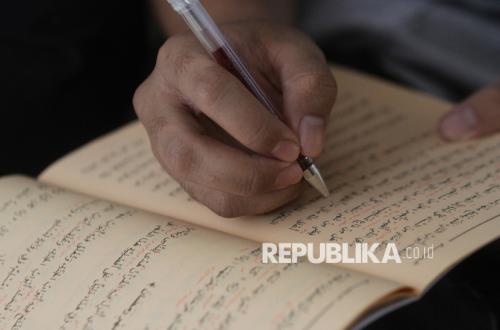
Every time Muslims commemorate prophetic milestones such as the Prophet’s Birthday, the Revelation of the Qur’an, the Night Journey, the Prophet’s Migration, the Battle of Badr, the Conquest of Mecca, and the Farewell Pilgrimage, the preaching stage is often filled with repetitions of sentimental stories about the noble figure of Muhammad ﷺ. The narratives presented generally stop at historical romanticism, details of miracles, or annual chronologies sterilised from contextualisation with the times. A fundamental question arises that tickles our intellectual consciousness: Have we read the Prophetic Biography as it ought to be read?
The greatest weakness in the reading of the Sirah today lies in methodological reduction. The Sirah is often treated merely as a pile of artefacts from the past or bedtime tales. In fact, the Prophetic Biography is a living civilisation laboratory—the only historical testing ground where we can empirically witness how divine revelation was transformed into social reality, shaping family structures, organising state governance, and leading changes in the global geopolitical order.
A Complete Epistemology and the Collapse of the Jahiliyah Order
The contemporary world often falls into the trap of a knowledge dichotomy between rationalism and materialistic empiricism. At this point, the Sirah offers a harmonious integrative model through three pillars of Islamic epistemology: Revelation (Naql), Reason (Aql), and Sensory Experience (Hiss).
Miracles and divine guidance never negate logical causality. When planning the Migration, the Prophet ﷺ hired a non-Muslim professional guide, mapped a detour route southwards (the Cave of Thawr) instead of the direct northern route, and built a well-organised intelligence network. Spiritual conviction (tawakal) was integrated in balance with risk mitigation (Aql) and concrete action (Hiss).
This transformation simultaneously served as an antithesis to the sociological diseases of civilisation. Adopting the thesis of the Algerian thinker, Malik Bennabi, human civilisation is divided into three phases of orientation:
A healthy civilisation (centred on Ideas/Concepts);
A sick civilisation (centred on Figures/Persons); and
A decadent civilisation (centred on Objects/Material).
Seventh-century Jahiliyah society was trapped in the worship of objects (idols) and figures (tribal ashabiyah). Through the prophetic mission, the Prophet ﷺ demolished the idols of materialism and the cult of individuals, redirecting them towards the sovereignty of monotheism and transcendent values. A modern reading of the Sirah must be able to restore the orientation of the ummah to the supremacy of ideas and sharia principles, not to narrow group fanaticism.
Facing the Storm of Liquid Modernity
In the contemporary era, sociologist Zygmunt Bauman introduced the concept of Liquid Modernity—an era of uncertainty in which moral values melt, relativism runs rampant, and people lose their grip on life. Its further impact has spawned an epidemic of existential anxiety (the age of anxiety) and extreme individualism. The younger generation is swept into the illusion of “individual salvation”, busy pursuing personal career achievements without concern for social problems.
The Prophetic Biography emerges as a solid moral anchor (solidity of references). It tethers truth to the absolute principles of revelation, yet opens flexibility to contemporary technical means. The Sirah also nurtures the human dimension proportionally:
• The Pillar of Reason: Guiding strategic planning and the logic of cause and effect.
• The Pillar of Spirit: Offering catharsis and mental therapy. When his son, Ibrahim, passed away, the Prophet ﷺ wept and affirmed that sadness is a natural human trait that must remain framed within divine contentment. The experience of bloody rejection in Taif taught mental resilience without despair.
• The Pillar of Body: Demonstrating a strong work ethic as an independent trader and physical integrity as a field leader.
The Sirah also educates social collectivity. The case of the boycott of Ka’ab bin Malik after the Battle of Tabuk proved that the integrity of the community must not be sacrificed for individual egoism.
Source: jawawa.id (https://jawawa.id/newsitem/the-prophets-biography-in-society-5-0-what-must-change-1787359875)
Originally published by Republika (https://analisis.republika.co.id/berita/tk58cn451/sirah-nabi-di-society-50-apa-yang-harus-berubah), translated from Indonesian