
The President’s Phone-Tapping Case and the Urgent Need to Reform Indonesia’s Intelligence Laws
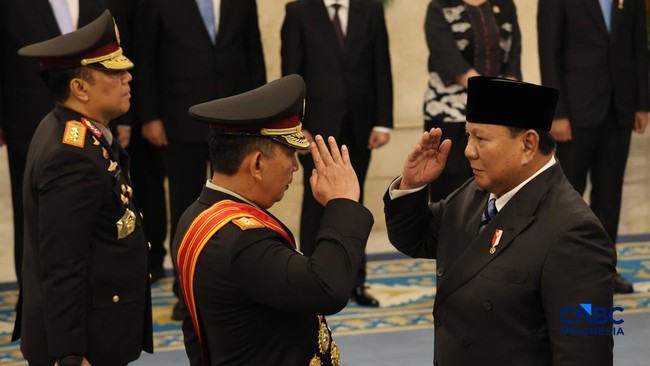
Allegations of wiretapping involving President Prabowo Subianto, the former National Police chief Listyo Sigit Prabowo and three senior police officers have raised serious questions about national security and accountability in the use of intelligence tools.
According to media reports, the police have named four people as suspects over alleged illegal interception, deletion of electronic data and unlawful access. The activities under investigation are said to have taken place during 2025–2026, including the alleged use of a Lawful Interception Management System (LIMS) without proper verification (Hambali, 2026; Rahmawati, 2026).
However, it must be stressed that being named a suspect is not a finding of guilt. As of 9 November 2026, the police were still investigating alleged treason, while reports said the suspects had so far been charged under provisions relating to interception and the Electronic Information and Transactions Law.
The Minister of State Secretary has also said that the content of the conversations, the recipients of the intercepted material and those behind the activity have not yet been established in detail (Prayudhia, 2026; Rahmawati, 2026). The central issues, therefore, are proving the purpose of the surveillance, tracing the flow of information and determining whether its results might have been used to disrupt the functioning of the state.
Fragmented regulation of interception in Indonesia
Indonesia is not entirely without laws on the subject. Before Law No. 1 of 2023 on the Criminal Code (hereafter the Criminal Code) came into force, Article 31 in conjunction with Article 47 of the Electronic Information and Transactions Law prohibited interception without authority.
Since 2 January 2026, criminal provisions on interception have been codified in Article 258 of the Criminal Code, which prohibits unlawful listening to, recording, altering, obstructing or noting non-public electronic information transmissions. Article 40 of the Telecommunications Law (Law No. 36 of 1999) also prohibits the interception of information transmitted through telecommunications networks.
Meanwhile, the State Intelligence Law authorises the State Intelligence Agency (BIN) to conduct interception for intelligence purposes, including countering espionage and sabotage, subject to certain conditions. Such action must, among other things, be based on an order from the head of BIN; where there is sufficient preliminary evidence against a target, it also requires authorisation from the head of a district court.
Article 47 also provides for the accountability of state intelligence personnel who conduct interception outside their designated functions. This does not, however, amount to a unified oversight regime for all institutions with access to interception technology.
The gap is made clearer by Article 136 of Law No. 20 of 2025 on the Criminal Procedure Code. Investigators may conduct interception for investigative purposes, but the provision explicitly requires the procedures to be regulated further by a separate law.
An initial draft of the Interception Bill published by the DPR’s Expertise Agency also acknowledges that current rules are dispersed, with different authorisation mechanisms and time limits (DPR Expertise Agency, n.d.). The problem, therefore, is not the absence of criminal prohibitions, but the fragmentation of powers, procedures and oversight mechanisms.
Illegal interception does not automatically amount to espionage, let alone treason. Espionage concerns the gathering or possession of strategic information for a particular purpose, while foreign interference requires a link to the interests or direction of a foreign power.
Treason against the president is addressed in Article 191 of the Criminal Code: acts intended to kill the president, deprive the president of liberty or render the president unable to govern. Article 193 covers treason intended to overthrow the government unlawfully. Article 196 specifically criminalises conspiracy or preparation to commit offences under Articles 191–194.
Accordingly, proving treason requires establishing the purpose of the surveillance and the connection between it and a prohibited plan. Investigators need to trace the period and targets of interception, the type of information collected, its recipients, the chain of orders and any possible coordination to disable the president’s functions or replace the government outside constitutional processes. Abuse of office, ethical violations and insubordination may also give rise to separate liability, but should not simply be equated with treason.
International comparisons and the need for future reform
The United States regulates intelligence interception under the Foreign Intelligence Surveillance Act (FISA) 1978 (50 U.S.C. §§ 1804–1805). The law requires judicial authorisation through the Foreign Intelligence Surveillance Court (FISC).
Applications for interception must be submitted by a federal official with the approval of the Attorney General and supported by probable cause that the target is a foreign power or its agent. FISA also applies minimisation procedures to limit the collection, retention and dissemination of irrelevant information. This framework shows that national intelligence interests can be pursued within a system of legal authorisation and oversight.
The United Kingdom’s National Security Act 2023 criminalises foreign interference where there is a connection to a foreign power, prohibited conduct and an intention—or recklessness as to whether the conduct will have—an impact on national security and the functioning of the state. The provisions cover covert action, information manipulation and pressure intended to influence political and governmental processes.
Separately, the Investigatory Powers Act 2016 regulates interception according to the principles of necessity and proportionality. It requires approval by the Home Secretary as well as judicial oversight by a Judicial Commissioner. This arrangement, known as double-lock authorisation, is intended to prevent the arbitrary use of interception powers.
Australia has established more explicit distinctions between espionage and foreign interference in its Criminal Code Act 1995, particularly Divisions 91 and 92. The provisions cover obtaining or communicating strategic information to a foreign principal, as well as conduct intended to influence political and governmental processes or harm national security.
Interception powers are governed by the Telecommunications (Interception and Access) Act 1979, which requires warrants for intelligence interception by the Australian Security Intelligence Organisation (ASIO). Oversight also involves the Inspector-General of Intelligence and Security (IGIS), an independent body supervising intelligence activities.
These three countries offer lessons for Indonesia. The United States emphasises judicial authorisation and limits on the use of intelligence; the United Kingdom has developed layered oversight alongside criminalisation of foreign interference; and Australia clearly separates the regulation of espionage and foreign interference from interception powers.
Together, these examples show that protecting sovereignty requires more than criminalising espionage: it also requires rules governing intelligence powers, independent oversight and legal accountability. Indonesia therefore needs a comprehensive framework covering espionage and foreign interference while also preventing state officials from abusing intelligence tools.
Indonesia needs two complementary legal frameworks. First, an Interception Bill should provide procedural safeguards covering judicial authorisation, standards of necessity and proportionality, limits on targets and duration, deletion of irrelevant data and independent audits.
Second, a Bill on Combating Espionage and Foreign Interference should precisely define links to a foreign principal, theft of strategic information, covert influence operations, agent recruitment, institutional sabotage and the misuse of state access for foreign interests (Arbani, 2026).
These provisions must protect political criticism, journalism, advocacy and disclosures made in the public interest. The term ‘subversion’ must not be defined so vaguely that it becomes a tool for restricting civil liberties.
The alleged surveillance of the president shows that threats to sovereignty can come not only from external actors, but also from the misuse of access and authority within state institutions.
Indonesia already has several offences relating to interception and treason, but it lacks an integrated legal architecture to prevent, detect and prosecute espionage and foreign interference. Dedicated legislation is important not to expand state power without limits, but to protect sovereignty, the constitution and citizens’ rights at the same time.
Source: jawawa.id (https://jawawa.id/newsitem/the-presidents-phone-tapping-case-and-the-urgent-need-to-reform-indonesias-intelligence-laws-1794210640)
Originally published by CNBC Indonesia (https://www.cnbcindonesia.com/opini/20261109135415-14-783570/penyadapan-presiden-dan-urgensi-membenahi-hukum-intelijen-indonesia), translated from Indonesian