
The Position of Islamic Economy in the 2027 State Budget Draft
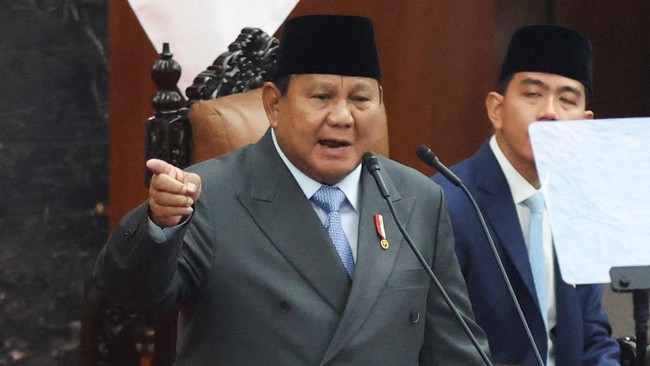
State addresses are always more interesting when read as political texts rather than merely ceremonial speeches. Every word chosen, every theme repeated, and even every issue not mentioned often represents how the state defines its development priorities. In the tradition of political economy, language is an instrument of power because through language, the state builds narratives, directs public attention, and determines which agendas are considered strategic.
Therefore, President Prabowo Subianto’s two speeches on 14 August 2026 deserve to be read as a roadmap for Indonesia’s development. In them, it is clear that downstreaming, investment, state-owned enterprises, Danantara, digitalisation, food security, and energy transformation are positioned as the main foundations of economic development.
However, amidst the dominance of these various issues, one question deserves to be asked: where is the position of Islamic economy?
This question arises not because Islamic economy is not mentioned at all, but because its presence is barely audible. Text frequency analysis of the two speeches shows that the term “syariah” appears only twice. Meanwhile, the terms halal, zakat, waqf, and sukuk do not appear at all.
Of course, the quality of a policy cannot be measured solely by the number of words in a presidential speech. However, state addresses have a symbolic dimension that cannot be ignored. They are political instruments for sending signals to the bureaucracy, market players, investors, and the public about which sectors the state considers important.
Italian political thinker Antonio Gramsci once explained that hegemony is built not only through control of institutions but also through control of discourse. What is continuously discussed will shape collective consciousness, while issues that no longer receive space will slowly lose their relevance in the public imagination. Perhaps that is what is happening to Islamic economy.
Over the past decade, Islamic economy has been promoted as one of the pillars of Indonesia’s economic transformation. The state established the National Committee for Islamic Economy and Finance (KNEKS), incorporated Islamic economy into the 2025-2045 National Long-Term Development Plan, included it in various strategic documents, and made it one of the instruments for enhancing national competitiveness.
However, President Prabowo’s speeches show a different symptom. Islamic economy is not present as a standalone development agenda. It appears in the context of Bank Syariah Indonesia as the operator of the national gold bank and as one of the services to be offered in the Indonesian International Financial Centre.
Both examples show the same pattern. Islamic economy is positioned as a supporting instrument for larger projects, not as a strategic agenda with its own development direction.
This is where the political economy perspective becomes important. Karl Polanyi, in The Great Transformation, reminds us that economic development is ultimately always determined by the contest between market logic, state interests, and societal interests.
The question is, when the state is increasingly oriented towards industrialisation, investment, and capital accumulation, is Islamic economy still seen as an instrument for building society, or is it beginning to be reduced to part of the global market mechanism?
This question becomes increasingly relevant when observing how Islamic economy is framed in the 2027 State Budget Draft speech. Islamic finance is positioned as one of the attractions for international investors through the establishment of the Indonesian International Financial Centre (PFII).
Yet the challenges facing Indonesia’s Islamic economy remain very fundamental. The national Islamic banking market share is still below 10 percent. Islamic financial literacy remains limited. Integration between the halal industry, Islamic finance, zakat, and waqf has not been fully realised.
The experience of several countries can serve as material for reflection. Malaysia, for example, does not build Islamic economy solely through financial industry development. The country integrates education, halal certification, regulation, research, industry, and financing into one interconnected ecosystem.
The United Arab Emirates takes a different path. It positions Islamic economy as part of a strategy to become a global trade, investment, and financial centre. Indonesia actually sits between these two models. Its domestic market potential is enormous, but at the same time, its ambition to become a global player is also very strong.
The problem is that Indonesia has not fully determined its choice. Will Islamic economy be developed as an instrument to strengthen social justice domestically, or will it be positioned as a strategic commodity in global economic competition? This question cannot be answered merely by looking at the development of the Islamic banking industry.
Islamic economy, in the tradition of Islamic thought, was never intended merely as an interest-free banking system. Ibn Khaldun, long before modern development concepts emerged, placed justice as the main foundation of a nation’s prosperity.
In a more contemporary perspective, thinkers such as Mohammad Umer Chapra emphasise that development in Islamic economics cannot be separated from welfare distribution, institutional strengthening, and protection of societal interests.
Therefore, the absence of the terms zakat and waqf in the state address actually carries far greater meaning than merely a matter of terminology. What disappears is the discourse on redistribution, social financing, and the idea that development is not only about growth.